

Dog training for destructive behavior starts with one core principle: destruction is almost never spite. Dogs chew, dig, and shred because they are bored, anxious, under-stimulated, or simply untrained. Once you understand the root cause, you can apply the right fix instead of reacting to the symptom.
Key Takeaways
- Destructive behavior in dogs is driven by unmet physical or psychological needs, not bad character.
- Identifying the trigger (boredom, anxiety, teething, or lack of structure) determines which training method works best.
- Consistent redirection, structured exercise, and clear boundaries resolve most cases without punishment.
- Professional trainers offer faster, more lasting results for severe or anxiety-driven destruction.
- Management tools like crates, baby gates, and enrichment toys buy you time while training takes hold.
- Most dogs show measurable improvement within two to four weeks of consistent, structured training.
Why Dogs Destroy Things: The Real Causes Behind the Behavior
Before you can fix the problem, you need to know what is fueling it. Destruction rarely comes from one single cause, and misreading it leads to wasted effort and a frustrated dog.
Boredom and Under-Stimulation
A dog that does not have enough physical activity or mental challenges will create its own entertainment. That entertainment usually involves your furniture, shoes, or baseboards. High-energy breeds like Border Collies, Belgian Malinois, and Labrador Retrievers need significant daily output. Without it, they redirect that energy into anything available.
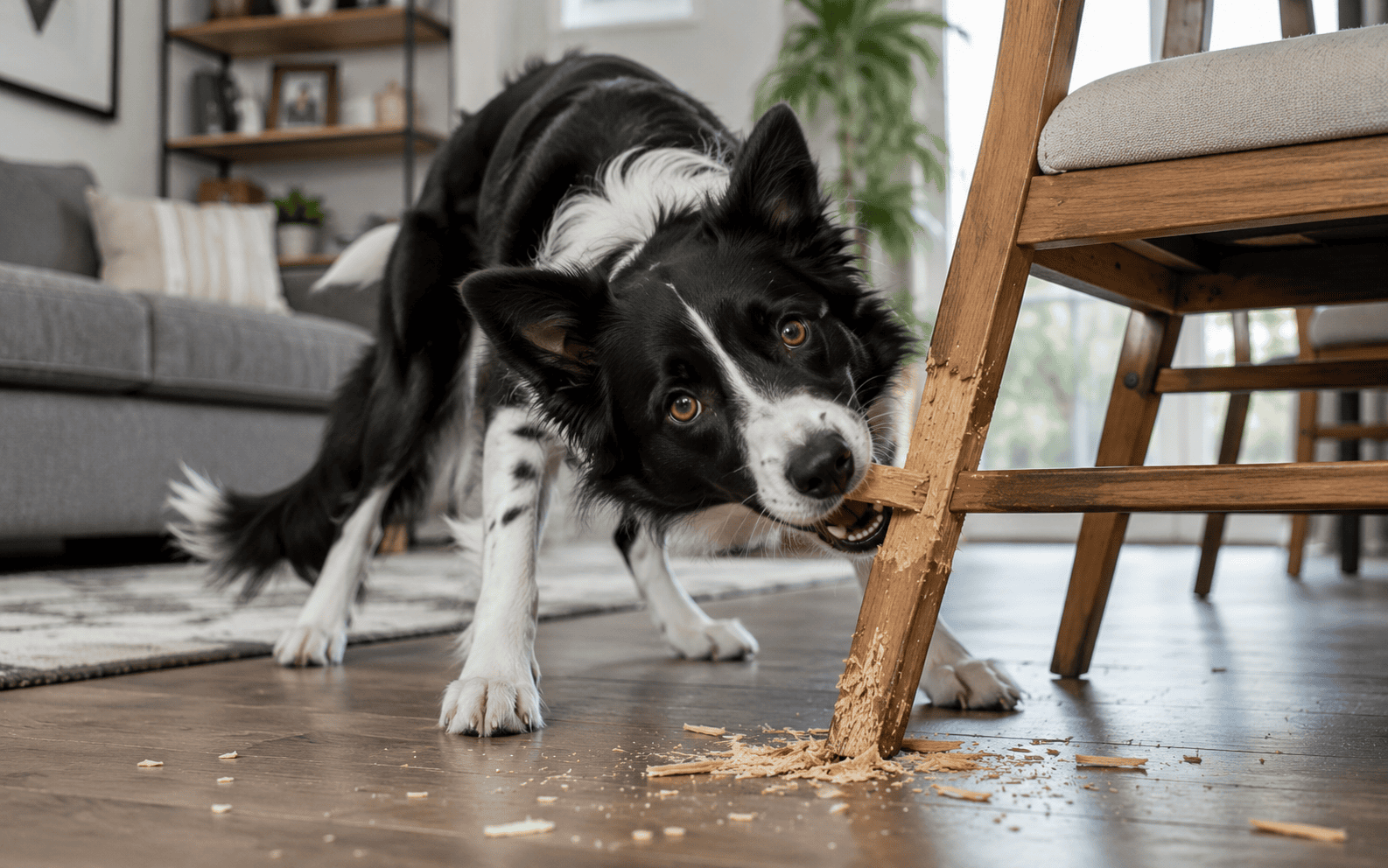
Reading up on the importance of regular exercise for your dogs physical and mental health makes it clear that exercise is not a bonus for dogs. It is a foundational need that directly impacts behavior. A dog logging 60 to 90 minutes of real physical activity daily is far less likely to tear up your couch cushions.
Separation Anxiety
This is one of the most misdiagnosed causes of destructive behavior. If your dog only destroys things when you are gone, specifically near exits like doors and windows, separation anxiety is likely the culprit. According to the American Veterinary Medical Association, separation anxiety affects roughly 14% of dogs in the United States. Symptoms include destruction concentrated near entry points, excessive vocalization, and elimination inside even in house trained dogs.
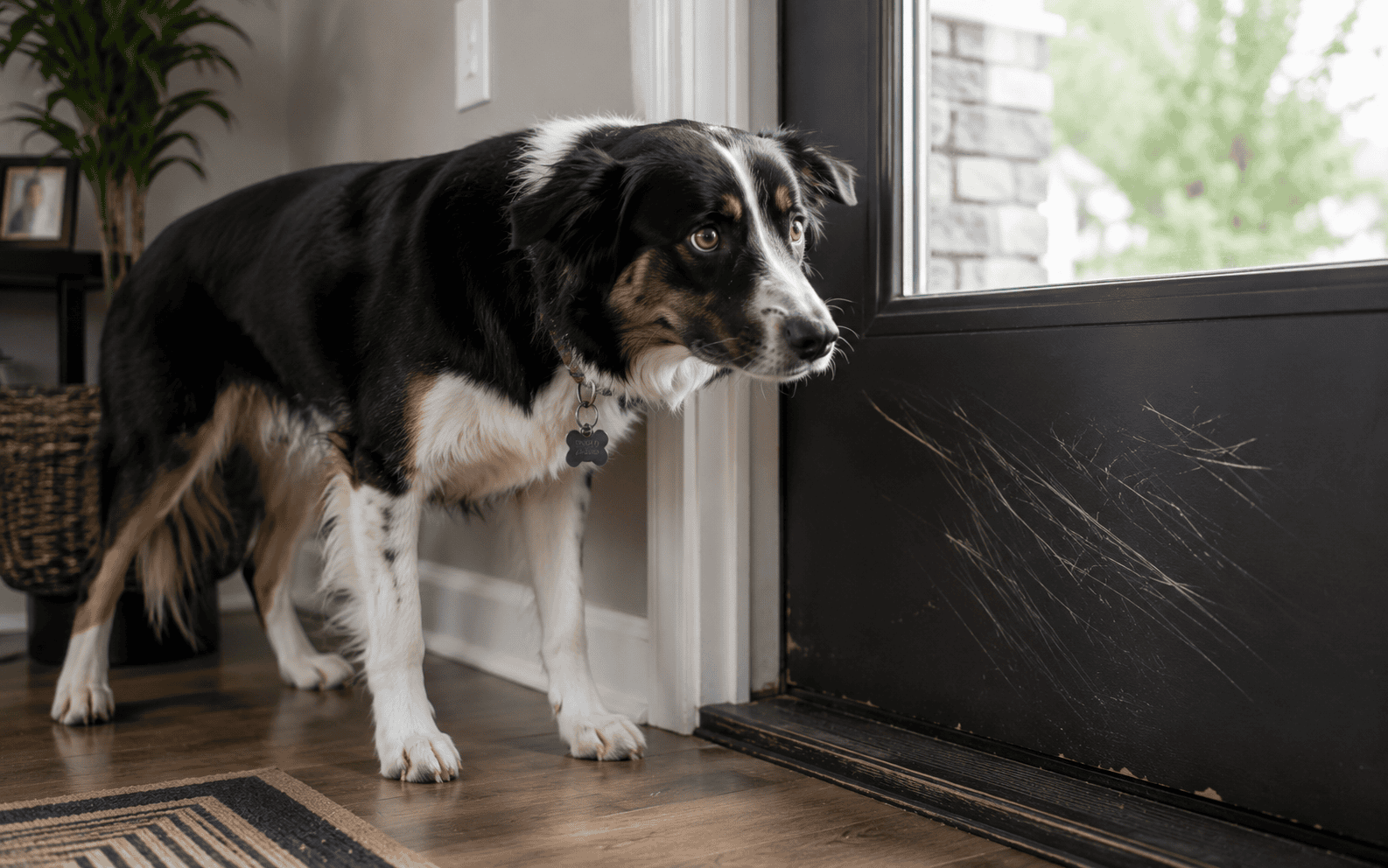
Standard obedience training alone will not fix anxiety-driven destruction. It requires a desensitization and counterconditioning protocol, and in severe cases, veterinary support alongside behavioral training.
Teething and Developmental Chewing
Puppies between three and six months old are teething. Their gums hurt, and chewing provides relief. This is biologically driven behavior, not disobedience. The key is not stopping the chewing but redirecting it to appropriate outlets. Rubber chew toys, frozen Kongs, and nylon bones work well.
If your adult dog is still chewing compulsively, that points to either anxiety, habit, or insufficient mental stimulation rather than teething.
Lack of Boundaries and Structure
Some dogs destroy things simply because no one has ever taught them not to. They have had free access to the whole house, no crate training, no structured rules, and no consistent feedback. These dogs are actually the easiest cases to fix because the solution is straightforward obedience training and environmental management.
The Training Methods That Actually Resolve Destructive Behavior
Not all training approaches work equally for every dog or every situation. Here is a breakdown of the most effective methods and when each one applies.
Redirection Training
Redirection is the foundation of most successful programs. The moment your dog goes for an inappropriate target, you interrupt calmly and replace the item with an approved chew toy or activity. You then reward the dog for engaging with the correct object.
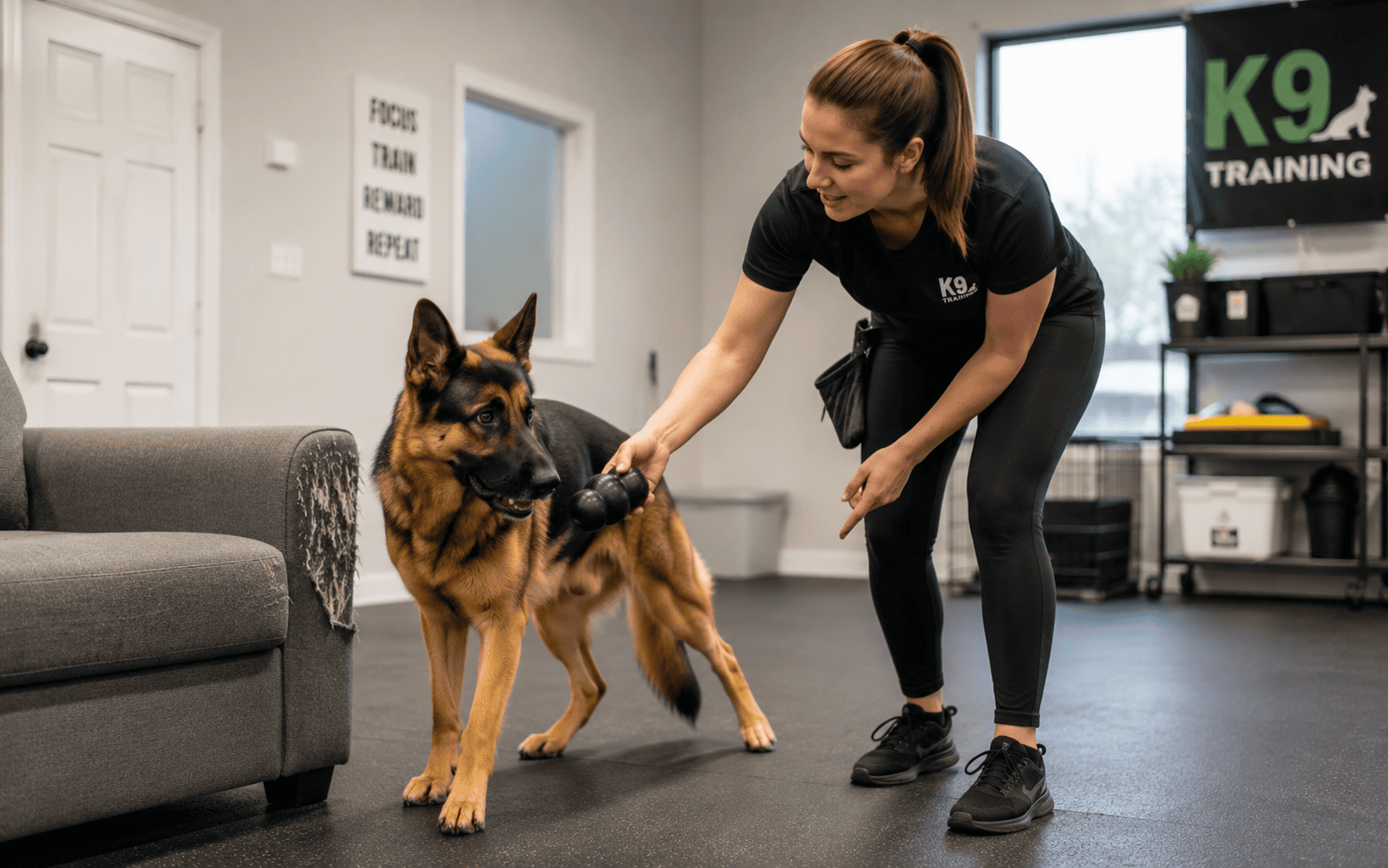
The key word is “calm.” Yelling or physical corrections at this stage often increase anxiety, which can actually worsen destruction. The correction should be a neutral interrupter, like a short verbal “no” or a clap, followed immediately by the redirect.
Crate Training and Environmental Management
Crate training is not punishment. For dogs that destroy when unsupervised, a properly introduced crate is a safe space that also prevents rehearsal of the bad behavior. Every time a dog destroys something unchecked, that behavior gets reinforced through self-reward. Removing the opportunity stops that cycle.
Baby gates, exercise pens, and dog-proofed rooms serve the same function. Management is not a permanent solution, but it is a critical bridge while training progresses.
Structured Obedience as a Behavioral Foundation
A dog that understands and responds to basic commands such as “leave it,” “place,” and “off” has the vocabulary to respond to corrections. Without this vocabulary, corrections mean nothing. Investing in obedience dog training builds the communication channel you need to address destructive habits efficiently. Dogs with solid obedience fundamentals are also calmer overall because structure reduces anxiety.
Desensitization for Anxiety-Driven Cases
For dogs with separation anxiety, a gradual desensitization protocol involves practicing departures in very small increments. Start by picking up your keys, then sitting back down. Progress to stepping outside for five seconds, then returning. Over days and weeks, you slowly extend the duration of absences. This is painstaking work but it is the only method that actually rewires the anxiety response.
Comparing Your Training Options: DIY vs. Professional Help
| Training Option | Best For | Time to Results | Cost Range | Supervision Level |
| Self-guided training | Mild boredom chewing, puppies | 4-8 weeks | $0-$50 (books/videos) | Owner-driven |
| Group obedience classes | General structure, socialization | 6-8 weeks | $100-$300 | Weekly instructor |
| Private training sessions | Specific problem behaviors | 2-4 weeks | $75-$200/session | High |
| Board and train programs | Severe cases, fast turnaround | 2-4 weeks immersive | $1,500-$4,000 | Full professional |
| In-home training | Real-environment work | 4-6 weeks | $100-$250/session | Trainer in your space |
For mild cases, consistent self-guided work with redirection and management can absolutely get results. But if the behavior is severe, has been going on for months, or is rooted in anxiety, professional help will get you there significantly faster and with fewer setbacks.
When to Call a Professional Trainer
There is no shame in bringing in expert support, and waiting too long often makes the problem harder to fix. Here are the situations where professional intervention is the smarter move.

The Behavior Has Escalated or Persisted
If you have been consistently applying redirection and management for four weeks and the behavior has not improved, something in your approach or the dog’s underlying state needs professional assessment. A trainer can identify what you are missing.
You Suspect Separation Anxiety
As noted above, anxiety-driven destruction requires a specific protocol. A certified trainer or a veterinary behaviorist can design the right desensitization program and determine whether medication is needed alongside training. Learning how to train a dog with separation anxiety is essential for any owner facing this challenge.
You Need Fast, Reliable Results
If your landlord is threatening your lease, your dog is causing expensive damage, or you simply do not have the bandwidth to run a months-long self-training program, board and train long island programs are worth the investment. Your dog lives with a professional trainer for two to four weeks and receives intensive daily work in a structured environment.
For owners who prefer training to happen inside their actual home, in home dog training long island is especially effective for destructive behavior because the trainer addresses the behavior in the exact environment where it occurs. There is no translation gap between a training facility and your living room.
If you want focused, one-on-one attention tailored to your specific dog, private dog training long island sessions allow a trainer to zero in on your dog’s specific triggers and history without the distraction or pace of a group class.
Things to Know
- Punishment after the fact does not work. If you find chewed furniture and scold your dog minutes later, your dog cannot connect the correction to the act. You need to catch the behavior in the moment.
- Some breeds are genetically predisposed to chewing and digging. Terriers dig, retrievers carry and chew. Knowing your breed helps you set realistic expectations.
- Chewing is often self-soothing. Dogs that chew compulsively when stressed are self-medicating in a sense. Addressing only the behavior without addressing the stress will yield inconsistent results.
- Exercise quality matters as much as duration. A 20-minute game of fetch that engages the dog’s prey drive is more effective than a 45-minute slow walk at reducing destructive behavior.
- Enrichment toys are not a substitute for training. Puzzle feeders and Kongs reduce boredom, but they do not teach the dog not to chew inappropriate items. Both elements are needed.
- Medication is occasionally appropriate. For dogs with severe separation anxiety, a veterinarian may recommend short-term anti-anxiety medication to make the behavioral training more effective. This is not a cop-out. It is smart clinical practice.
Chewing Specifically: A Closer Look
Since chewing is the most common form of destructive behavior reported by American dog owners, it deserves specific attention. You can read a detailed breakdown of effective strategies to stop your dog from destructive chewing for a comprehensive look at this specific issue.

The short version comes down to three steps: manage the environment so inappropriate items are inaccessible, provide high-value approved chew options, and consistently reward the dog for choosing the right targets. Anti-chew sprays like bitter apple can help, but they work best as a temporary deterrent while training takes hold, not as a standalone fix.
Ready to Stop the Destruction for Good?
Pick one specific behavior your dog is exhibiting right now and start there. If it is chewing, introduce a crate or a dog-proofed space today and add one high-value chew toy. If your dog is destroying things only when you leave, begin a five-second departure-and-return exercise this evening. Small, consistent steps compound quickly. If you have tried these approaches and are not seeing results within three to four weeks, book a professional consultation. The sooner you act, the less the habit has a chance to solidify.
Read Related Articles
Board and Train for Fearful Dogs: What to Expect
Impulse Control Training for Dogs: What Actually Works
Dog Bite Inhibition Training: How to Do It Right
Frequently Asked Questions
How long does it take to fix destructive behavior in dogs?
Most dogs show meaningful improvement within two to four weeks of consistent training, though severe cases can take two to three months.
Mild cases driven by boredom respond fastest once exercise and mental stimulation are increased. Anxiety-driven destruction takes longer because it requires behavioral reconditioning, not just redirection. Consistency from everyone in the household speeds up results significantly.
Is it too late to stop destructive behavior in an adult dog?
No. Adult dogs can absolutely learn new behaviors, and many trainers find adult dogs easier to work with than puppies because of their longer attention spans.
The key is identifying the root cause first. An adult dog that has been chewing for years has a well-rehearsed habit, so you will need to be more consistent and patient than with a younger dog, but the behavior is not permanent.
Should I use punishment to stop my dog from chewing or destroying things?
Punishment is generally counterproductive for destructive behavior and can worsen anxiety-driven cases.
Instead, use neutral interrupters in the moment and redirect to appropriate behavior. Positive reinforcement for choosing the right behavior is far more durable than punishment for choosing the wrong one. Physical corrections in particular tend to increase stress in dogs, which can fuel more destruction.
Does crate training make destructive behavior worse?
When introduced correctly, crate training reduces destructive behavior by preventing unsupervised access to the home.
The mistake most owners make is using the crate as punishment or leaving the dog crated for excessively long periods. A properly introduced crate becomes a resting den the dog chooses voluntarily, and it prevents the rehearsal of destructive habits while training is in progress.
What breeds are most prone to destructive behavior?
High-energy working breeds including Belgian Malinois, Border Collies, Siberian Huskies, and Jack Russell Terriers are among the most commonly reported for destructive behavior.
That said, any breed can develop these habits if their needs go unmet. Breed drives the intensity and type of destruction, such as digging versus chewing, but under-stimulation and lack of training affect all dogs regardless of breed.
The Bottom Line on Dog Training for Destructive Behavior
Dog training for destructive behavior is not about stopping your dog from being a dog. It is about meeting their needs appropriately and teaching them what is and is not acceptable in your home. Every destructive behavior has a cause, and every cause has a solution. The work is identifying which applies to your specific dog and applying the right method consistently.
Start with exercise, structure, and environmental management. If those do not resolve the issue, bring in a professional. The cost of a few training sessions is almost always less than the cost of replacing furniture, paying pet deposits, or dealing with a stressed dog for another year. Take action this week, not next month.