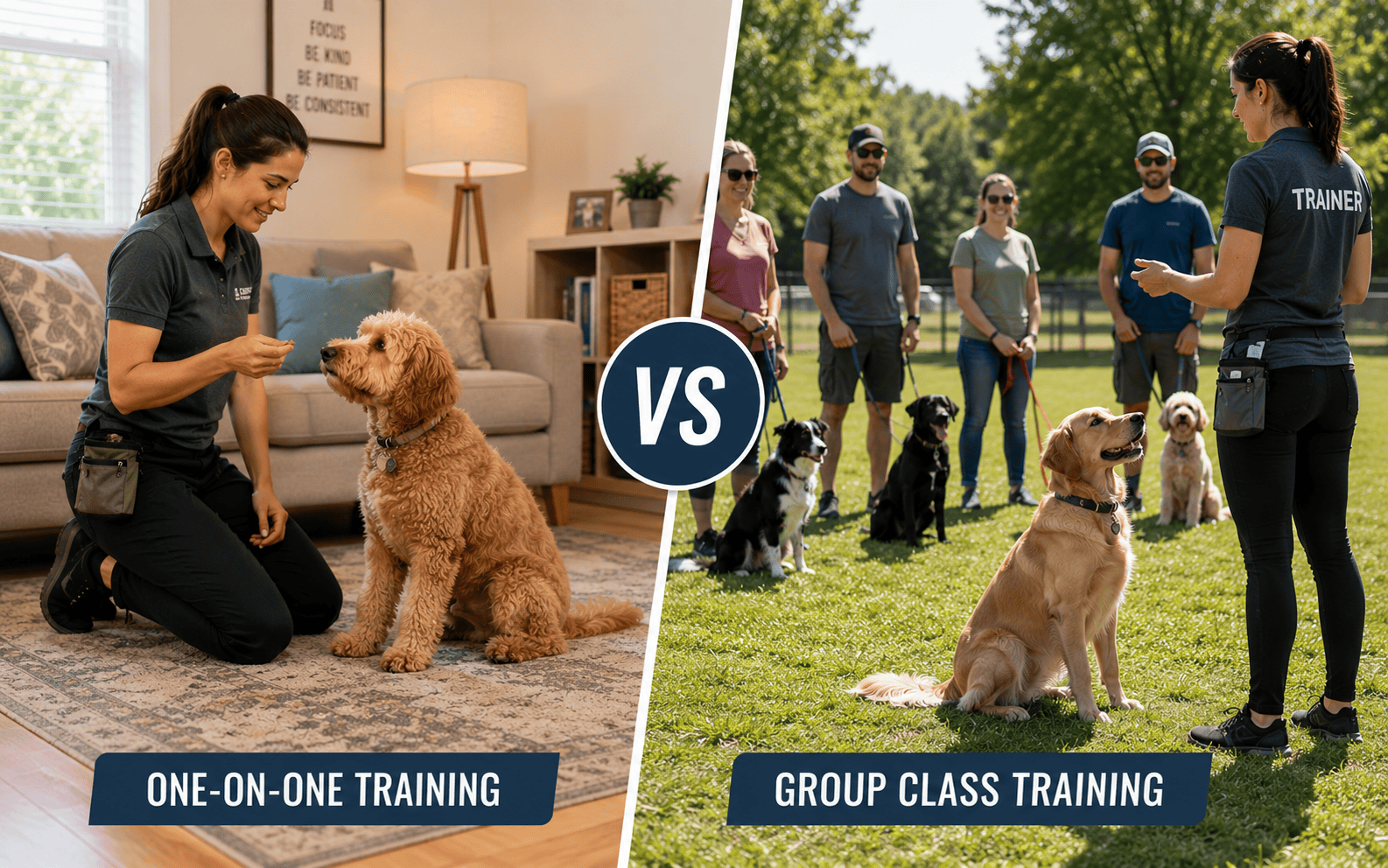
When choosing between in home vs group dog training, the short answer is this: in-home sessions deliver faster, more personalized results for dogs with behavioral issues, while group classes work well for socialization and basic obedience on a budget. The right choice depends on your dog’s temperament, your household environment, and what specific outcomes you’re trying to achieve.
Key Takeaways
- In-home training addresses problem behaviors in the exact environment where they occur, making lessons more immediately applicable.
- Group classes typically cost $100-$300 for a multi-week course, while private in-home sessions range from $75-$250 per session.
- Dogs with anxiety, aggression, or reactivity almost always perform better in one-on-one settings before being introduced to group environments.
- Socialization is a genuine strength of group training, but it’s not the only way to safely expose your dog to other animals and people.
- Your own schedule, consistency, and follow-through matter as much as the training format you choose.
- Some dogs benefit from both formats used in sequence, starting with private sessions and transitioning to group classes.
Why the Training Environment Changes Everything
Most dog owners focus heavily on training techniques and almost forget about environment. That’s a mistake. Dogs do not generalize learned behaviors the way humans do. A dog that sits perfectly on command at a training facility may completely ignore that same command at home, near the front door, or when a squirrel runs across the yard.
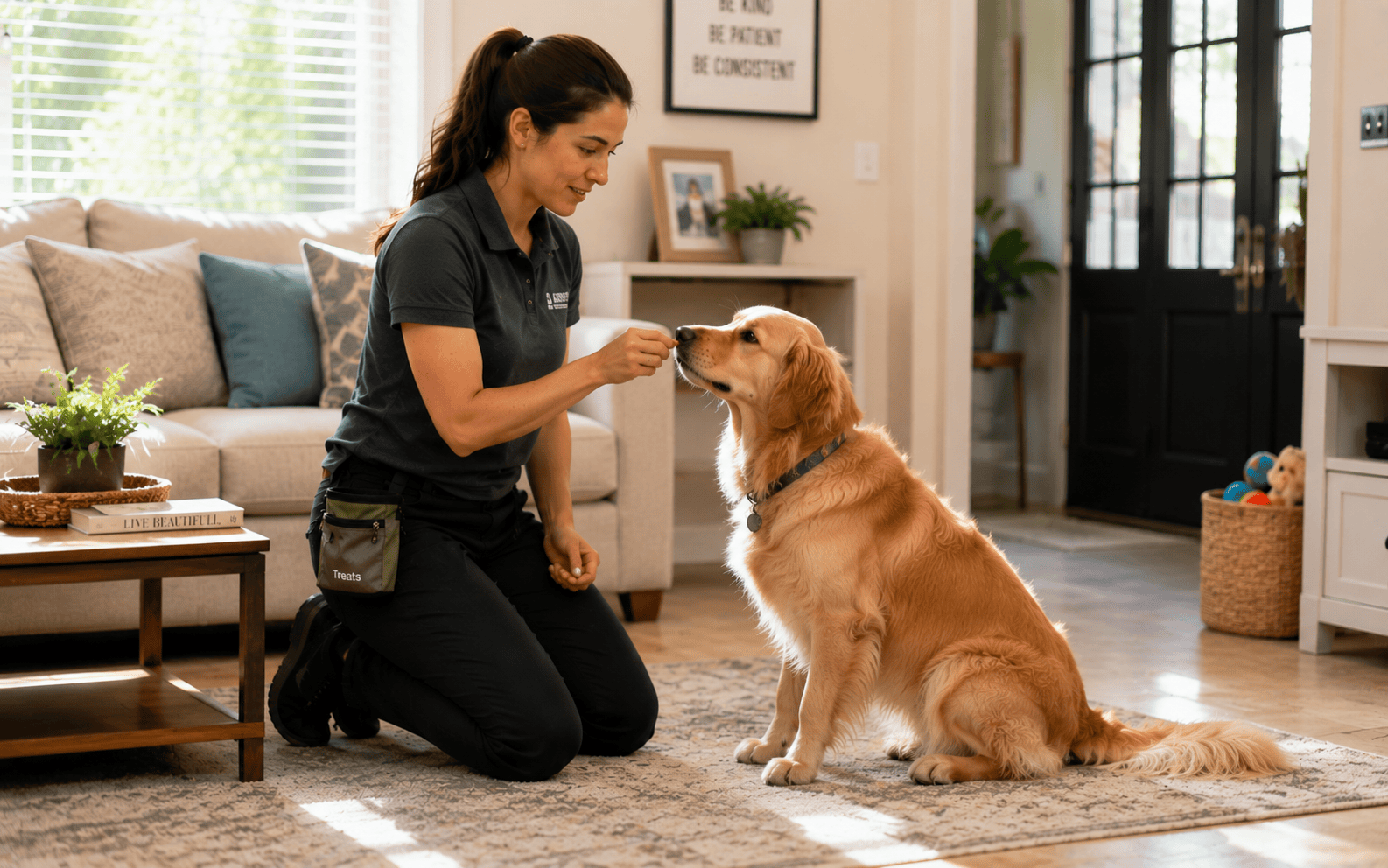
This is called “context dependency,” and it’s one of the strongest arguments for in home dog training long island when your dog is struggling with specific household behaviors. If your dog jumps on guests the moment they walk through your front door, practicing “sit” at a community center 12 miles away doesn’t directly fix that problem. The training needs to happen where the behavior actually occurs.
Group training environments introduce variables like noise, other dogs, unfamiliar smells, and distractions that can overwhelm certain dogs, especially those that are already anxious or reactive. For a calm, confident puppy with no serious behavioral issues, this kind of stimulation can actually accelerate learning. For a dog that lunges at strangers or barks non-stop in new environments, a group class can quickly become a frustrating experience for both dog and owner.
The in home dog training tailored approach to your dog philosophy is built on this exact principle: working in your dog’s real world produces real-world results faster than clinic-based training alone.
Cost Breakdown: What You’re Actually Paying For
Price is a real factor for most families, and it’s worth being specific here rather than vague.
| Training Format | Typical Cost | Session Length | Number of Sessions |
| Group Obedience Class | $100-$300 per course | 1 hour | 6-8 weeks |
| Private In-Home Session | $75-$250 per session | 45-90 minutes | Varies (usually 4-8) |
| Board and Train Program | $1,500-$4,000+ | Full days | 2-4 weeks |
| Online/Virtual Training | $40-$120 per session | 30-60 minutes | Varies |
Group classes look like the obvious budget winner at first glance. But consider what you get per dollar. A group class with 10 dogs means your dog and trainer interact directly for maybe 5-8 minutes of that hour. The trainer is managing a room, answering general questions, and working across multiple skill levels simultaneously.
A private session is 45-90 minutes of focused attention on your specific dog, your specific problem, and your household dynamic. If your dog has a leash-pulling issue, a resource-guarding tendency, or separation anxiety, that one-on-one time is significantly more efficient. You often need fewer total sessions to reach your goals, which changes the value equation considerably.
If you’re based in New York and weighing your options, private dog training long island offers a useful look at what a structured private program actually looks like in practice.
Which Dogs Belong in Which Setting?
This is where honest guidance matters more than marketing. Not every dog is a good fit for every training format, and pushing a dog into the wrong environment can actually reinforce the problem behavior you’re trying to fix.
Dogs That Thrive in Group Classes
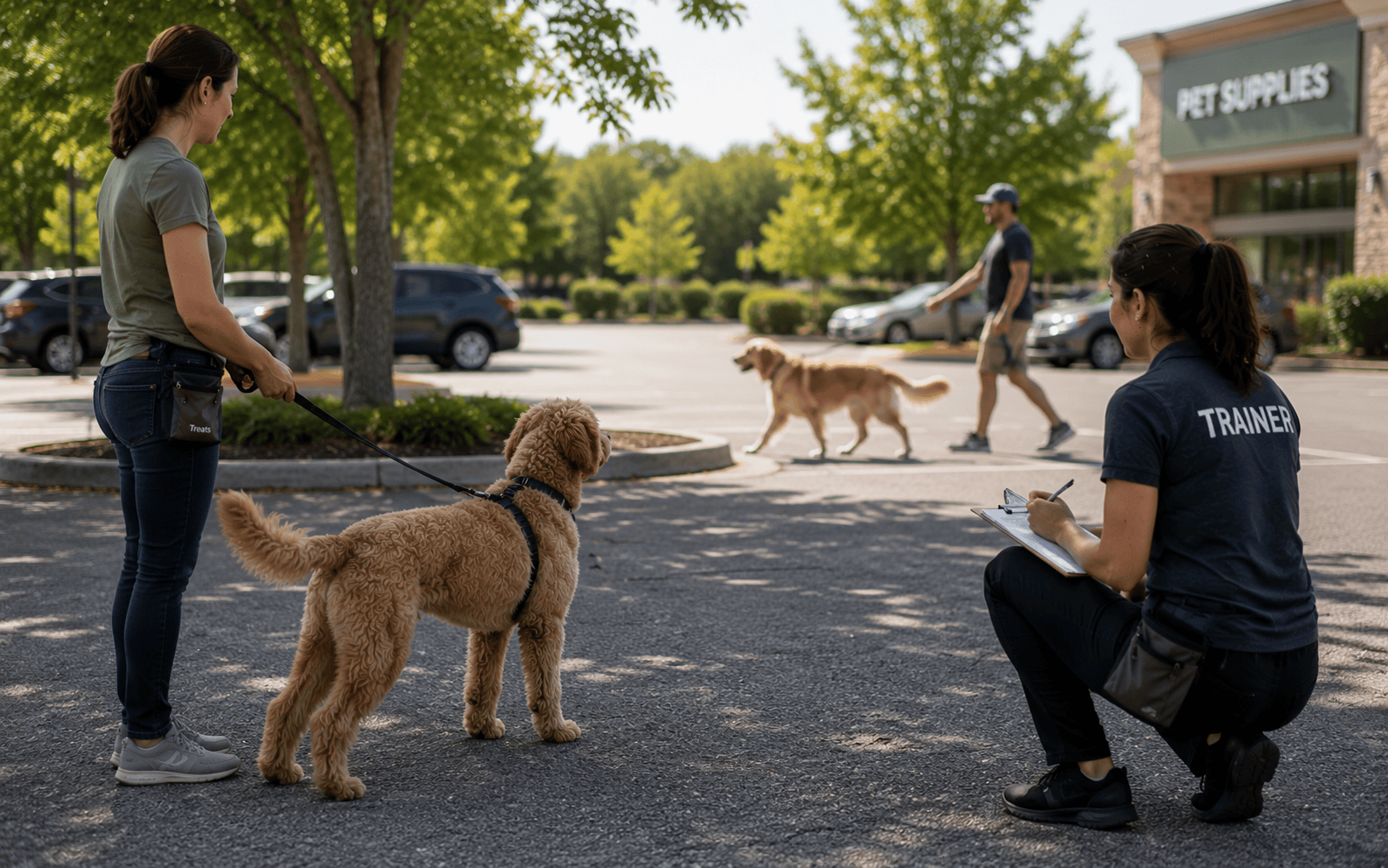
- Puppies between 8-16 weeks old with no established behavioral problems
- Dogs that are naturally social, calm, and curious in new environments
- Dogs whose owners primarily want to build basic obedience skills
- Owners looking to bond with their dog through a shared activity
Dogs That Need Private or In-Home Training First
- Dogs with any form of aggression toward people or other animals
- Dogs with separation anxiety or destructive indoor behavior
- Rescue dogs still adjusting to a new home environment
- Dogs that have already “failed” or been asked to leave a group class
- Dogs with reactivity issues, excessive barking, or leash-pulling that’s become dangerous
For a deep dive into what structured one-on-one training actually covers, obedience dog training breaks down the core commands and behavioral foundations that form the basis of any solid training program.
The debate around in home vs group dog training often ignores one practical reality: many dogs need private training first and group settings later. The two formats aren’t always competitors. They can be a sequence.
What In-Home Training Covers That Group Classes Often Miss
Group classes are structured around a curriculum. Week one is sits and stays. Week three is loose-leash walking. Week six is recall. This standardized approach works for dogs that fit the average profile. Your dog may not fit the average profile.
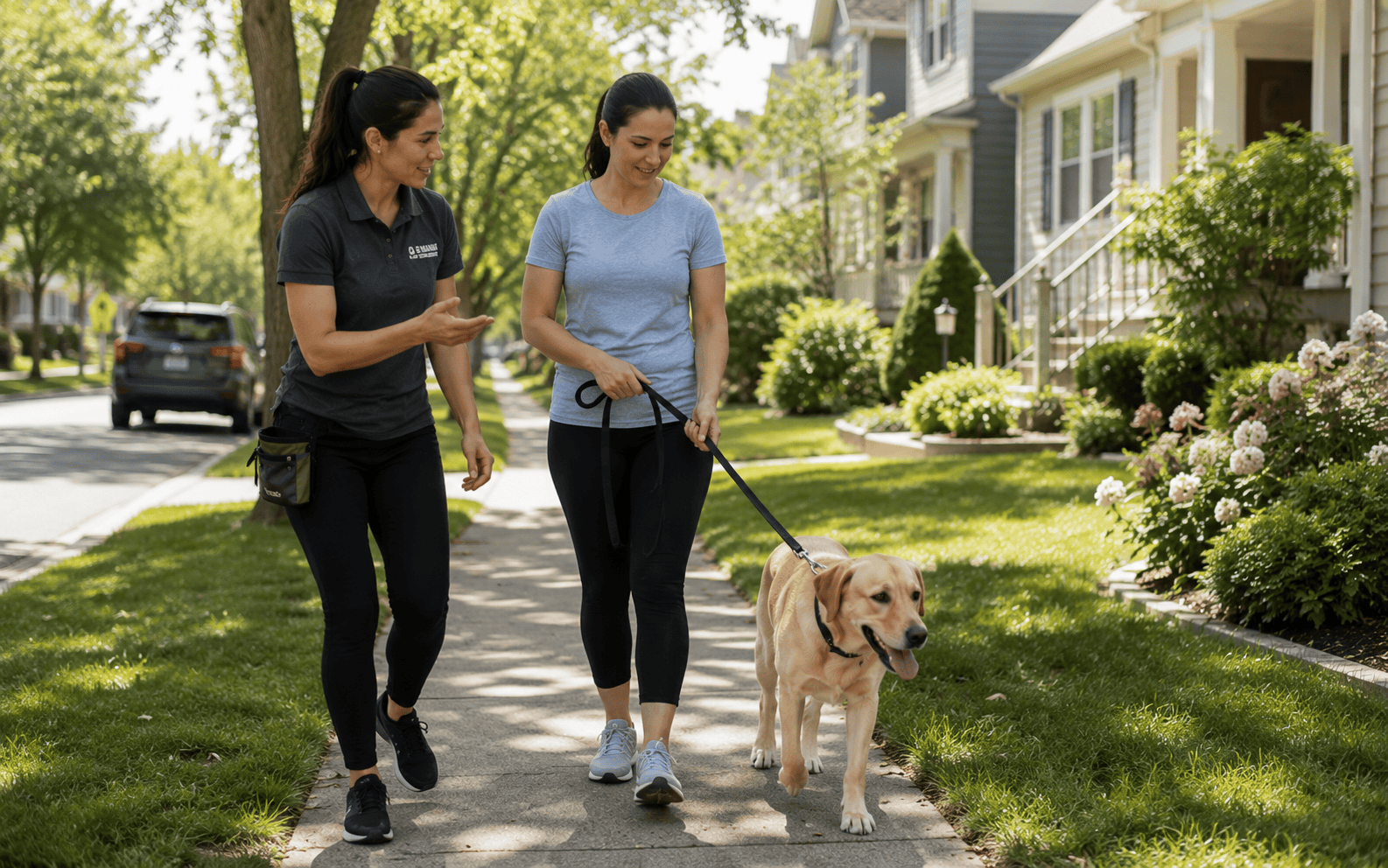
In-home trainers assess your specific household, your daily routines, the layout of your home, and the exact triggers that set your dog off. They watch how you interact with your dog naturally, not how you behave in a clinical setting where you’re on your best behavior. That honest observation is valuable.
Common issues that in-home training addresses more effectively:
- Door-dashing and jumping on guests
- Counter surfing and kitchen boundaries
- Bedroom access rules and furniture management
- Reactivity during walks in your specific neighborhood
- Behavior around children or elderly family members in the home
- Feeding time aggression or food-related resource guarding
If you’re located in the New York area, board and train long island is a practical starting point for understanding what intensive immersive programs offer and how they’re structured.
The Socialization Argument for Group Training
One of the most common reasons owners default to group training is socialization. The logic makes sense: your dog needs to learn to behave around other dogs, so put them in a room full of other dogs.
The reality is more nuanced. Socialization isn’t just exposure. It’s controlled, positive exposure paired with confident leadership from you. Throwing an anxious or reactive dog into a group class doesn’t socialize them. It can actually make their fear or reactivity worse by confirming their suspicion that other dogs are a threat.
True socialization involves gradual, positive introductions in controlled settings. A skilled private trainer can walk you through this process methodically, and many in-home trainers have access to controlled socialization environments or can coordinate structured introductions with other well-behaved dogs.
That said, if your dog is genuinely ready for group interaction, a well-run group class with a low dog-to-trainer ratio (ideally no more than 6:1) is a productive environment. Look for certified trainers, structured formats, and clear communication about how reactive or difficult dogs are handled before you enroll.
Is Private Training Worth the Higher Price Tag?
This is a question worth addressing directly. If your dog has a specific behavioral issue that’s affecting your quality of life or your dog’s safety, private training is almost always worth the investment. The cost of a damaged relationship with your dog, a bite incident, or rehoming a dog that wasn’t given the right support is far greater than the cost of a private training package.
The article is private dog training worth it addresses this question thoroughly, including honest scenarios where group training is actually the better fit.
For more intensive cases, where behavioral issues are deeply established or owners need hands-on immersive support, a structured program can compress months of work into a few weeks by giving your dog consistent, professional training around the clock.
Things to Know
- Group class curriculum is standardized, which means it may move too fast or too slow for your dog’s current skill level.
- In-home trainers often spot owner habits that unintentionally reinforce bad behavior, something that’s hard to observe in a group setting.
- “Reactive” and “aggressive” are not the same thing, but both conditions typically require private training before any group exposure is appropriate.
- The best group classes have a maximum of 6-8 dogs and at least one assistant trainer to support the lead instructor.
- Trainer certification varies widely in the U.S. Look for credentials from the Certification Council for Professional Dog Trainers (CCPDT) or the International Association of Animal Behavior Consultants (IAABC).
- In-home sessions require you to be an active participant when considering how to choose the right dog training program for your dog, so showing up distracted or inconsistent will slow progress regardless of the trainer’s skill level.
Ready to Choose the Right Training Path for Your Dog?
The single most useful next step you can take right now is to write down the top three behavioral issues you want your dog to overcome. Be specific: not “bad behavior” but “jumps on my kids when they come home from school” or “pulls so hard on the leash I can’t walk him safely.”
Once you have that list, it becomes much easier to evaluate whether a group curriculum that covers general obedience will actually fix those specific problems, or whether a private trainer working inside your home is the more direct path. From there, contact two or three local trainers, ask about their approach to your specific issues, and ask how they handle dogs that are struggling in sessions. Their answers will tell you a lot about whether they’re the right fit for your dog.
Are Papillon Dogs Easy to Train
Board and Train for Fearful Dogs: What to Expect
Frequently Asked Questions
How do I know if my dog is ready for a group class?
Your dog is likely ready for group class if they can focus on you in moderately distracting environments and show no signs of aggression or severe reactivity toward other dogs or strangers.
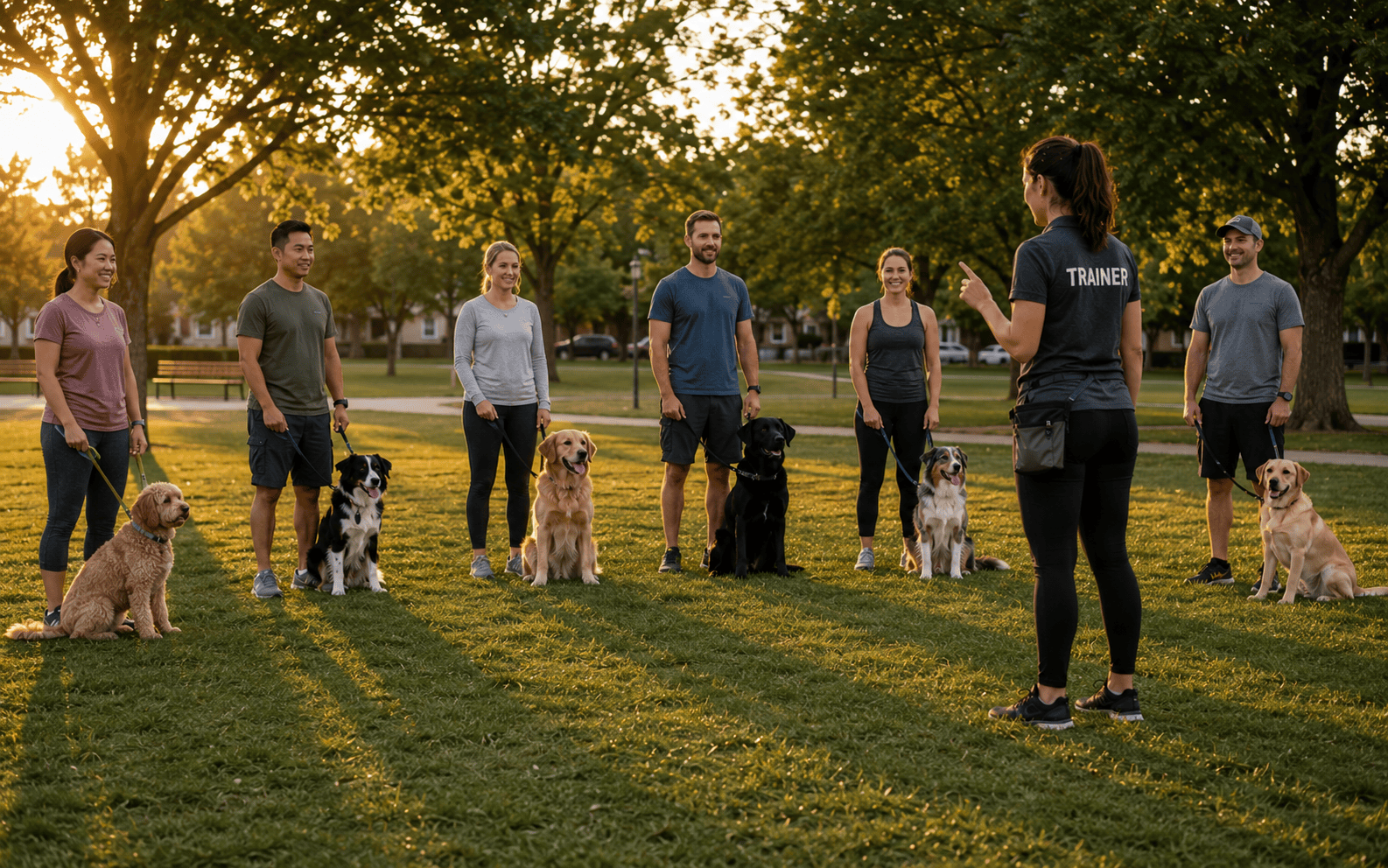
A good test is to take your dog to a public area like a pet store or park and observe how they respond to other dogs passing at a distance of 20 feet or more. If they can maintain attention on you with mild encouragement, a beginner group class is a reasonable next step. If they lunge, bark uncontrollably, or shut down completely, private training first is the more responsible choice.
Can I do both in-home and group training at the same time?
Yes, and for many dogs this combination produces the best long-term results.
In-home training builds the foundational skills and addresses specific household behaviors, while group classes reinforce those skills in a more stimulating, social environment. Just make sure both trainers are aware of each other’s methods so they’re not using conflicting approaches, which can confuse your dog and slow progress.
How many sessions does in-home training typically require?
Most dogs with moderate behavioral issues show meaningful progress within 4-8 private sessions, though complex cases may require more.
The number of sessions depends heavily on the severity of the behavior, how consistently you practice between sessions, and whether any household routines are inadvertently reinforcing the problem. Your trainer should be able to give you a realistic estimate after the first session.
Are group classes appropriate for adult rescue dogs?
Group classes can work for adult rescue dogs that have been assessed and show no signs of anxiety, reactivity, or fear-based responses in public.
Many rescue dogs, however, are still building trust with their new owners and adjusting to a new environment. A private trainer can assess where the dog actually is behaviorally and recommend the right timing for group exposure rather than dropping the dog into a stimulating class setting too early.
What should I ask a trainer before booking a session?
Ask about their certification, their training philosophy, how they handle dogs that are struggling during sessions, and whether they have experience with your dog’s specific breed or behavioral issue.
You should also ask for references or reviews from previous clients and confirm whether they carry liability insurance. A professional trainer will answer these questions comfortably and without hesitation. Be cautious of anyone who guarantees specific results within a fixed number of sessions without ever meeting your dog.
The Bottom Line on In Home vs Group Dog Training
The debate over in-home vs group dog training ultimately comes down to your dog’s specific needs, not general popularity or price. Group classes are a solid, cost-effective option for puppies and sociable dogs pursuing basic obedience. In-home training is the stronger choice for dogs with established behavioral issues, anxious personalities, or problems that are tied to specific household environments.
Neither format is universally superior. The right question isn’t which is better overall; it’s which is better for your dog, right now, given what you’re dealing with. Take that specific list of behaviors you want to change, talk to a qualified trainer, and make a decision based on real information rather than assumptions. Your dog’s progress will reflect the quality of that choice.