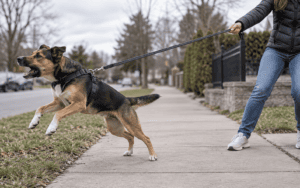
Leash aggression in dogs is barking, lunging, growling, or snapping that happens when a dog is restrained on a leash and cannot reach or move away from a trigger. Most cases are driven by frustration or fear rather than a true desire to fight, which means the behavior can be reduced, and often resolved, with structured training.
If your sweet, friendly dog turns into a barking, lunging handful the moment the leash clips on, you are not alone, and your dog is not broken.
At K9 Mania Dog Training, we work with leash reactive dogs across Long Island every week, and we see the same pattern over and over. The dog is calm at home, plays well at daycare, then explodes the second another dog appears on a walk. Owners feel embarrassed, start walking at 5 a.m., and slowly stop walking the dog at all, which only makes things worse.
This article explains why the behavior happens, what it looks like, how to train through it, and which training option fits your situation best.
Things to Know 💡
- What it is: An over-the-top reaction (barking, lunging, growling) toward dogs, people, or moving objects that happens, or gets much worse, on leash.
- Why it happens: The leash removes your dog’s ability to approach or retreat naturally. Frustration and fear build with nowhere to go, so they come out as an explosion.
- It is common: Studies suggest roughly half of pet dogs show some reactive display on leash at some point. You are not dealing with a rare problem.
- Punishment backfires: Leash corrections and yelling teach the dog that other dogs predict pain, which makes the reaction stronger over time.
- It is fixable: With distance management, counterconditioning, and consistent structure, most leash reactive dogs improve dramatically. Many become genuinely pleasant to walk.
What Is Leash Aggression, Exactly?
A leash changes everything about how a dog communicates. Off leash, dogs approach each other in curves, sniff, circle, and move away when uncomfortable. The leash takes away every one of those options.
When a dog cannot get to something exciting, or cannot get away from something scary, the nervous system has one outlet left: an outburst. That is why so many dogs who play beautifully at the dog park behave like a different animal on the sidewalk.
This restraint-driven frustration works the same way as fence fighting and window barking. If your dog also loses it behind a gate or at the front window, read our guide on barrier aggression in dogs, because the two problems share the same root and respond to the same training principles.
Leash Reactivity vs. True Aggression
Most “aggressive” walkers are reactive, not dangerous. Knowing the difference matters because it tells you how urgent the problem is and which training path to take.
| Factor | Leash Reactivity | True Aggression |
| Main emotion | Frustration or fear | Intent to make contact and do harm |
| Off-leash behavior | Often friendly or neutral with dogs | Hostile on or off leash |
| Body language | Loud, dramatic, lots of noise and motion | Quiet, stiff, hard stare, direct charge |
| Bite history | Rare, usually none | Often has bitten or attempted to bite |
| Prognosis | Excellent with training | Manageable with professional behavior work |
If your dog has bitten, or you genuinely cannot read what they would do with access to the trigger, skip the DIY phase and bring in a professional from day one.
Why Do Dogs Develop Leash Aggression?
Understanding the cause shapes the fix, because a frustrated dog and a fearful dog need slightly different handling.
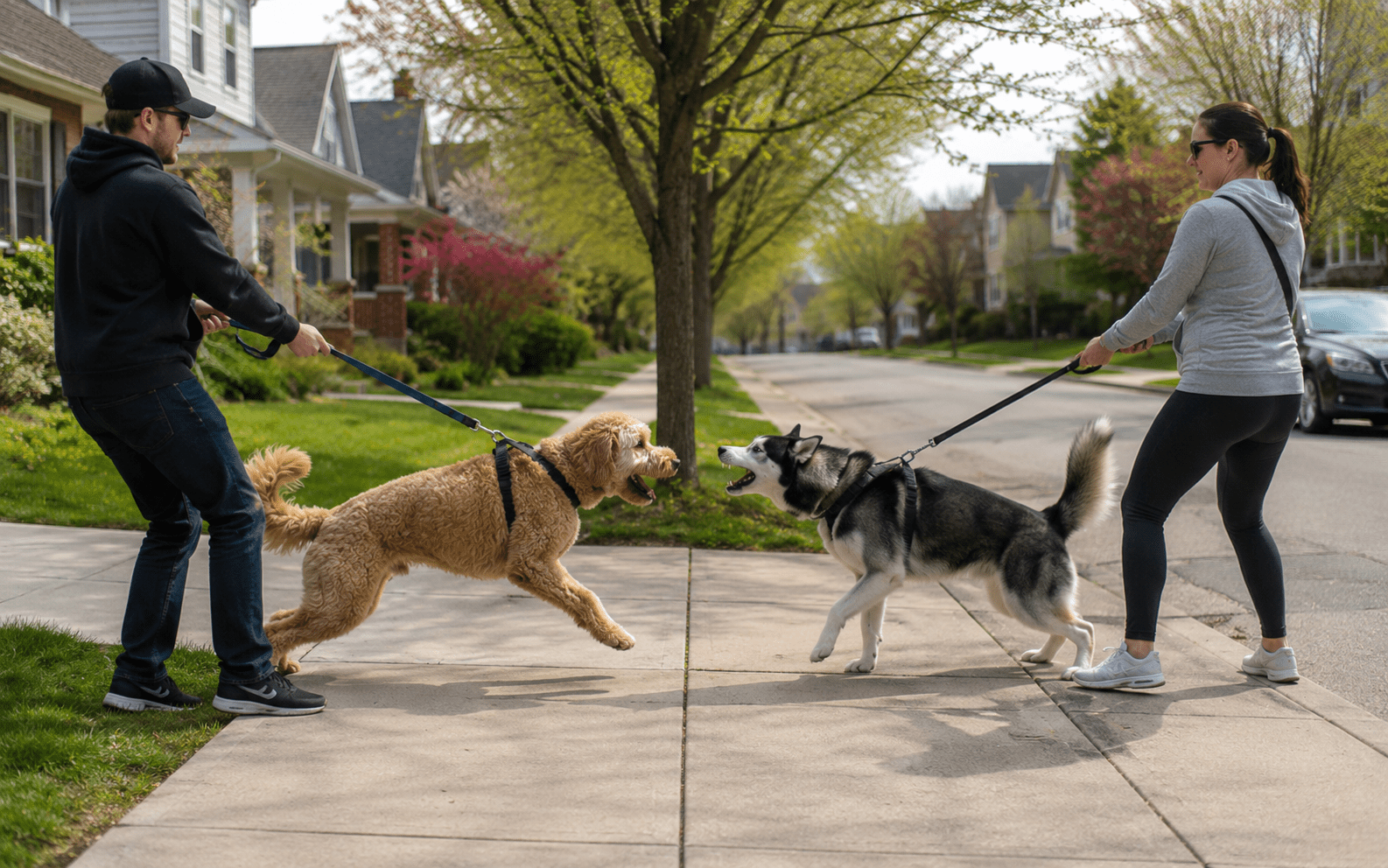
Frustrated greeters. These dogs love other dogs. They were often allowed to greet every dog as puppies, so the leash now blocks something they expect. Blocked expectation turns into barking and lunging, the canine version of a tantrum.
Fear-based reactors. These dogs want distance. A scary experience, such as being rushed by an off-leash dog, or thin socialization during puppyhood, taught them that other dogs are a threat. The lunge is a bluff designed to make the threat leave. If your dog also shows fearful body language at home, our article on fear aggression in dogs breaks down this emotional driver in detail.
Learned behavior. Here is the part most owners miss. Every time your dog barks and lunges, the other dog eventually walks away. From your dog’s point of view, the explosion worked. The behavior gets reinforced on every walk, which is why it worsens over months instead of fading.
Handler tension. Dogs read leash pressure like a telegraph wire. When you spot another dog and tighten the leash, hold your breath, and choke up on the handle, your dog feels it and concludes that something bad is coming. Your tension confirms their suspicion.
What Does a Leash Aggressive Dog Look Like?
The blow-up is easy to spot. The warning signs that come ten seconds earlier are the part that matters, because that is your training window.
Early warning signs:
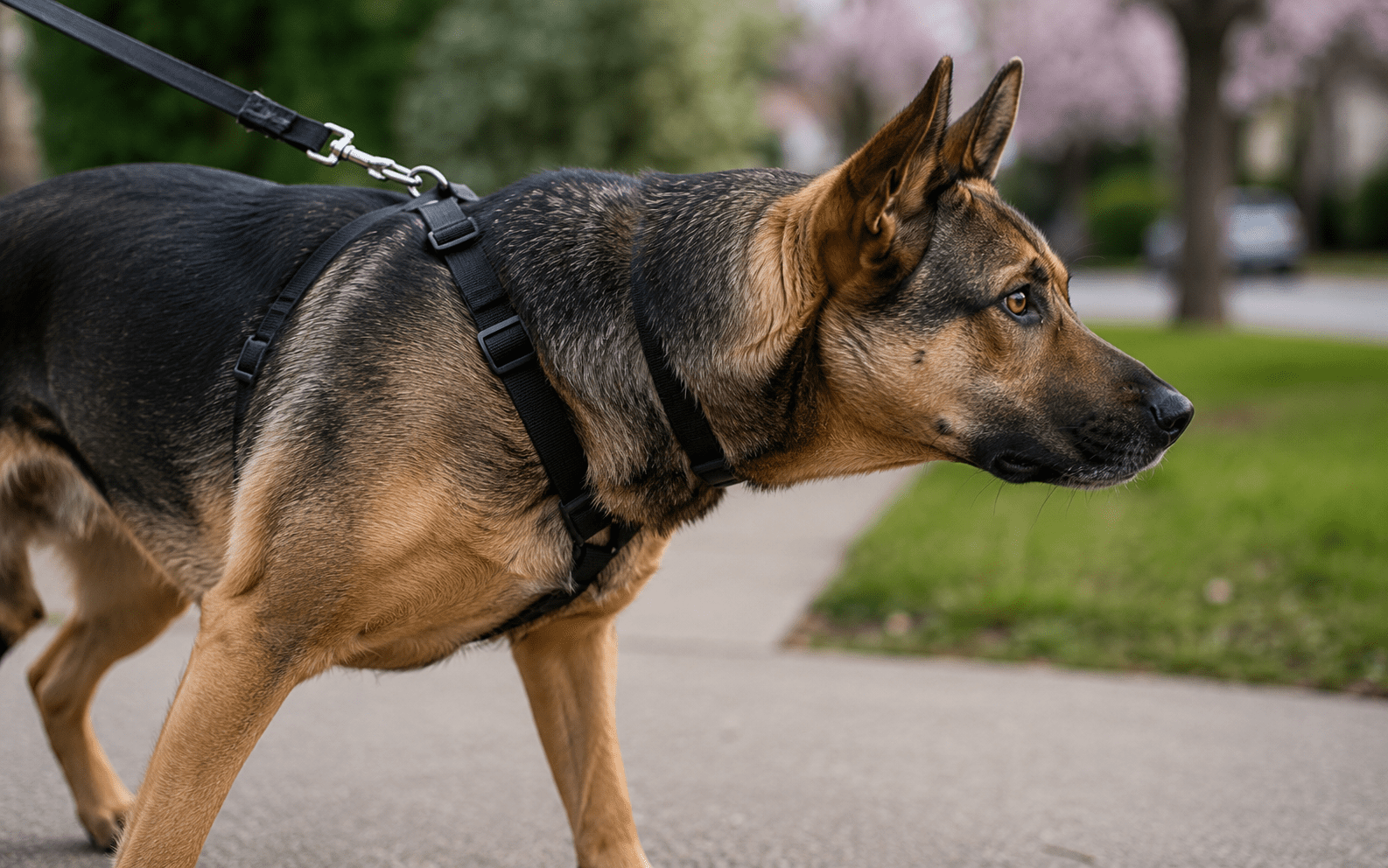
- Body stiffens and forward weight shifts onto the front legs
- Hard, locked stare at the trigger
- Ears pinned forward or flattened back
- Mouth closes after relaxed panting stops
- Tail goes high and stiff, or tucks tightly
Full escalation:
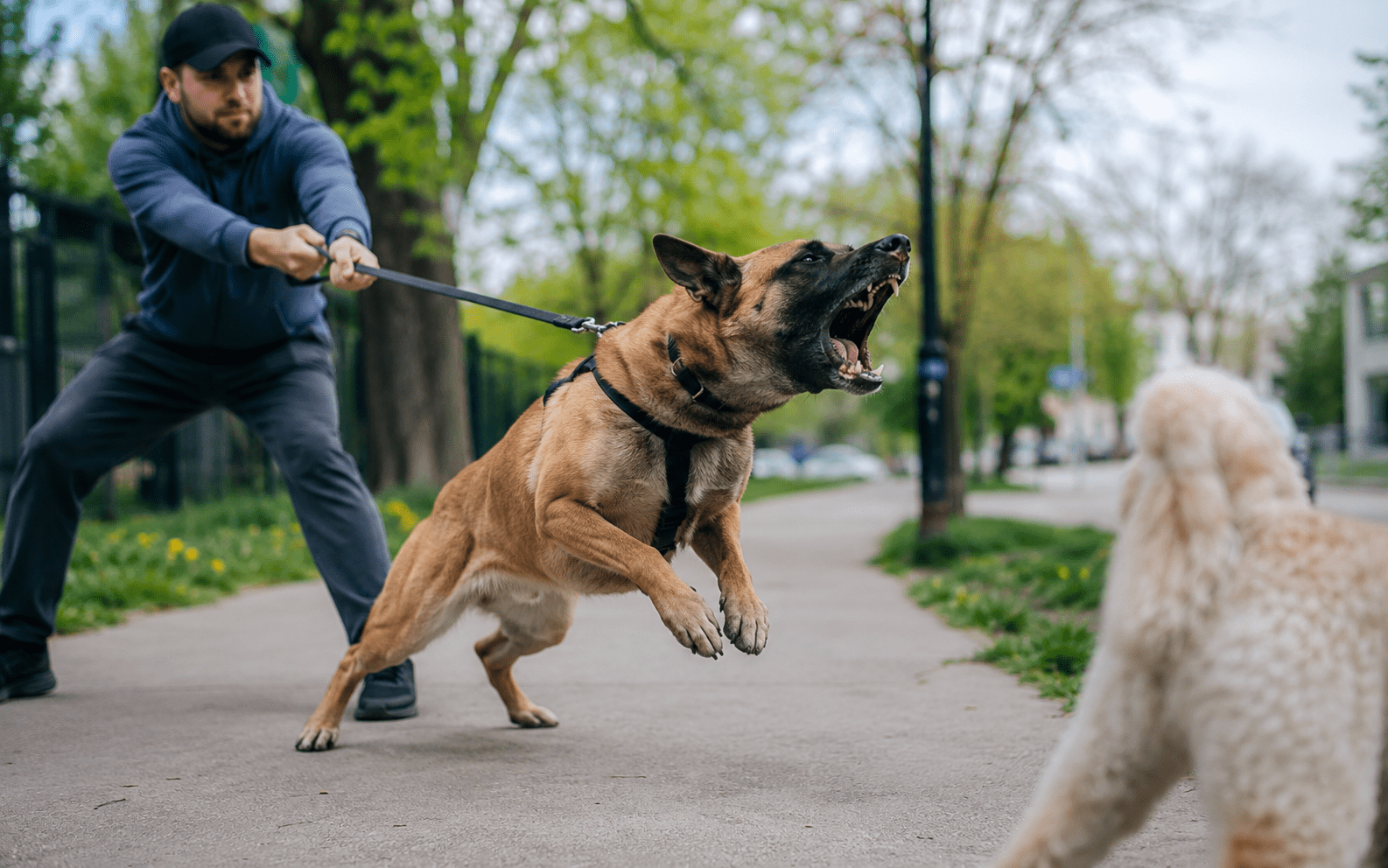
- Whining that builds into explosive barking
- Lunging and hitting the end of the leash
- Growling, snarling, or snapping at the air
- Spinning or redirecting onto the leash, or even onto your leg
Every dog has a threshold, the distance at which they notice a trigger but can still think, eat, and respond to you. Inside that distance, the thinking brain goes offline. All effective training happens outside the threshold first, then gradually moves closer.
How to Stop Leash Aggression: Step by Step
Leash aggression in dogs is one of the most common complaints professional trainers hear, and the fix follows a reliable sequence. Skipping steps is the number one reason home training fails.
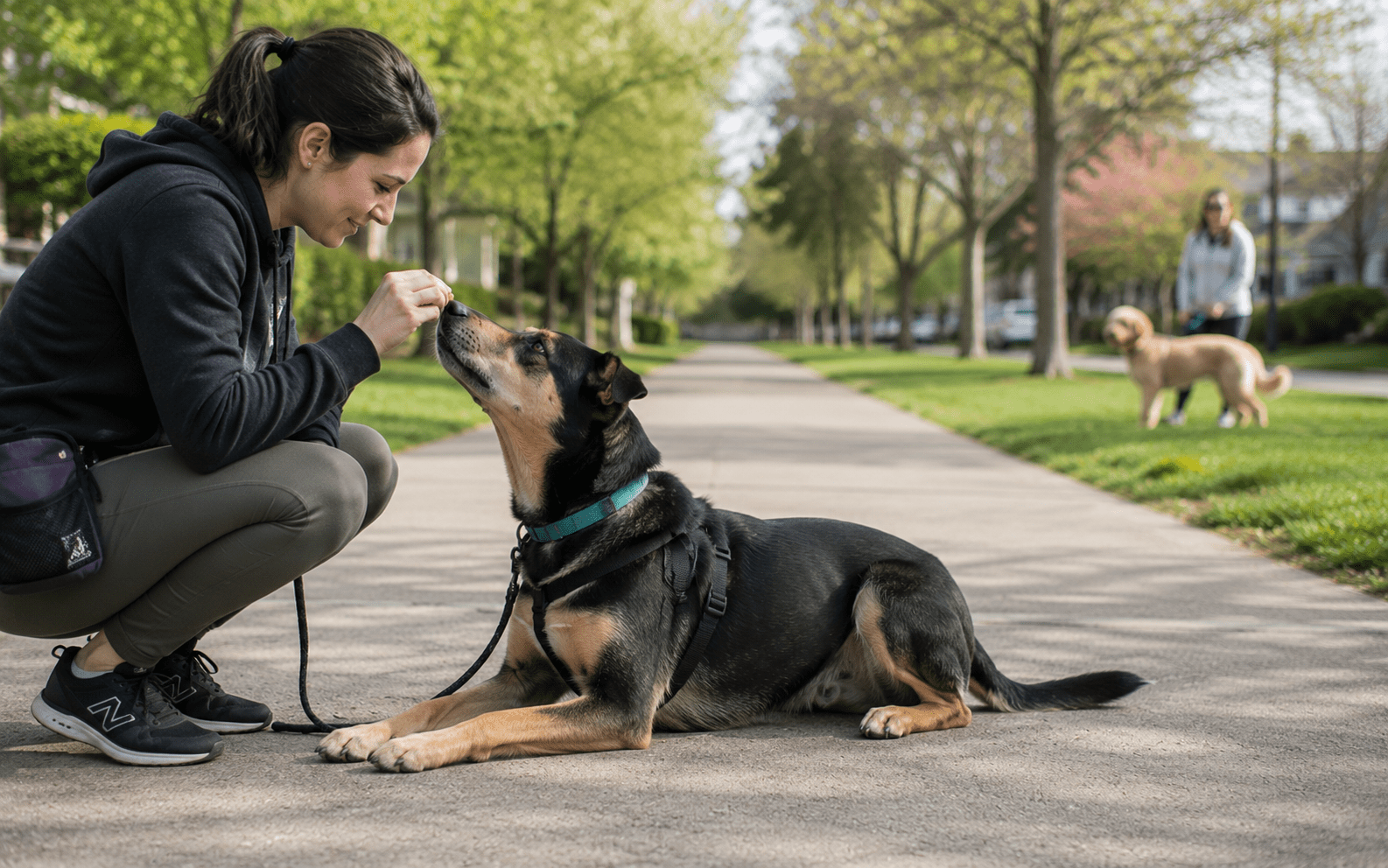
Step 1: Map Your Dog’s Triggers and Threshold
Spend three or four walks just observing. Write down what sets your dog off (dogs, joggers, bikes, men in hats) and how far away the trigger was when your dog locked on. That distance is your starting line.
Step 2: Manage First, Train Second
For the next few weeks, prevent rehearsal of the explosion. Cross the street early, use parked cars as visual blocks, and walk at quieter times. Every blow-up you prevent speeds up the training. Every blow-up you allow strengthens the habit.
Step 3: Change the Emotional Response
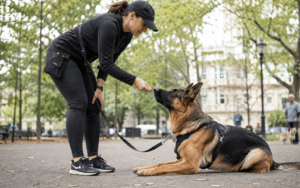
This is the engine of the whole program. At a distance where your dog can stay calm, the moment they notice a trigger, mark it with a cheerful “yes” and feed a high-value treat. Repeat dozens of times across many sessions.
You are rewiring the equation in your dog’s head. A trigger used to predict frustration or fear. Now it predicts chicken. Done consistently, dogs start spotting a trigger and whipping their head back to you for the payout. That head turn is the foundation for everything else.
Step 4: Teach an Escape Hatch
Train a smooth U-turn and a “watch me” cue at home with zero distractions, then in the yard, then on quiet walks. When a surprise trigger pops up at close range, you need a practiced pattern to fall back on.
Step 5: Close the Distance Gradually
Over weeks, shrink the gap between your dog and triggers in small slices. If your dog explodes, you moved too fast. Return to the last distance where they succeeded and stay there longer. Progress is measured in calm exposures, not days on the calendar.
For a deeper session-by-session breakdown of this process, our guide on how to train a reactive dog on leash walks through the exact drills we use with client dogs.
Mistakes that make it worse:
- Yanking or “correcting” the lunge, which pairs pain with the trigger
- Forcing close-range greetings to “socialize” the dog (this is flooding, and it backfires)
- Using a retractable leash, which removes all your control and timing
- Practicing only when triggers surprise you, instead of setting up controlled reps
Which Tools Help, and Which Make It Worse?
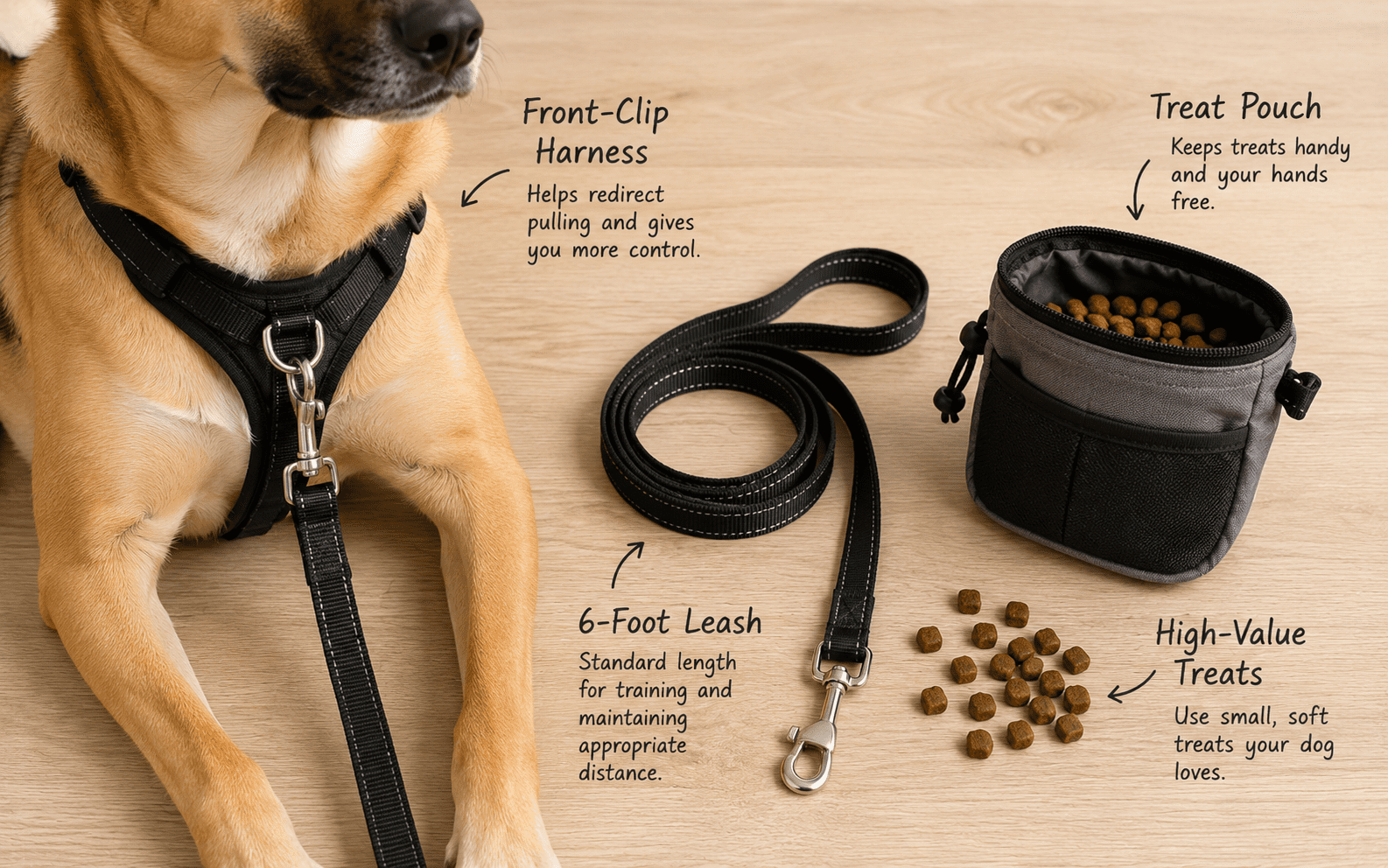
Equipment will not fix the behavior, but the right setup makes training easier and safer.
| Tool | Verdict | Why |
| Front-clip harness | Recommended | Redirects lunging power sideways without pain |
| Standard 6-foot leash | Recommended | Predictable length, good communication |
| High-value treats (chicken, cheese) | Essential | Kibble cannot compete with a trigger |
| Treat pouch | Recommended | Your timing must be instant |
| Retractable leash | Avoid | No control, constant tension teaches pulling |
| Prong or e-collar used as punishment | Avoid for reactivity | Adds pain to the trigger picture and intensifies the emotion |
Which Training Option Is Best for a Leash Reactive Dog?
Honest answer: it depends on severity, your schedule, and how long the habit has been rehearsed. Here is how we guide Long Island owners.
Mild to moderate cases: private lessons. If your dog reacts but recovers quickly and has no bite history, coaching you is the highest-value move, because your timing and leash handling are half the battle. Our private dog training Long Island program pairs you with a trainer who sets up controlled trigger scenarios you cannot stage on your own.
Reactivity that starts at home: in-home training. Some dogs are wound up before the walk even begins, exploding at the window, the doorbell, and the leash itself. In that case the training has to start inside the house. Our in home dog training Long Island option fixes the foundation where the behavior actually lives.
Severe or long-standing cases: board and train. When a dog has practiced exploding for years, has a bite history, or the owner is physically unable to hold the dog safely, immersion works fastest. Our board and train Long Island program gives the dog weeks of daily, professionally handled exposure work, then transfers the skills to you before the dog comes home.
For most families, the best option is the one that gets professional eyes on the dog early. Reactivity that is addressed in month two resolves far faster than reactivity addressed in year three.
You May Also Want to Read
What Is Compulsive Behavior in Dogs
Frequently Asked Questions
How do I stop my dog from being aggressive on leash?
Stop putting your dog in situations where they explode, then retrain the emotion underneath. Keep enough distance from triggers that your dog stays calm, mark and reward the moment they notice a trigger, and shrink the distance gradually over weeks. Avoid leash corrections, which add pain to the picture and intensify the reaction. If the behavior is severe or includes snapping, work with a professional trainer.
How common is leash reactivity?
Very common. Surveys of pet dog owners consistently find that between a third and a half of dogs display barking, lunging, or growling on leash at some point, making it one of the top reasons owners contact trainers. Frustration and fear on a restraint are normal canine responses, which is exactly why so many otherwise friendly dogs struggle with it.
How to train out leash reactivity?
The proven sequence is distance, counterconditioning, and gradual exposure. Start outside your dog’s threshold, pair every trigger sighting with high-value food, teach an alternative behavior like a U-turn, and only close distance when your dog stays relaxed. Most dogs show visible improvement within a few weeks of consistent work, with full reliability building over several months.
What is the #1 most aggressive dog breed?
There is no single most aggressive breed, and research backs that up. Studies measuring owner-reported aggression often rank small breeds like Chihuahuas and Dachshunds highest, while breed accounts for only a small fraction of behavior differences between individual dogs. Socialization, training history, and the situation matter far more. Any dog of any breed can develop leash reactivity, and any dog can be trained through it.
What does leash aggression look like?
It starts subtle: a stiff body, a hard stare, a closed mouth, and forward-shifted weight. Within seconds it escalates to whining, explosive barking, lunging against the leash, growling, and sometimes snapping or spinning. Some dogs redirect onto the leash or the handler’s leg. Off leash, many of these dogs are friendly, which is the clearest clue that the restraint itself drives the behavior.
Can a leash reactive dog be cured?
Most leash reactive dogs improve dramatically, and many improve to the point that walks look completely normal. Frustrated greeters often resolve fully. Fear-based dogs usually keep some sensitivity for life, but with training they learn to notice a trigger and check in with their owner instead of exploding. Ongoing maintenance, not a one-time fix, keeps the results solid.
The Bottom Line on Reactive Walks
Leash aggression in dogs looks scary, but it is one of the most fixable behavior problems we see. Find the threshold, change the emotional response, and stay consistent, and the dog who once dragged you across the street can learn to glance at a trigger and look back at you instead.
If you want that transformation handled by experts, trust K9 Mania Dog Training. We are the leading board and train Long Island, backed by the best animal behaviorist for dogs in the region, and we have helped thousands of families turn chaotic walks into calm ones. Whatever behavior issue your dog is facing, from reactivity to fear to obedience, our team can help you fix it. Visit k9maniadogtraining.com today, and let us show you what your dog is truly capable of.