Crate training a dog with separation anxiety is completely possible when you use the right approach and patience. The key is creating positive associations with the crate while gradually increasing alone time, so your dog learns the crate is a safe space rather than a punishment.
If your dog panics, barks, or shows distress when left alone in a crate, you’re dealing with a common but challenging situation. Many dog owners struggle with this exact problem, wondering if they’re doing more harm than good.
The truth is, when done correctly, crate training can actually help reduce separation anxiety by giving your dog a secure den-like space. But rushing the process or using the crate as punishment will make things worse.
In this guide, you’ll learn proven techniques to help your anxious dog accept and even love their crate. We’ll cover why separation anxiety happens, how to create positive crate experiences, and what to do when your dog struggles.
Start your dog’s training journey right with our in-home dog training program designed specifically for anxious dogs.
Understanding Separation Anxiety in Dogs
Separation anxiety is more than just a dog that misses you. It’s a genuine panic disorder that causes extreme distress when your dog is separated from you or left alone.
Dogs with separation anxiety don’t misbehave on purpose. They’re experiencing real fear and panic that they can’t control. Understanding this helps you approach crate training with the right mindset.
Signs Your Dog Has Separation Anxiety
Not every dog that whines in a crate has separation anxiety. Here’s how to spot the real signs:
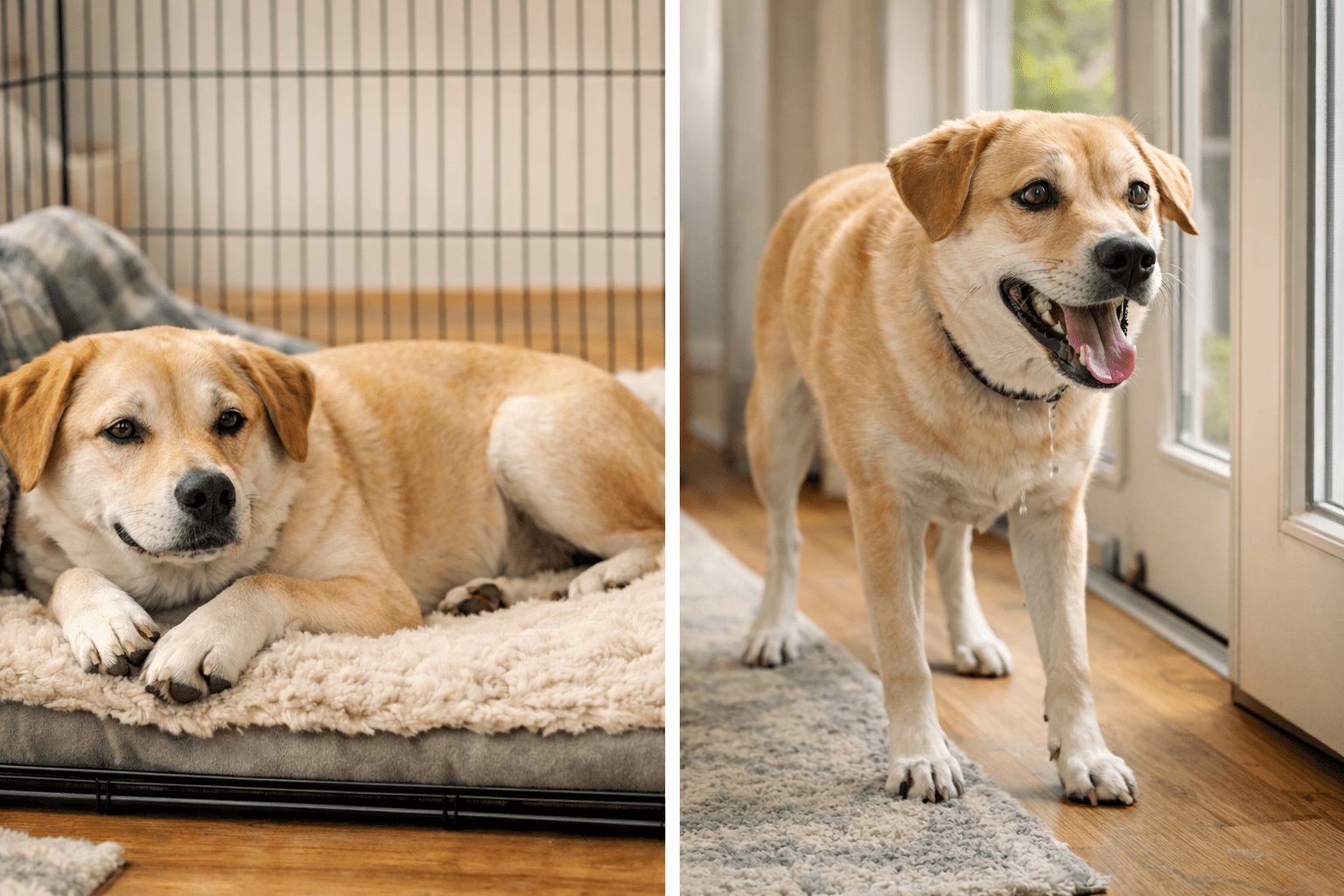
- Excessive drooling, panting, or trembling when you prepare to leave
- Destructive behavior that only happens when you’re gone
- Attempts to escape the crate or room, sometimes causing injury
- Urinating or defecating in the crate despite being house trained
- Non-stop barking or howling that starts immediately when you leave
- Refusing to eat treats or food when alone
These behaviors go beyond normal puppy adjustment or mild protest. Dogs with true separation anxiety escalate quickly and don’t calm down on their own.
Why Crates Can Help (When Used Correctly)
A crate can actually reduce anxiety for many dogs by providing a safe, den-like space. Dogs are naturally den animals who seek small, enclosed areas when stressed.
The crate limits your dog’s environment, which can feel more manageable than an entire house. It also prevents destructive behaviors that might make your dog’s anxiety worse.
However, the crate only helps if your dog sees it as a positive space. Forcing an anxious dog into a crate too quickly can make separation anxiety much worse. The goal is to build a positive association first, then gradually increase alone time.
For dogs with severe anxiety, professional guidance can make the difference between success and failure.
Preparing for Crate Training Success
Before you start any crate training, you need the right setup and realistic expectations. Preparation makes the entire process smoother and less stressful for both you and your dog.
Choosing the Right Crate Setup
The crate itself matters more than you might think. Here’s what to consider:
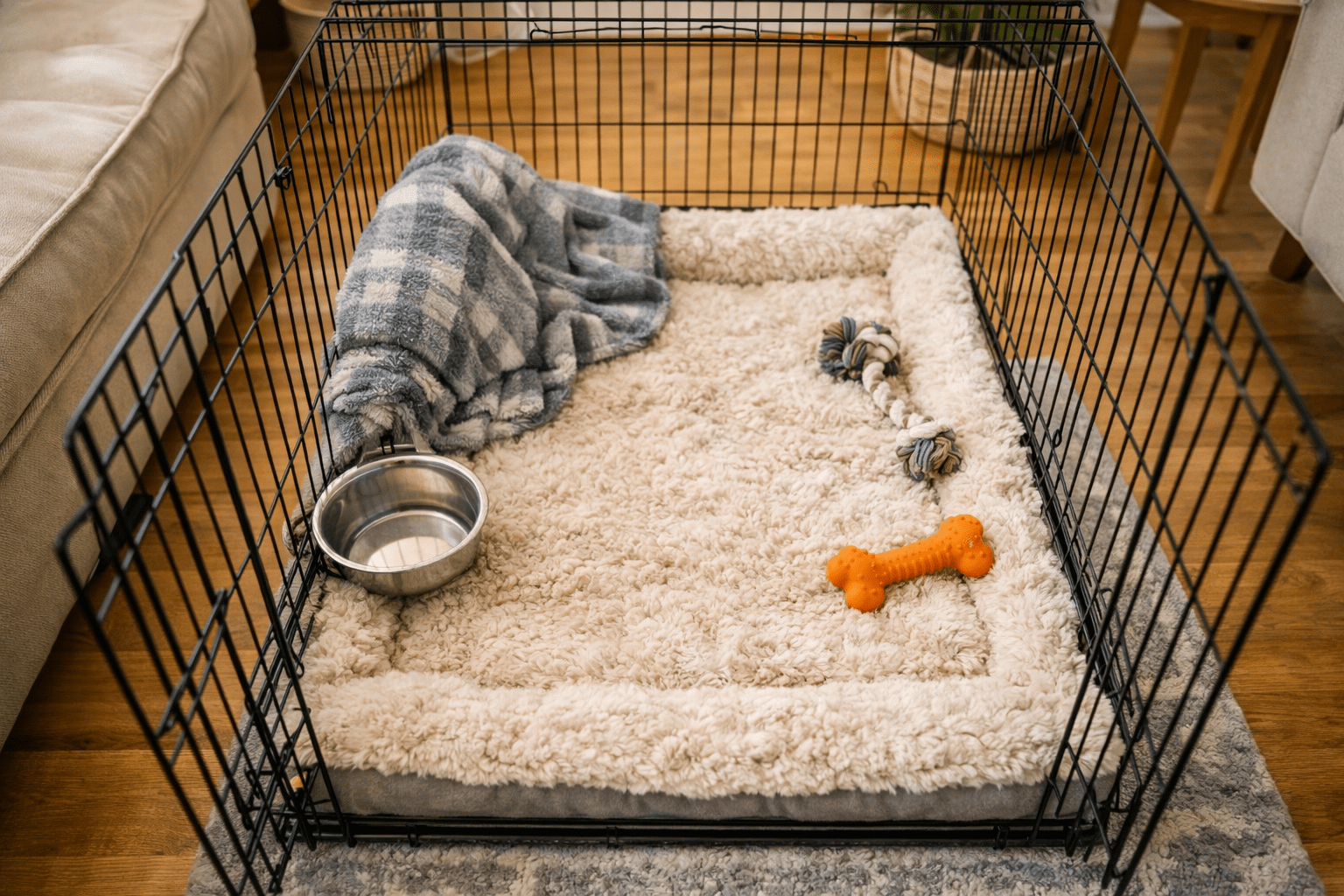
Size matters: Your dog should be able to stand up, turn around, and lie down comfortably. Too large, and they might use one end as a bathroom. Too small creates additional stress.
Location is key: Place the crate in a quiet area where your dog can still see or hear family activity. Isolating an anxious dog in a basement or garage will make things worse.
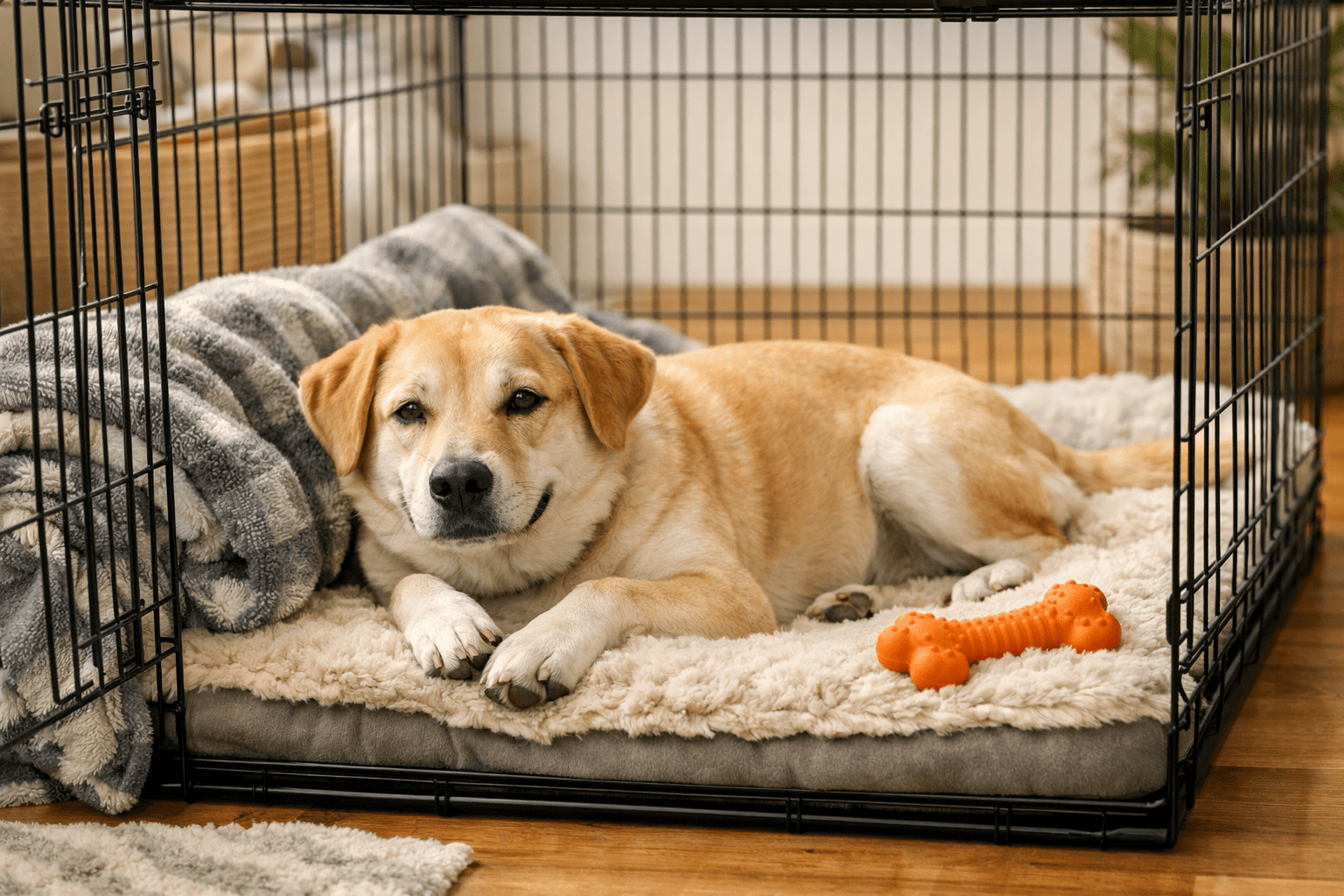
Make it comfortable: Add a soft bed, a blanket with your scent, and safe chew toys. Some dogs also benefit from a cover over the crate to create a cave-like atmosphere.
Never use the crate for punishment: This creates negative associations that undo all your training efforts.
Creating a Training Schedule
Consistency helps anxious dogs feel more secure. Create a realistic schedule you can stick to every day:
- Feed meals inside the crate to build positive associations
- Practice short crate sessions at the same times daily
- Plan longer sessions when you’re home to supervise
- Keep weekend schedules similar to weekdays
Most dogs need 4-8 weeks of gradual training before they’re comfortable being crated alone for extended periods. Dogs with separation anxiety often need longer.
If you’re struggling to maintain consistency or your dog isn’t progressing, consider enrolling in a structured program like our board and train Long Island service where professionals handle the daily training.
Step-by-Step Crate Training Process
The key to success is moving slowly through each stage. Rushing causes setbacks that take weeks to fix. Your dog sets the pace, not your schedule.
Stage 1: Introduction Without Pressure
Start by making the crate the best place in your house:
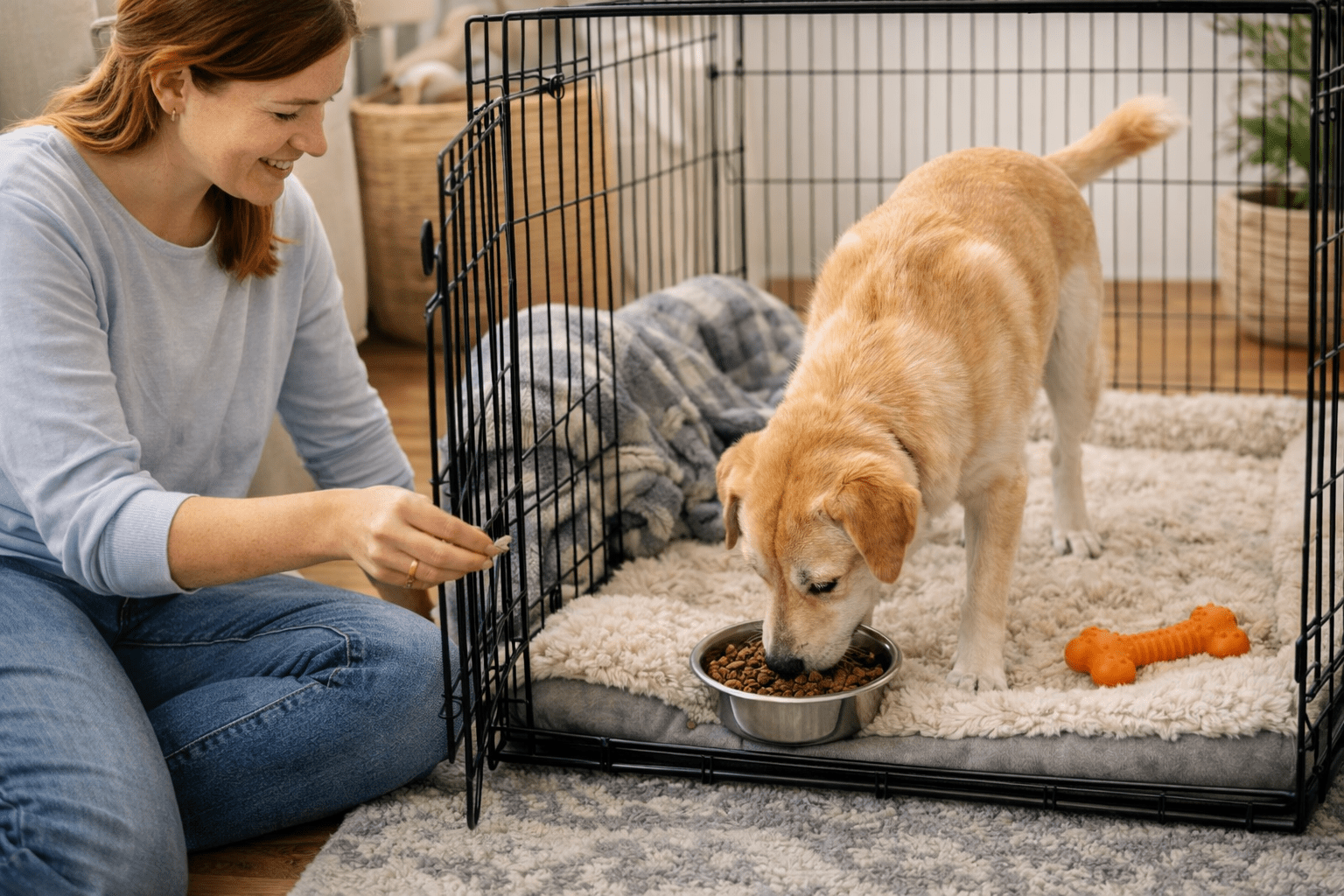
- Leave the crate door open and toss high-value treats inside several times daily
- Feed all meals just inside the crate entrance with the door open
- Place your dog’s favorite toys near or inside the crate
- Praise calmly when your dog investigates the crate on their own
- Never force or lure your dog all the way in during this stage
This stage can take anywhere from a few days to two weeks. Your dog should willingly go in and out of the crate to explore before you move forward.
Stage 2: Building Positive Time Inside
Once your dog enters the crate willingly for treats or meals, start building duration:
Week 1-2:
- Toss a treat in and let your dog go in and come out freely
- Gradually move the food bowl deeper into the crate
- Start closing the door for just 5-10 seconds while your dog eats, then immediately open it
- Practice multiple times daily with no stress
Week 3-4:
- Close the door for 1-2 minutes while giving continuous treats through the bars
- Sit next to the crate and work up to 5-minute sessions
- Open the door before your dog shows any signs of distress
- Never let your dog out while they’re whining or scratching
The goal is to stop each session while your dog is still calm and happy. This builds confidence that the crate door will always open.
Stage 3: Adding Distance and Duration
Now you can start preparing your dog for real alone time:
- Practice closing the crate door and walking across the room for 30 seconds
- Return and reward calm behavior before releasing your dog
- Gradually increase distance and time over several weeks
- Add in departure cues like picking up keys or putting on shoes
- Leave the room for very short periods (1-2 minutes initially)
This stage often causes the most setbacks. If your dog panics, you’ve moved too fast. Go back to the previous successful level and progress more slowly.
Stage 4: Managing Actual Departures
When your dog can handle 15-30 minutes crated while you’re home, try short actual absences:
- Start with 5-minute trips outside the house
- Gradually increase to 15 minutes, then 30, then an hour
- Keep departures and arrivals calm and low-key
- Provide a special chew toy or food puzzle that only appears during crate time
- Monitor your dog with a pet camera to track their stress levels
Some dogs regress when you actually leave the house. This is normal. Maintain the routine and don’t skip steps.
For detailed guidance on the overall training approach, check out our guide on proper crate training that covers additional techniques.
Managing Setbacks and Common Problems
Even with perfect training, you’ll face challenges. Here’s how to handle the most common issues:
What to Do When Your Dog Cries or Barks
This is the hardest part for most owners. Here’s the rule: Never let your dog out while they’re actively crying, barking, or scratching. This teaches them that making noise gets them released.
Instead:
- Wait for even a 2-3 second pause in the noise
- Immediately release them during that quiet moment
- If they never pause, you’ve pushed too far too fast
The exception: If your dog is having a full panic attack (excessive drool, frantic escape attempts, self-injury), remove them immediately and restart at an earlier stage.
Dealing with Accidents in the Crate
Dogs with separation anxiety sometimes have accidents even when house trained. This is a stress response, not defiance.
How to handle it:
- Make sure your dog has had a bathroom break right before crating
- Reduce the crate size if it’s too large
- Clean accidents thoroughly with an enzyme cleaner
- Don’t punish or scold your dog after the fact
- Consider whether your absences are too long for their current training level
If accidents continue despite proper training, consult a vet to rule out medical issues.
When to Get Professional Help
Some cases of separation anxiety are too severe for DIY training. Consider professional help if:
- Your dog injures themselves trying to escape
- They vomit or have diarrhea from stress every time you crate them
- You’ve followed the process for 8+ weeks with no improvement
- Your dog is destroying property or disturbing neighbors
- You’re feeling overwhelmed and frustrated
Our dog boarding camp provides intensive training in a structured environment, which often helps dogs make faster progress than home training alone.
Training Tools and Techniques That Help
The right tools can make crate training easier, but they’re not magic solutions. Use them alongside proper training, not as replacements.
Calming Aids and Supplements
Several options can take the edge off your dog’s anxiety:
Tool How It Works Best For
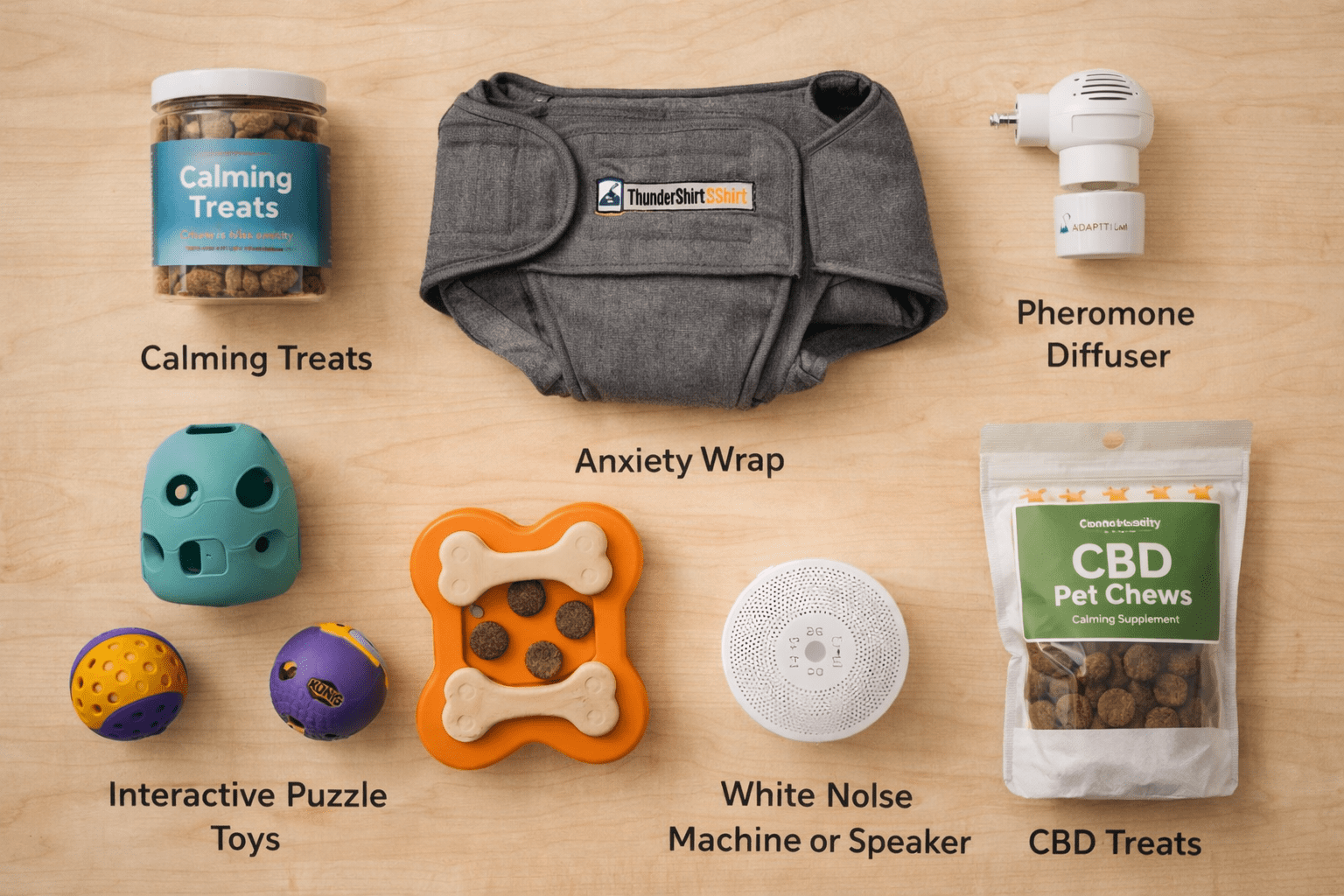
Calming treats Natural ingredients Mild to moderate anxiety like chamomile reduce
stress
Anxiety wraps Gentle pressure mimics Dogs who respond to physical swaddling comfort
Pheromone diffusers Releases calming scents Dogs sensitive to near the crate environmental cues
White noise Masks outside sounds Dogs reactive to noises that trigger anxiety
Long-Term Success Strategies
Crate training doesn’t end once your dog tolerates the crate. Maintaining the skills and preventing regression requires ongoing effort.
Maintaining Progress Over Time
Even after successful training, continue these practices:
Daily routines:
- Use the crate regularly, even when you’re home
- Keep feeding meals or special treats in the crate
- Never use it only when you leave (this creates an “uh oh” association)
- Practice random short sessions to keep skills sharp
Life changes: Moving, new family members, schedule changes, or other stressors can trigger regression. If this happens, go back to shorter sessions and rebuild confidence.
Knowing When to Transition Out of the Crate
Not every dog needs lifelong crate use. Consider transitioning out when:
- Your dog has been consistently calm for 3+ months
- They can be trusted alone in a small room without destruction
- Separation anxiety symptoms have resolved
- They willingly go to the crate for rest even when unsupervised
Transition gradually by leaving the crate door open and expanding their alone-time space slowly. Watch for any regression.
Crate Training Timelines by Dog Type
Different dogs progress at different speeds. Here’s what to realistically expect:
Dog Type Typical Timeline Special Considerations
Puppies (8-16 weeks) 2-4 weeks Shorter bladder control, need more frequent breaks
Adult dogs (no 3-6 weeks Faster learning if no anxiety) previous trauma
Dogs with mild 6-10 weeks Need extra patience, slower separation anxiety progression
Dogs with severe 3-6 months or longer May need medication + separation anxiety professional training
Senior dogs Variable May have medical issues affecting progress
These timelines assume consistent daily training. Inconsistency doubles the time needed.
Real Results From Proper Training
When you follow the process correctly, the results can be dramatic. Dogs who once panicked in crates learn to view them as safe retreats.
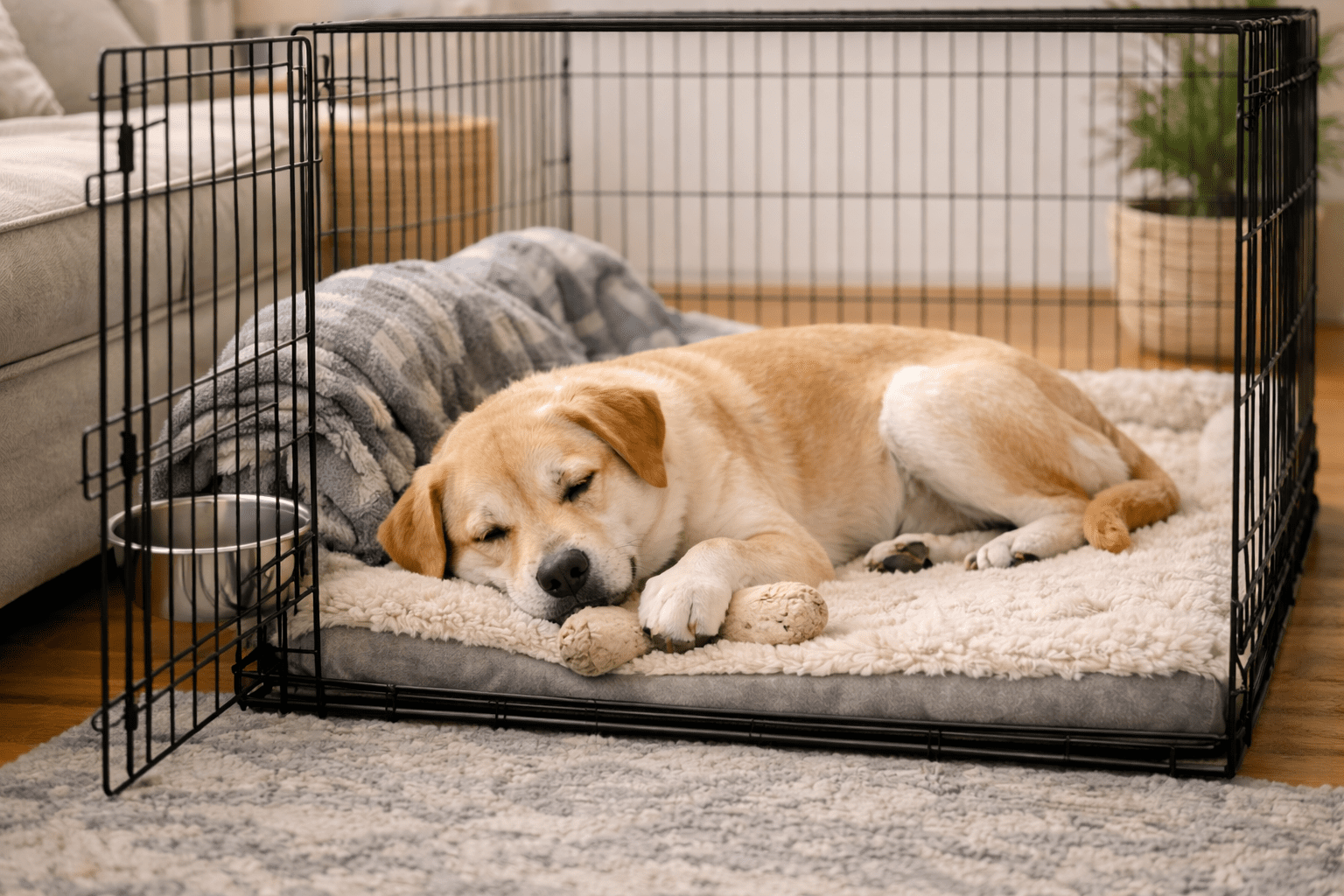
Success looks like:
- Your dog voluntarily napping in their crate with the door open
- Calm behavior when you pick up keys or prepare to leave
- No destruction or accidents during your absence
- Relaxed body language when crated
- Easy transitions in and out without resistance
This level of comfort takes time, but it’s achievable for most dogs with patience and consistency.
Final Thoughts on Crate Training Dogs With Anxiety
Crate training a dog with separation anxiety is one of the most challenging aspects of dog ownership, but it’s far from impossible. The secret lies in moving at your dog’s pace, celebrating small wins, and never using the crate as punishment.
Your dog’s anxiety didn’t develop overnight, and it won’t disappear overnight either. Some dogs progress in weeks while others need months. What matters is consistent, patient training that builds positive associations one session at a time.
Remember that setbacks are normal and don’t mean failure. They’re simply signals to slow down and revisit earlier training stages. With the right approach, most dogs learn to accept and even enjoy their crate.
At K9 Mania Dog Training, we specialize in helping Long Island dog owners overcome separation anxiety and crate training challenges. Our experienced dog trainers understand that every dog is different and create customized training plans that work. Whether you need in-home dog training guidance or intensive boarding programs, we have the expertise to help your anxious dog become calm and confident. Don’t struggle alone—let our proven methods give you and your dog the peace of mind you both deserve.
You May Also Want to Read
Positive Reinforcement Dog Training: A Complete Guide
How to Train a Dog to Lay Down: Step-by-Step Guide
Signs of Bad Dog Boarding: What Every Dog Owner Should Know
Frequently Asked Questions
Can dogs with separation anxiety be crate trained?
Yes, dogs with separation anxiety can absolutely be crate trained, but it requires more patience and a slower approach than training dogs without anxiety. The key is building extremely positive associations with the crate before ever closing the door, and progressing in very small increments that keep your dog under their stress threshold.
How to train a dog out of separation anxiety?
Training a dog out of separation anxiety involves gradually desensitizing them to your departure cues and alone time. Start with very brief separations (even just 30 seconds), reward calm behavior, and slowly increase duration over weeks or months. Combine this with exercise, mental stimulation, and potentially calming aids. Severe cases may need professional help or medication.
How long does it take to crate train a puppy with separation anxiety?
Crate training a puppy with separation anxiety typically takes 6-12 weeks, though some puppies need longer. Puppies have shorter attention spans but also form new habits faster than adult dogs. The process involves daily 10-15 minute training sessions, feeding meals in the crate, and gradually building up alone time while addressing the underlying anxiety.
How can I calm my dog’s anxiety naturally?
Natural anxiety relief includes increased exercise before alone time, puzzle toys for mental stimulation, calming supplements like chamomile or CBD (consult your vet), anxiety wraps that provide gentle pressure, and establishing predictable routines. White noise machines can mask triggering sounds, and pheromone diffusers help some dogs feel more secure.
What to do if my dog is crying in his crate?
If your dog cries in the crate, wait for a brief pause (even 2-3 seconds) before opening the door. Never release them while actively crying, as this rewards the behavior. If they never pause or show signs of panic (excessive drool, frantic attempts to escape), you’ve pushed too fast and need to go back to shorter sessions with the door open.
Should you let your dog cry it out when crate training?
No, letting an anxious dog “cry it out” can make separation anxiety worse and damage trust. Instead, prevent crying by progressing slowly enough that your dog stays calm. If some whining occurs, wait for a brief quiet moment before releasing. For dogs showing true panic symptoms, remove them immediately and restart training at an easier level to avoid traumatizing them.