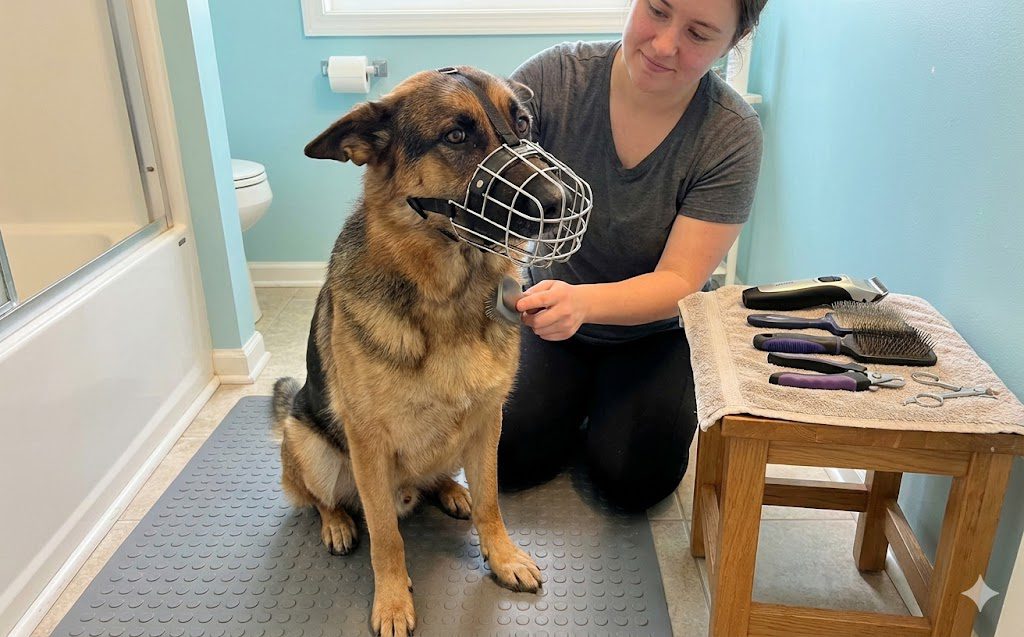
Grooming aggressive dogs is possible with the right approach, techniques, and patience. With proper desensitization training, safety measures, and understanding of your dog’s triggers, you can successfully maintain your dog’s hygiene while keeping both of you safe.
Many dog owners feel overwhelmed when their pet shows aggression during grooming sessions. Whether it’s growling at the sight of nail clippers or snapping when you touch their paws, aggressive behavior during grooming is more common than you think. The good news is that with consistent training, patience, and the right strategies, you can transform grooming from a stressful battle into a manageable routine.
Understanding why your dog reacts aggressively and learning proven techniques to address this behavior will help you keep your dog clean, healthy, and comfortable. If your dog’s aggression stems from deeper behavioral issues, consider our board and train program to address these challenges professionally.
Why Dogs Show Aggression During Grooming
Before you can address aggressive behavior, you need to understand what’s causing it. Dogs don’t just act out for no reason. Grooming aggression usually has clear triggers that, once identified, can be managed effectively.
Fear-Based Aggression
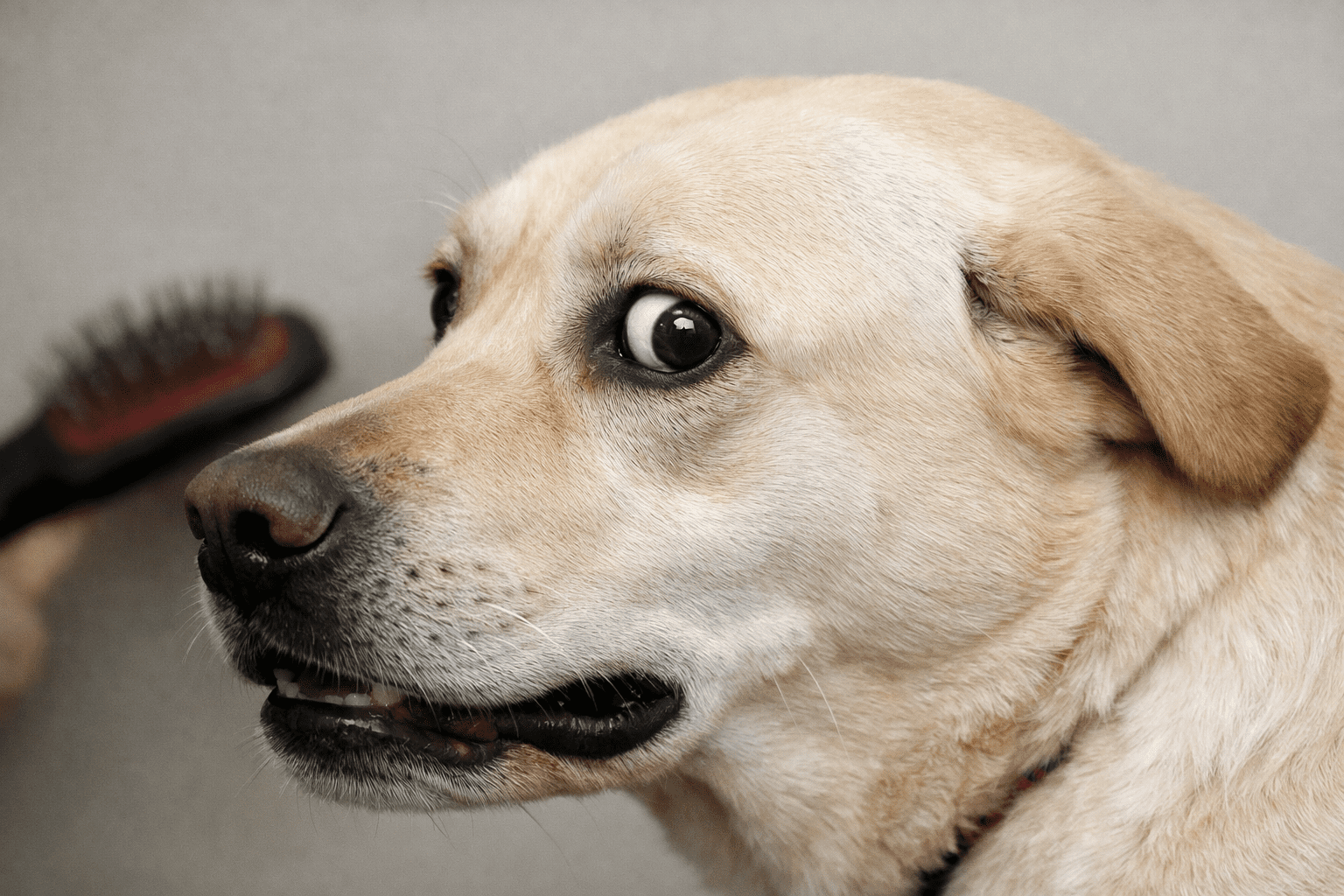
Fear is the most common reason dogs become aggressive during grooming. If your dog had a bad experience at a groomer or was hurt during a previous grooming session, they may associate the activity with pain or distress.
Dogs who weren’t properly socialized as puppies often fear new sensations like running water, the buzz of clippers, or the feeling of having their paws handled. This fear manifests as defensive aggression because the dog feels trapped with no escape route.
Signs of fear-based aggression include:
- Whale eye (showing whites of eyes)
- Pinned back ears
- Tucking tail between legs
- Attempting to escape before showing teeth
- Shaking or trembling
Pain-Related Reactions
Sometimes what looks like aggression is actually a pain response. Dogs with arthritis may snap when you lift their legs. Skin conditions, ear infections, or previous injuries can make certain areas sensitive to touch.
Older dogs especially may have joint pain that makes standing still for grooming uncomfortable. If your dog suddenly becomes aggressive during grooming when they never were before, schedule a vet checkup to rule out medical issues.
Common pain-related triggers:
- Matted fur pulling on skin
- Ear infections making ear cleaning painful
- Arthritis in hips or shoulders
- Nail quicks that were previously cut too short
- Skin allergies or hot spots
Territorial Behavior
Some dogs view grooming as a dominance challenge, especially if they have resource guarding issues. They may see their body as their “property” and react aggressively when you try to control or handle them.
This is more common in dogs who haven’t learned impulse control or who have been allowed to make their own decisions without proper boundaries. If your dog shows aggression in other situations like when you approach their food bowl or toys, territorial aggression during grooming is likely part of a larger behavioral pattern that needs professional intervention through our private dog training program.
Preparing Your Aggressive Dog for Grooming
Success with grooming aggressive dogs starts long before you pick up the brush or clippers. Preparation and desensitization training are essential for changing your dog’s emotional response to grooming.
Desensitization Training
Desensitization means gradually exposing your dog to grooming tools and handling in a way that doesn’t trigger their aggressive response. This process takes time but creates lasting results.
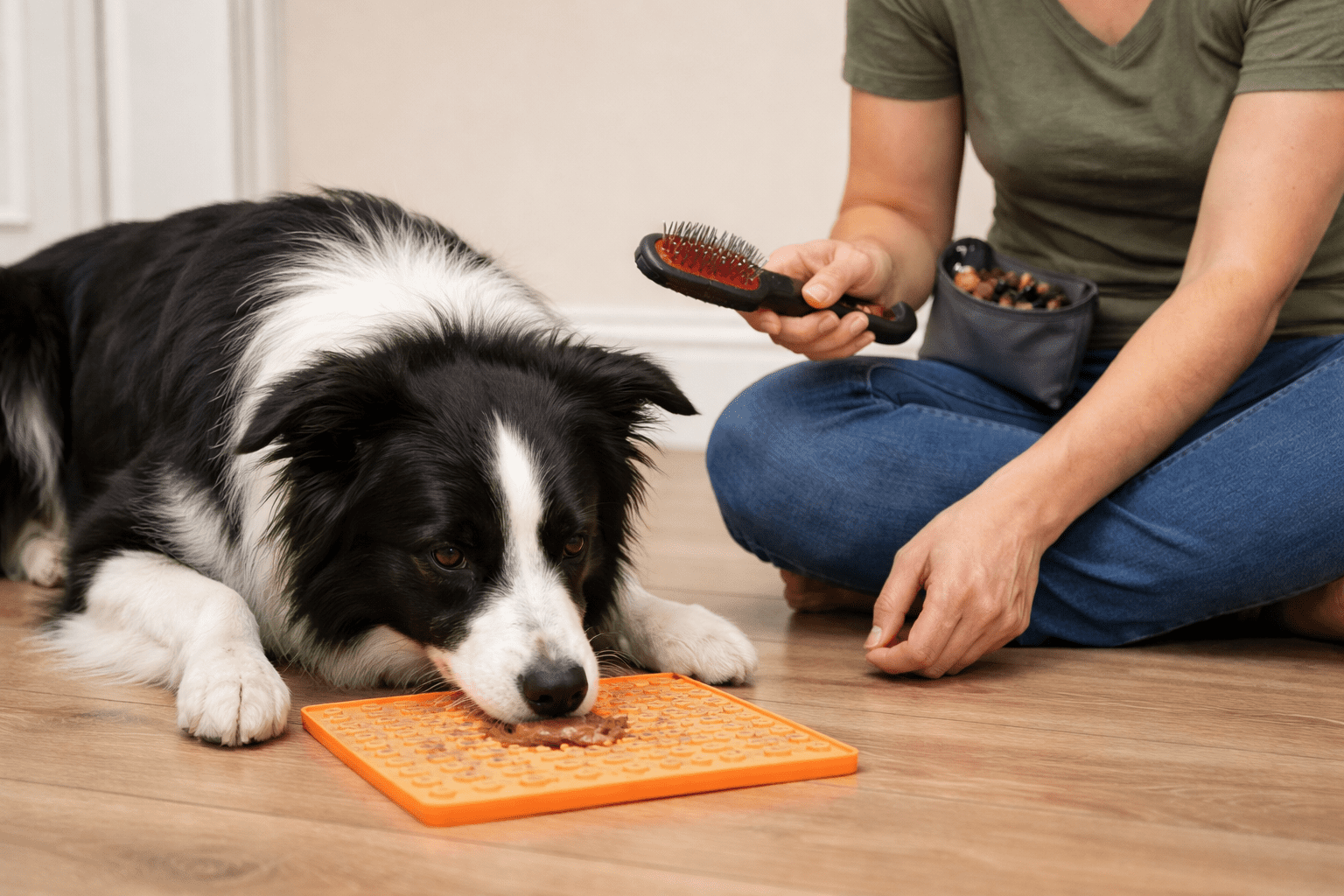
Start by leaving grooming tools out where your dog can see and smell them without any pressure to interact. Reward your dog with treats just for being calm near the tools. Over several days, begin touching the tools to your dog’s body without actually grooming, rewarding calm behavior each time.
Week-by-week desensitization plan:
| Week | Activity | Goal |
| Week 1 | Tools visible, no touching | Dog ignores tools, stays relaxed |
| Week 2 | Touch tools to dog’s body (not grooming) | Dog accepts touch without tension |
| Week 3 | Brief grooming motions (5-10 seconds) | Dog tolerates short sessions |
| Week 4 | Extend time gradually (up to 30 seconds) | Dog remains calm for longer periods |
Building Trust Through Positive Reinforcement
Every grooming session should end on a positive note, even if you only managed to brush one area. Use high-value treats that your dog only gets during grooming sessions.
Never punish aggressive behavior during grooming as this confirms your dog’s fear that grooming is dangerous. Instead, stop before your dog reaches their threshold and try again later with an easier task.
Create positive associations by:
- Starting with the easiest areas (usually the back and sides)
- Keeping sessions very short initially (2-3 minutes)
- Ending before your dog shows stress
- Pairing each step with treats or play
- Using a calm, cheerful voice throughout
For dogs with severe aggression issues, working with a professional trainer can accelerate progress. Our aggressive dog board and train program specifically addresses behavioral challenges that interfere with daily care like grooming.
Setting Up Your Grooming Space
Your environment matters. Choose a small, enclosed area where your dog can’t escape but doesn’t feel cornered. A bathroom or laundry room works well because it limits distractions and escape routes.
Use a non-slip mat so your dog feels secure. Slippery surfaces increase anxiety because dogs don’t feel stable. Have all your tools within reach so you don’t have to leave your dog unattended or make sudden movements to grab something.
Safe Grooming Techniques for Aggressive Dogs
Once you understand your dog’s triggers and have done some preparation work, you can begin the actual grooming process using techniques that prioritize safety for both of you.
Essential Safety Equipment
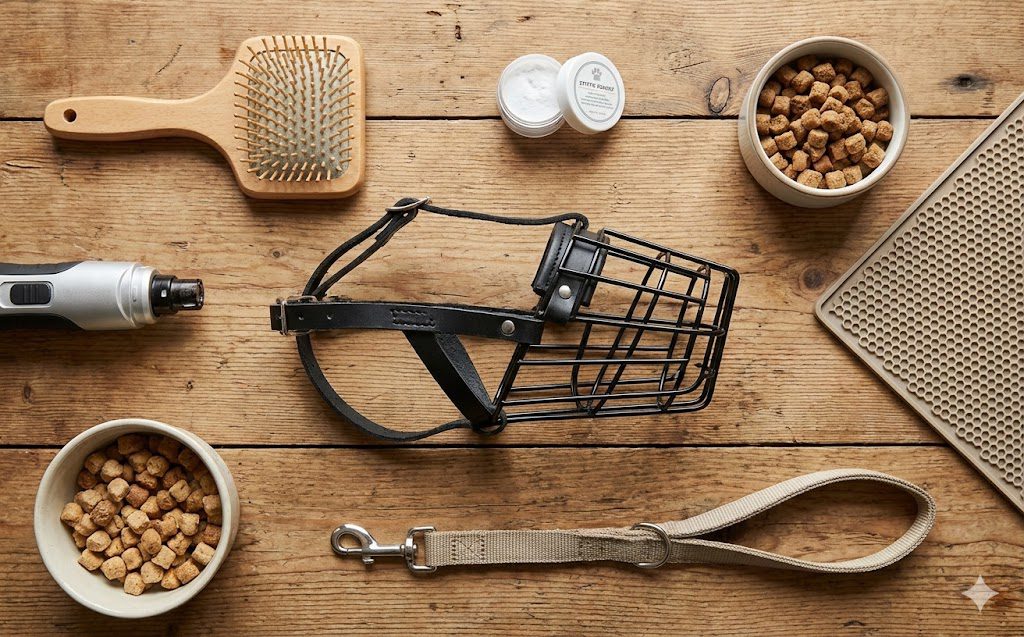
Before you start grooming an aggressive dog, proper safety equipment is not optional. A basket muzzle allows your dog to pant and take treats while preventing bites. Never use a grooming muzzle that keeps the mouth completely closed, especially for extended periods.
A grooming loop or tether attached to a secure point keeps your dog in place without you having to restrain them physically. This is particularly helpful for dogs who try to escape.
Safety gear checklist:
- Well-fitted basket muzzle (introduced gradually, not forced)
- Grooming arm or tether
- Non-slip mat
- Thick grooming gloves for protection
- Styptic powder (in case of nail quick injury)
- Helper if possible for the first few sessions
Step-by-Step Grooming Process
Never try to complete a full grooming session on your first attempt with an aggressive dog. Break the process into small, manageable tasks spread over multiple days.
Day 1: Brush only the back and sides (5 minutes maximum)
Day 2: Add brushing the chest and tail
Day 3: Introduce handling paws without trimming nails
Day 4: Trim one or two nails only
Day 5: Work on ears and face (often the most sensitive areas)
Between each step, give your dog a break with play or a walk. This prevents the experience from feeling like one long stressful event. As your dog becomes more comfortable, you can gradually combine steps.
Body Language Warning Signs
Learning to read your dog’s stress signals prevents escalation to aggressive behavior. Stop immediately if you notice these warning signs:
Early stress signals:
- Yawning when not tired
- Lip licking
- Looking away or avoiding eye contact
- Stiffening body
- Whale eye
Moderate stress signals:
- Low growling
- Showing teeth
- Raising hackles
- Freezing in place
- Hard staring
Severe stress signals (stop immediately):
- Snapping or air biting
- Lunging
- Loud, sustained barking
- Attempts to bite
- Complete panic or thrashing
If you reach moderate or severe stress signals, you’ve pushed too far. End the session, give your dog space, and start at an easier point next time.
Professional vs At-Home Grooming for Aggressive Dogs
Deciding whether to groom your aggressive dog at home or seek professional help depends on several factors, including the severity of aggression, your experience level, and your dog’s specific needs.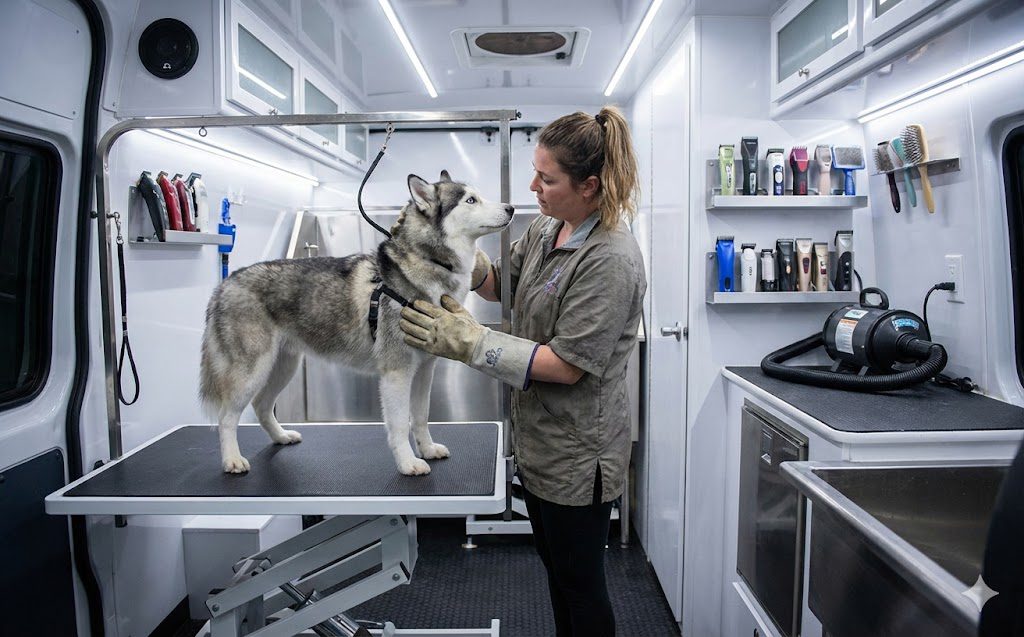
| Factor | At-Home Grooming | Professional Grooming |
| Best for | Mild to moderate fear-based aggression, owners with time to train | Severe aggression, dogs requiring sedation, complex grooming needs |
| Cost | Lower (one-time tool investment) | Higher ($50-150+ per session) |
| Time investment | High initially (training required) | Low (drop off and pick up) |
| Control | Complete control over pace and process | Less control, must trust groomer’s methods |
| Safety | Requires learning proper techniques | Professional training and equipment |
| Stress level | Lower over time (familiar person/place) | Potentially higher (unfamiliar environment) |
| Skill required | Learning curve for proper grooming | No skill needed from owner |
| Ongoing benefit | Builds trust and bond with dog | Transactional, no relationship building |
When to Choose Professional Help
Some situations require professional intervention. If your dog has bitten someone during grooming or shows extreme panic that doesn’t improve with training, professional groomers with experience handling aggressive dogs are your best option.
Mobile groomers who come to your home can reduce stress since your dog stays in familiar territory. Some veterinary clinics offer grooming under light sedation for dogs with severe anxiety or aggression.
Before choosing a groomer, ask these questions:
- What experience do you have with aggressive dogs?
- What safety protocols do you follow?
- Will you use a muzzle if needed?
- How will you handle my dog if they become aggressive?
- Can I stay nearby during the appointment?
For dogs whose aggression during grooming is part of broader behavioral issues, addressing the root cause through training makes future grooming much easier. Check out our board and train guide to learn how intensive training can transform aggressive behaviors.
Tools and Products That Make Grooming Easier
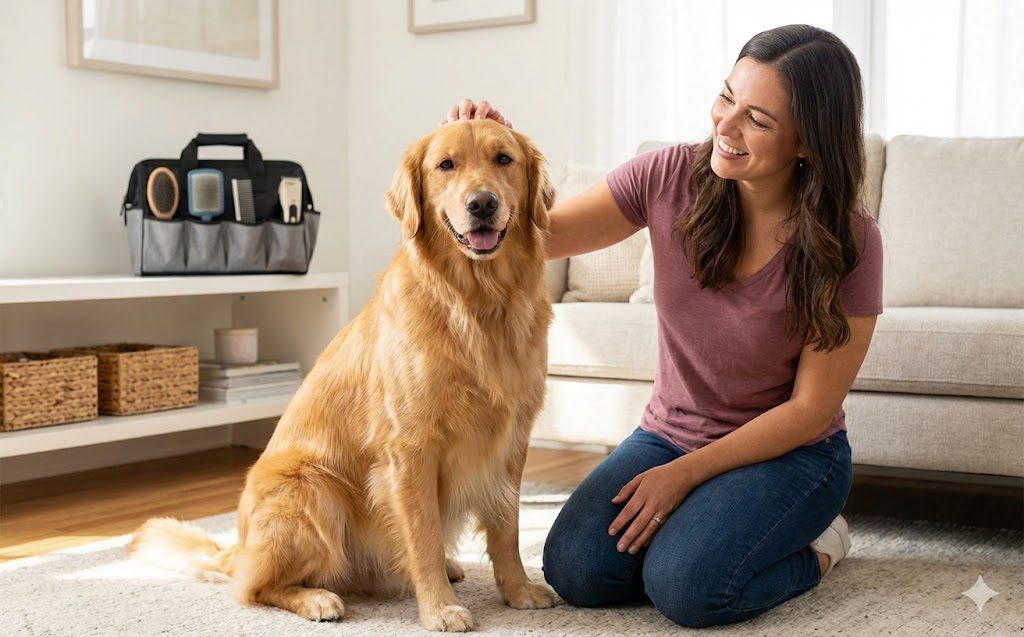
Having the right tools reduces stress for both you and your dog. Investing in quality grooming equipment designed for nervous or reactive dogs pays off in easier sessions.
For brushing and bathing:
- Slicker brush with rounded tips (prevents skin scratching)
- Undercoat rake for double-coated breeds
- Waterless shampoo or grooming wipes (for dogs who fear water)
- Long-handled brush (keeps hands at safe distance initially)
For nail trimming:
- Dremel-style nail grinder (quieter, more gradual than clippers)
- Guillotine-style clippers with guard
- Bright LED clippers (helps see the quick)
- Styptic powder or cornstarch
For comfort and safety:
- Lick mat with peanut butter or wet food (distracts during grooming)
- Calming pheromone spray
- Adaptil collar (releases calming pheromones)
- Thundershirt or anxiety wrap
Pro tip: Introduce each new tool separately during play time, letting your dog investigate it while receiving treats. This prevents tool-specific fears from developing.
Your Next Steps in Grooming Aggressive Dogs Successfully
Grooming aggressive dogs requires patience, consistency, and the right approach, but the effort creates a safer, cleaner, and healthier life for your dog. By understanding your dog’s triggers, using proper desensitization techniques, and knowing when to seek professional help, you can transform grooming from a dangerous confrontation into a manageable routine.
Remember that behavior change takes time. If your dog’s aggression during grooming is severe or hasn’t improved after several weeks of training, the issue may require professional behavioral intervention.
At K9 Mania Dog Training, we specialize in transforming aggressive behaviors through proven training methods. Whether your dog needs help with grooming aggression, resource guarding, or general reactivity, our experienced team can help you build a better relationship with your dog. Our programs address the root causes of aggression, giving you lasting results and a safer, happier companion.
You May Also Want to Read
How To Train A Dog To Walk On A Leash
Things You Need to Know About Puppy Training
How to Stop Food Aggression with Dogs Safely
Frequently Asked Questions
How do groomers deal with aggressive dogs?
Professional groomers use several techniques to safely handle aggressive dogs. They typically start with a muzzle for safety, work in short sessions, use restraint tools like grooming loops, and employ calming techniques such as slow movements and a quiet environment. Experienced groomers read dog body language to stop before aggression escalates. Some may recommend sedation for extremely aggressive dogs.
How to take an aggressive dog to the groomer?
Exercise your dog before the appointment to reduce energy and anxiety. Use a secure leash and consider a muzzle for transport if your dog has a bite history. Arrive early to let your dog acclimate to the environment. Inform the groomer about specific triggers and aggressive behaviors. Stay calm yourself, as dogs sense your stress. Some groomers allow you to stay nearby during the first visit to reduce anxiety.
How to groom a large, aggressive dog?
Grooming large aggressive dogs requires extra safety measures since their size increases bite risk. Use a sturdy grooming table with a tether, always muzzle for nail trimming and face grooming, and consider having a second person present. Break grooming into multiple short sessions rather than one long session. For severely aggressive large dogs, professional grooming or veterinary sedation may be necessary. Learn proper handling techniques through resources like our guide on how to stop food aggression with dogs, as many techniques overlap.
What do groomers use to sedate dogs?
Groomers themselves typically do not administer sedation, as this requires veterinary authorization. However, veterinarians may prescribe oral sedatives like trazodone or gabapentin that you give your dog before grooming appointments. Some veterinary clinics offer grooming services where a vet can administer sedation if necessary. Never give your dog human sedatives or medications without veterinary approval, as this can be dangerous or fatal.
How can I sedate my dog for grooming at home?
You should never sedate your dog at home without veterinary guidance. If your dog’s anxiety or aggression during grooming is severe enough to consider sedation, consult your veterinarian first. They may prescribe mild anti-anxiety medication appropriate for your dog’s size and health condition.
Can aggressive behavior during grooming be completely fixed?
Yes, most dogs can improve significantly with consistent training, though the timeline varies. Fear-based aggression typically responds well to desensitization and positive reinforcement over weeks or months. Pain-related aggression resolves once the underlying medical issue is treated. Territorial or dominance-based aggression requires more intensive behavioral training addressing the root cause. Some dogs may always need management strategies like muzzles, but the goal is reducing stress and making grooming safe and tolerable for everyone involved.