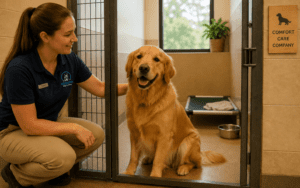

When you need care for your dog while you’re away, dog boarding vs. pet sitting is the central decision every pet owner faces. Boarding places your dog in a facility with staff and other dogs, while pet sitting brings a caregiver into your home or has your dog stay at theirs.
Key Takeaways
- Boarding facilities offer structured supervision, socialization, and professional staff, while pet sitters provide a calmer, more personalized experience.
- Dogs with anxiety, health conditions, or strong home attachment often do better with in-home pet sitting.
- High-energy or sociable dogs can thrive in a boarding environment, especially one that includes training or structured activity.
- Cost varies widely: pet sitters average $25-$75 per day, while boarding facilities range from $30-$85 per night depending on location and amenities.
- Some facilities combine boarding with training, giving your dog real skills while you’re away.
- Your dog’s age, temperament, vaccination status, and medical needs should drive the final decision.
What Dog Boarding Actually Looks Like in Practice
Before you can make the right call, it helps to understand what each option genuinely involves on a day-to-day basis. Many owners assume boarding is one-size-fits-all, but that’s not the case at all.
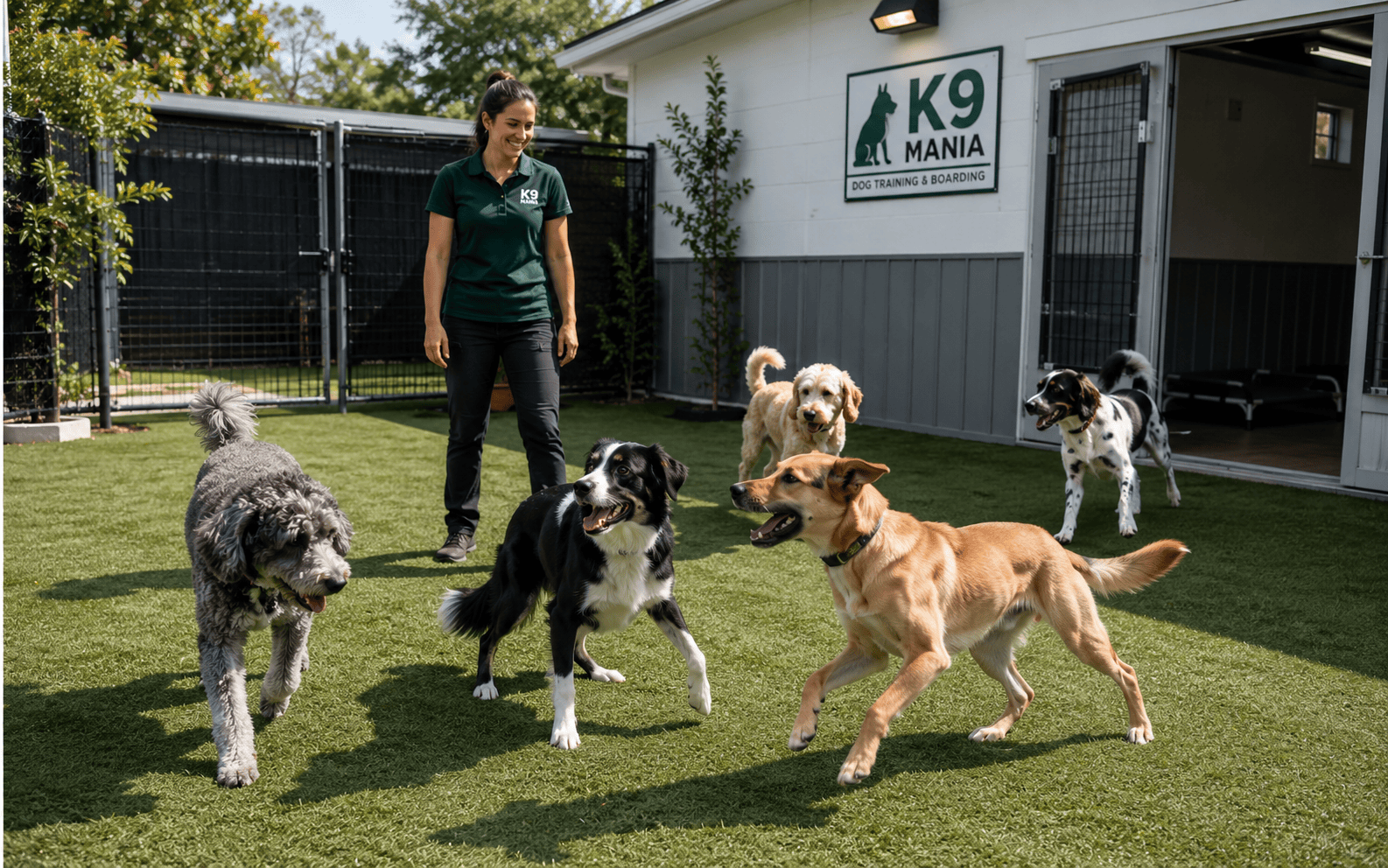
Dog boarding typically means your pet stays overnight at a facility staffed by trained handlers. Dogs sleep in kennels or private suites, eat on a schedule, and participate in group play sessions throughout the day. The quality varies enormously between budget kennels and premium facilities. A well-run operation will have climate control, separate spaces for different dog sizes, vaccination requirements, and emergency vet protocols. If you want a deeper breakdown of what goes into these programs, this resource on what is dog boarding covers the core elements in detail.
Premium boarding setups, particularly in suburban areas like Long Island, go well beyond basic overnight stays. Some offer structured exercise programs, behavioral reinforcement, and enrichment activities. A dog boarding camp in long island setting, for example, often integrates supervised group time, trained staff interactions, and a consistent daily routine that keeps dogs mentally engaged rather than simply warehoused until pickup.
Pet sitting, by contrast, keeps your dog in a familiar environment. A pet sitter either comes to your home multiple times per day or has your dog stay at their private residence. The big appeal is continuity: your dog sleeps in its own bed, eats its usual food, and follows a routine that doesn’t feel dramatically different from a normal week. For anxious dogs or older animals with medical needs, this continuity can be the deciding factor.
The Daily Reality for Your Dog
Here’s how a typical day looks in each setting:
Boarding Facility:
- Wake-up feeding around 7:00 a.m.
- Morning group play or individual yard time
- Midday rest or quiet time in kennel
- Afternoon activities or training sessions
- Evening feeding and wind-down
- Overnight in kennel or private suite
In-Home Pet Sitting (3 visits/day):
- Morning visit: feeding, walk, potty break
- Midday check-in and brief play session
- Evening visit: dinner, walk, and settling in for the night
- Dog sleeps alone in the home between visits
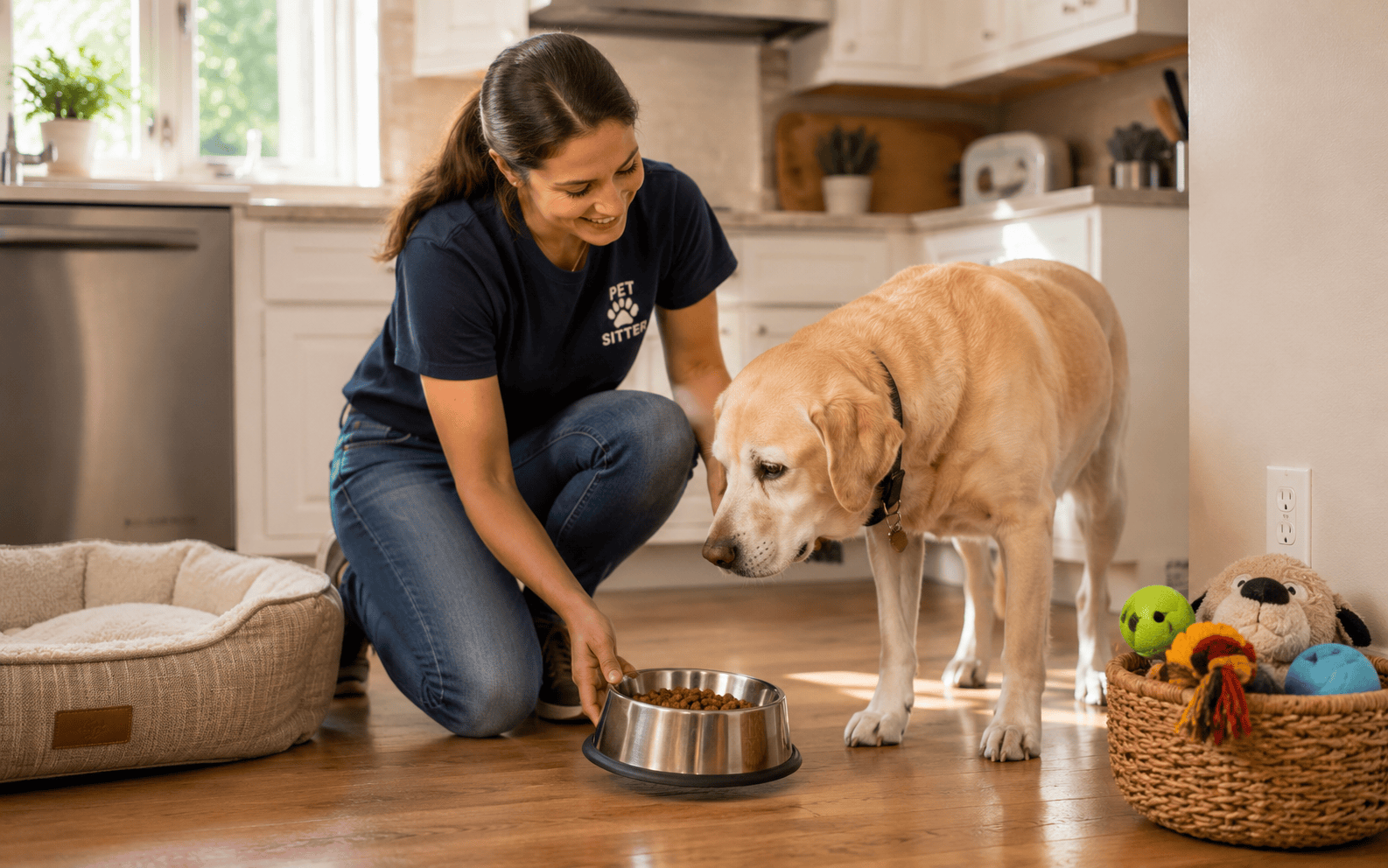
If your dog experiences separation anxiety or is prone to destructive behavior when left alone, the gaps between sitter visits can be a real problem. That’s a key consideration many owners overlook.
Comparing Costs, Risks, and Practical Trade-offs
The financial picture matters, but it’s rarely the only factor. Here’s a realistic breakdown of what you can expect to pay and what you get for each dollar:
| Factor | Dog Boarding | Pet Sitting |
| Average daily cost (U.S.) | $30-$85/night | $25-$75/day |
| Socialization with other dogs | High | Low to none |
| Supervision level | Continuous (during staff hours) | Intermittent (visit-based) |
| Stress for anxious dogs | Higher | Lower |
| Risk of illness exposure | Moderate (kennel cough, etc.) | Very low |
| Training add-ons available | Often yes | Rarely |
| Best for | Active, social dogs | Anxious, elderly, or routine-dependent dogs |
One risk specific to boarding that owners should take seriously is illness exposure. Even well-run facilities require vaccines, but respiratory infections like Bordetella (kennel cough) still spread in group settings. If your dog has a compromised immune system or is elderly, talk to your vet before committing to any facility.
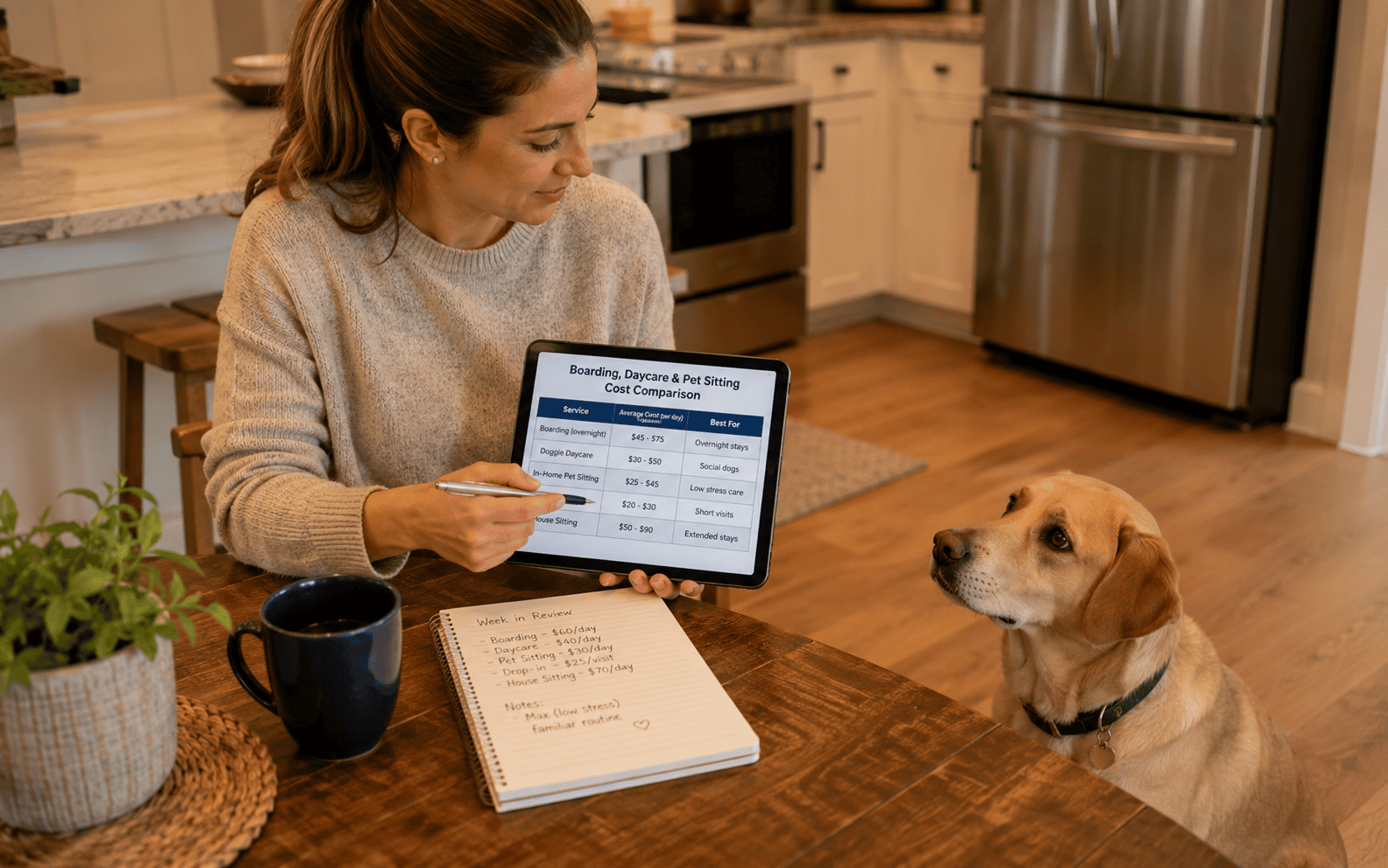
On the pet sitting side, the main risk is inconsistency. Not all sitters are certified, and platforms like Rover or Wag connect you with individuals whose experience ranges from highly professional to minimal. Always ask about pet first aid training, experience with your specific breed, and what their protocol is in an emergency.
When Boarding Is the Better Call
Boarding tends to work well when:
- Your dog is highly social and thrives around other dogs
- You’re traveling for longer than a few days
- You want structured daily activity and professional supervision
- Your dog needs behavioral reinforcement while you’re away
Facilities that pair stay with training, like a board and train long island program, offer a real advantage here. Your dog doesn’t just get fed and exercised. It comes home having practiced commands, improved leash manners, or worked through specific behavior issues under qualified trainers. That’s genuinely hard to replicate with even the most attentive pet sitter.
When Pet Sitting Makes More Sense
Pet sitting tends to win when:
- Your dog is elderly, ill, or on medication requiring specific timing
- Your dog has severe anxiety around other animals
- Your dog is recovering from surgery or has mobility issues
- You have multiple pets with incompatible temperaments
The Training Angle: Using Your Dog’s Time Away Productively
One conversation that doesn’t happen often enough when comparing dog boarding vs. pet sitting is what your dog is actually learning during that time. A week away from home is a week of experiences, and those experiences either reinforce good habits or don’t.
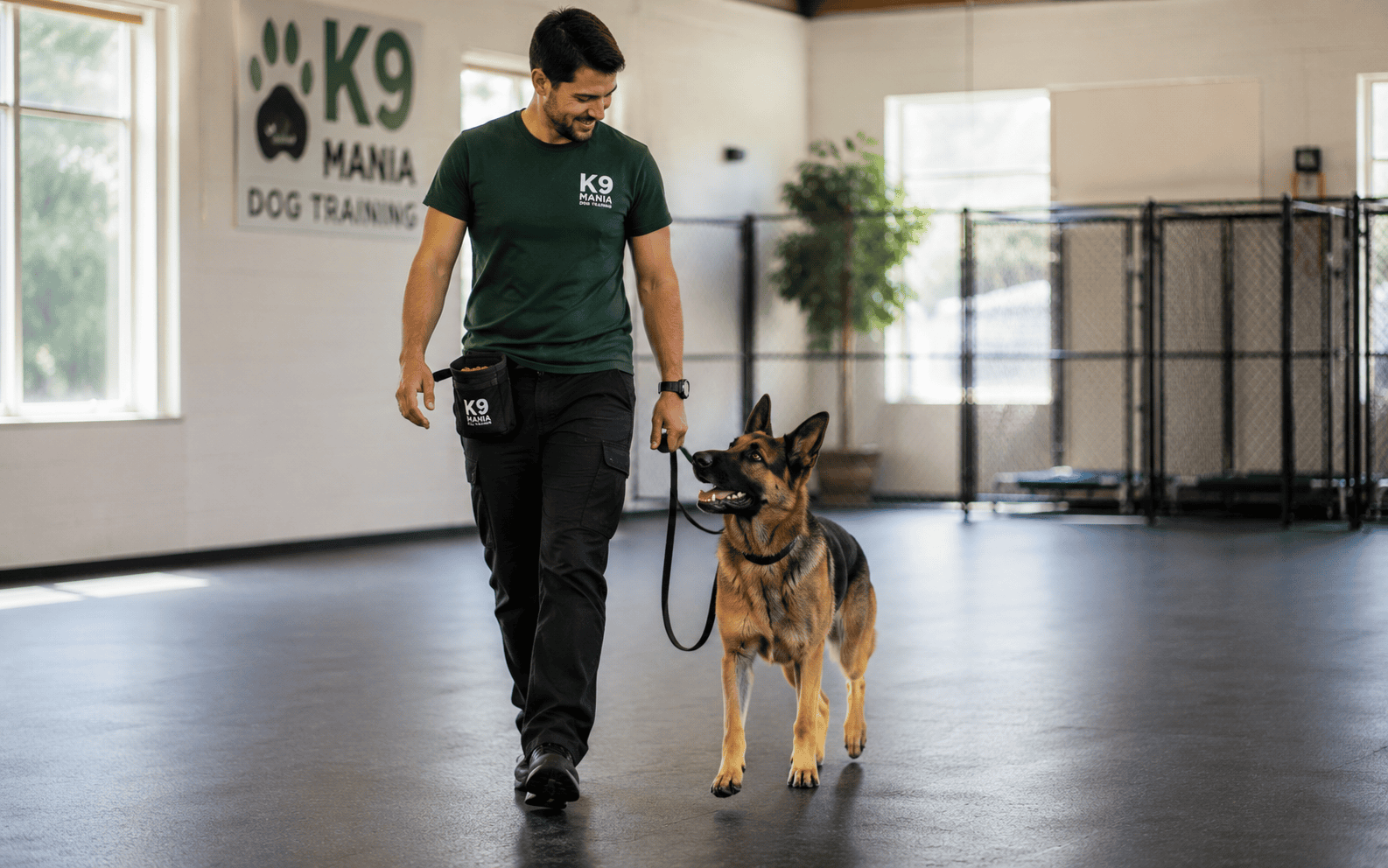
Standard pet sitting is neutral at best. The sitter feeds, walks, and keeps your dog safe. That’s valuable, but it doesn’t build on your dog’s behavioral foundation. Boarding facilities vary. Some are genuinely just hotels. Others are structured environments where trained staff use consistent commands and reinforce the behaviors you’ve already been working on.
If you’ve been investing in obedience dog training at home, a well-run boarding facility can maintain that progress rather than let it lapse for a week. This is especially relevant for younger dogs still in their formative behavioral window.
For owners who want to build on training more aggressively, there are options that go well beyond standard boarding. In home dog training long island programs, for instance, work directly in your dog’s own environment, which is where most problematic behaviors actually occur. The skills transfer more naturally because the dog is learning in the same context where the behavior needs to happen.
Similarly, private dog training long island gives you one-on-one sessions tailored to your specific dog’s issues, which is a different model than group boarding play. These training options aren’t replacements for boarding or sitting decisions, but they’re worth knowing about as part of a broader care strategy.
Things to Know
- Vaccination requirements at boarding facilities are not uniform. Most require rabies, Bordetella, and Distemper, but always confirm the specific list before booking.
- “Cage-free” boarding sounds appealing but isn’t automatically better. Some dogs are more stressed in open group settings than in a quiet private kennel.
- Pet sitters who offer overnight stays provide far more supervision than drop-in visit sitters. If your dog can’t be left alone safely for 8-10 hours, a drop-in model won’t work.
- Many boarding facilities fill up weeks in advance around major U.S. holidays like Thanksgiving, Christmas, and July 4th. Book early.
- If your dog has never been boarded before, a trial night or daycare visit before your actual trip can prevent a stressful first experience.
- Tipping pet sitters is common and appreciated, typically $10-$25 per visit for exceptional service.
How to Evaluate Any Facility or Sitter Before You Commit
Whether you lean toward boarding or sitting, the vetting process matters more than most people realize. Here’s a practical checklist:

For Boarding Facilities:
- Tour the space before drop-off. Look for clean kennels, good ventilation, and visible staff-to-dog ratios.
- Ask how emergencies are handled and which vet clinic they use.
- Confirm vaccination requirements and whether they verify records.
- Ask about sleep arrangements, feeding schedules, and how they handle dogs that don’t get along.
For Pet Sitters:
- Ask for references from clients with dogs of similar size and temperament.
- Request proof of pet first aid certification.
- Confirm their protocol if your dog escapes, gets injured, or becomes ill.
- Do a meet-and-greet before committing, and observe how your dog responds to them.
Ready to Set Up the Right Care Plan for Your Dog?
Start with a vet conversation if your dog has any health concerns, then do at least one in-person visit to any facility or sitter you’re considering. Don’t book based on online photos alone. If your dog is young, high-energy, or has known behavioral challenges, ask specifically about what structure will be in place during their stay, because that structure is what separates a good experience from a frustrating one. And if you know your dog needs more than just care while you’re away, look into boarding programs that include active training components.
You May Also Read
Dog Training Before Bringing Home a Puppy
Training Puppies vs. Adult Dogs
One on One Dog Training Long Island
Frequently Asked Questions
Is dog boarding or pet sitting better for a dog with separation anxiety?
Pet sitting is generally better for dogs with separation anxiety. Familiar surroundings reduce stress significantly, and a calm, consistent sitter can maintain a routine close to normal. If your dog’s anxiety is severe, even a quiet boarding facility may be too overstimulating.
How do I know if a boarding facility is safe?
Look for clean facilities, low dog-to-staff ratios, verified vaccination policies, and transparent emergency protocols. Ask for a tour in advance, and trust your instincts. If staff seem rushed, the facility is overcrowded, or you can’t get straight answers about daily routines, that’s a red flag.
Can pet sitting work for a week-long trip?
Yes, but the model matters a lot. Overnight pet sitting where the sitter stays in your home is ideal for longer trips. Drop-in visits several times per day can work for independent dogs, but dogs prone to anxiety or destructive behavior may struggle with the gaps between visits.
What age is too young for a puppy to go to a boarding facility?
Most facilities require puppies to be fully vaccinated before boarding, which typically happens around 16 weeks. Beyond vaccines, very young puppies under 5-6 months old may not handle the stimulation of group boarding environments well. A pet sitter or puppy-specific program is usually a better fit for dogs under 6 months.
Is board and train worth it compared to regular boarding?
Board and train is worth it if your dog has specific behavioral issues or if you want to make productive use of your time away. It costs more than standard boarding, often $75-$150 per day, but your dog returns with practiced skills. For dogs that have been working on obedience, it’s a strong option that maintains momentum rather than losing ground.
The Bottom Line on Dog Boarding vs. Pet Sitting
The right answer in the dog boarding vs. pet sitting conversation comes down to your individual dog’s personality, health, and behavioral history. Social, healthy, active dogs often thrive in structured boarding environments, especially those that include professional training components. Anxious, elderly, or medically complex dogs almost always do better in the familiarity of home care.
Whatever you choose, do the vetting work upfront. One tour, one reference call, and one honest conversation with your vet can prevent a stressful experience for both you and your dog. Start that process now, before your next trip is already on the calendar.