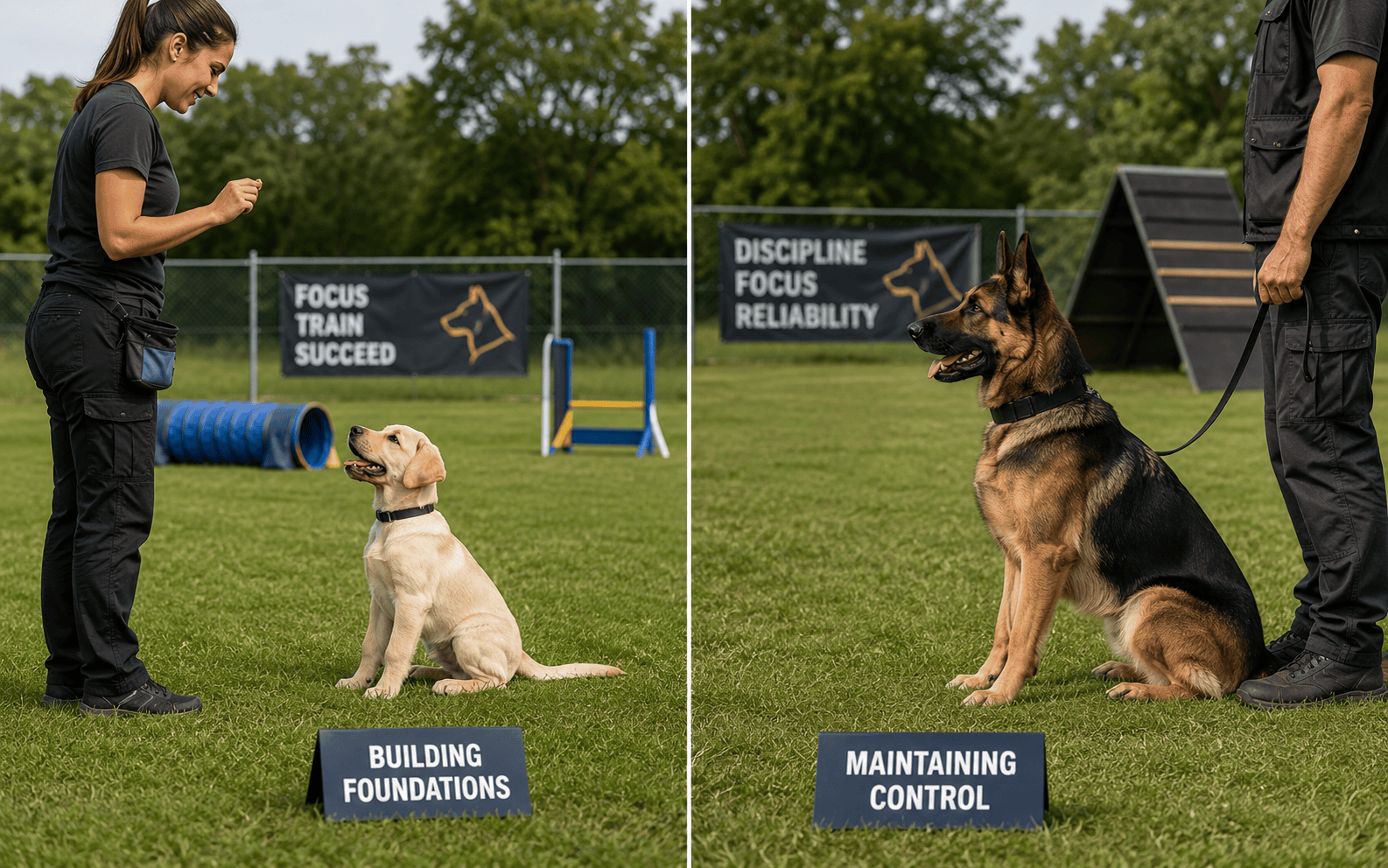
Puppies and adult dogs can both be trained effectively, but the methods, timelines, and challenges are genuinely different for each. Understanding those differences helps you set realistic expectations and get better results faster, regardless of your dog’s age.
Key Takeaways
- Puppies have a critical socialization window (roughly 3-14 weeks) that shapes behavior for life — missing it has lasting consequences.
- Adult dogs often have longer attention spans and can handle more complex training sessions than puppies.
- Existing habits in adult dogs can slow progress, but they are never a reason to give up on training.
- Consistency and timing matter more than the dog’s age when it comes to reinforcement.
- Both puppies and adults benefit from structured, positive reinforcement-based training programs.
- Professional support, whether in-home or board-and-train, accelerates results at any age.
Why Age Changes the Way Dogs Learn
Dog learning is not a single, universal process. A 10-week-old puppy and a 4-year-old rescue arrive at training with completely different neurological development, life experiences, and behavioral baselines. Ignoring these differences is one of the most common reasons owners hit a wall with their training efforts.
Puppies are essentially blank slates in some respects, but they are also running on instinct, hormones, and developing impulse control that simply does not exist yet. An 8-week-old Labrador cannot hold a “sit-stay” for 30 seconds reliably, not because the training is wrong, but because the prefrontal cortex equivalent in dogs is not developed enough to sustain that level of self-regulation.
Adult dogs, on the other hand, have established neural pathways. That can work in your favor when the dog has had good early socialization, or it can work against you when the dog has spent years practicing unwanted behaviors like jumping, leash pulling, or resource guarding.
To really understand what shapes a young dog’s behavior during those earliest months, reading your complete guide to the developmental stages of puppy behavior is one of the best starting points for any new puppy owner.
The Puppy Training Window: Short, Critical, and Easy to Miss
The socialization period for puppies runs roughly from 3 to 14 weeks of age. During this time, the brain is highly plastic, and experiences, whether positive or negative, leave deep impressions. Puppies introduced to a wide variety of sounds, people, surfaces, environments, and other animals during this window tend to grow into confident, adaptable adults. Those who miss out often develop anxiety, reactivity, or fear-based behaviors that require significant remediation later.
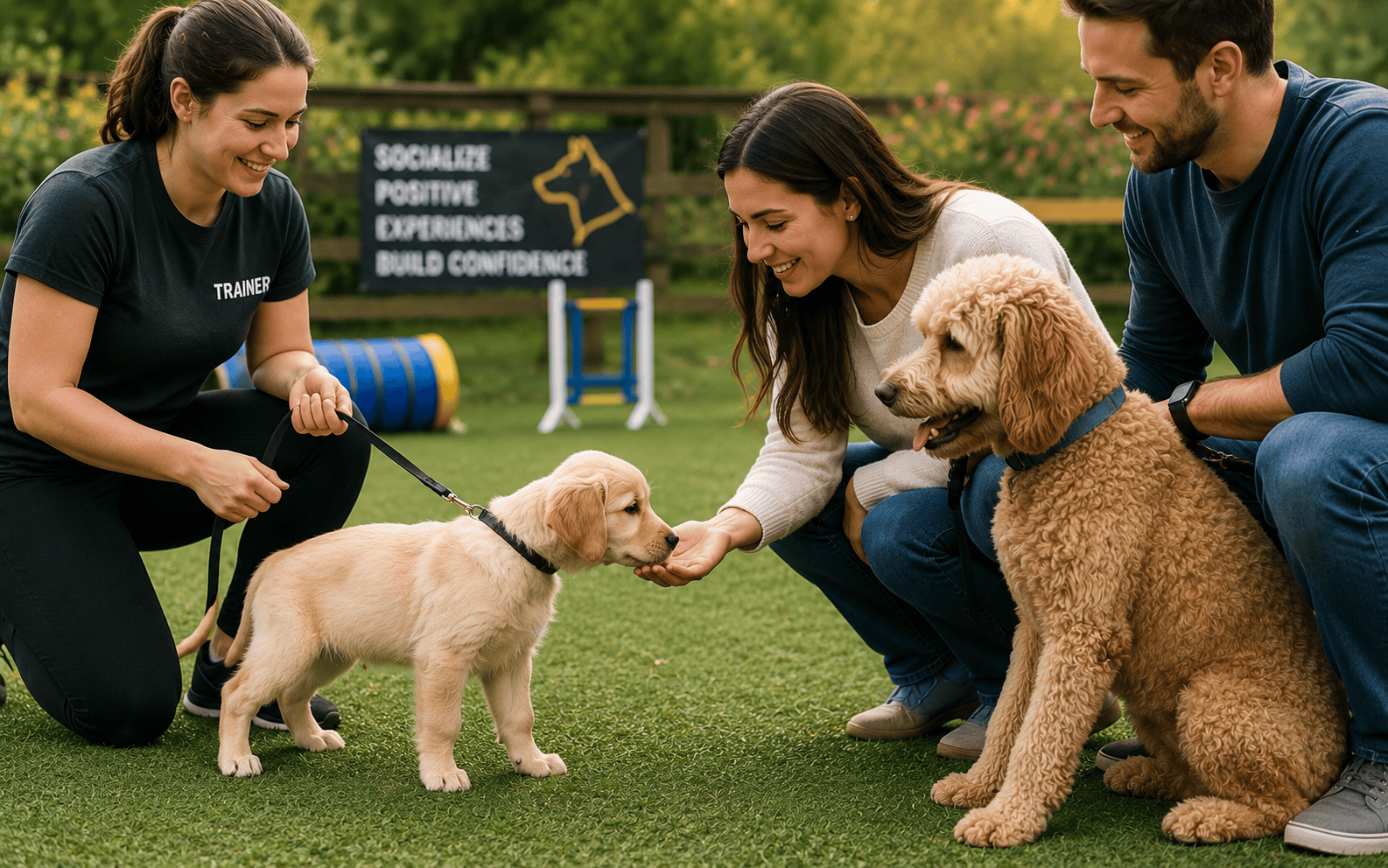
This does not mean puppy training is easy. In fact, the unpredictability is one of the biggest challenges. Puppies have short attention spans, typically 2-5 minutes per focused session, they tire quickly, and they are easily distracted. Sessions need to be short, frequent, and heavily rewarded. Trying to power through a 30-minute obedience drill with a 12-week-old puppy almost always backfires.
Key puppy training priorities include:
- Name recognition — the foundation of all future communication
- Basic commands — sit, down, stay, and come
- Bite inhibition — learning how to control jaw pressure
- Crate acceptance — building a positive association with confinement
- Leash introduction — getting comfortable with the collar and lead before adding distractions
- House training — consistent schedules and immediate reinforcement
The window closes fast. By 14-16 weeks, many foundational social impressions are already formed, which is why delaying professional guidance often costs more time and effort down the road.
Training Adult Dogs: Working With What’s Already There
Adult dogs do not learn more slowly than puppies in every context. In fact, for many tasks, adult dogs are significantly easier to work with because they have better impulse control, longer focus spans, and more predictable energy levels. A 3-year-old Border Collie can sustain a 20-minute structured session without falling apart. A 3-month-old Border Collie cannot.
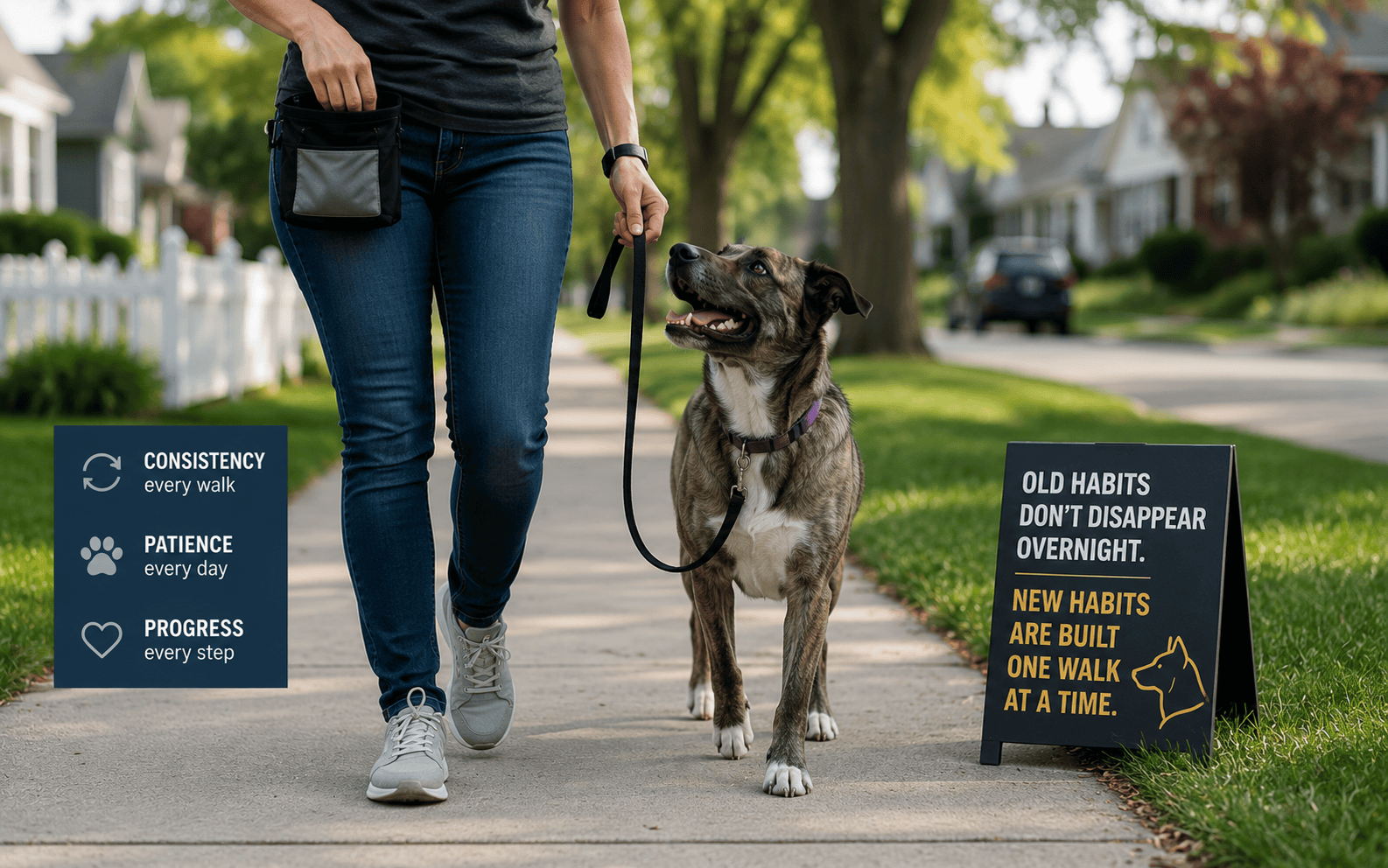
The real challenge with adult dogs is unlearning. If a dog has spent two years jumping on guests and being inadvertently rewarded with attention, that behavior has been rehearsed hundreds of times. The neural pathway is deep. Replacing it requires consistent management, clear communication, and enough repetitions of the new, desired behavior to make it the dog’s default response.
Common situations where adult dog training requires extra patience:
- Rescue dogs with unknown histories — triggers and fears may not be obvious at first
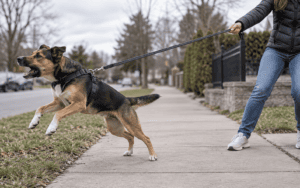
- Dogs with ingrained leash reactivity — the habit loop is strong and emotionally charged
- Dogs acquired from environments with minimal structure — they may never have learned that human cues mean anything
- Older dogs adapting to new households — stress alone can suppress learning temporarily
Understanding how to crate train an adult dog is a perfect example of adapting technique to age. The steps differ meaningfully from crating a puppy, and using puppy methods on an adult often causes unnecessary stress and resistance.
Comparing the Two: A Side-by-Side Breakdown
| Factor | Puppies (Under 6 Months) | Adult Dogs (1 Year+) |
| Attention span per session | 2-5 minutes | 10-20 minutes |
| Socialization flexibility | Very high (critical window open) | Lower (more effort required) |
| Habit formation speed | Fast — impressions stick quickly | Slower to replace existing habits |
| Impulse control | Very low | Moderate to high |
| Physical stamina for training | Low — tires quickly | Higher overall |
| Response to reinforcement | Strong — food drive is typically high | Varies by dog and history |
| Crate training difficulty | Moderate | Can be challenging without proper steps |
| Overall training complexity | High due to unpredictability | High due to established patterns |
This table makes it clear that neither age group is simply “easier.” They each present a different profile of challenges and advantages.
Choosing the Right Training Method for Your Dog’s Age
The method you choose matters as much as the timing. Positive reinforcement, rewarding desired behaviors with food, play, or praise, is the most research-supported approach for both age groups. It builds trust, creates voluntary compliance, and avoids the fallout that punishment-based techniques can cause, particularly in young or sensitive dogs.
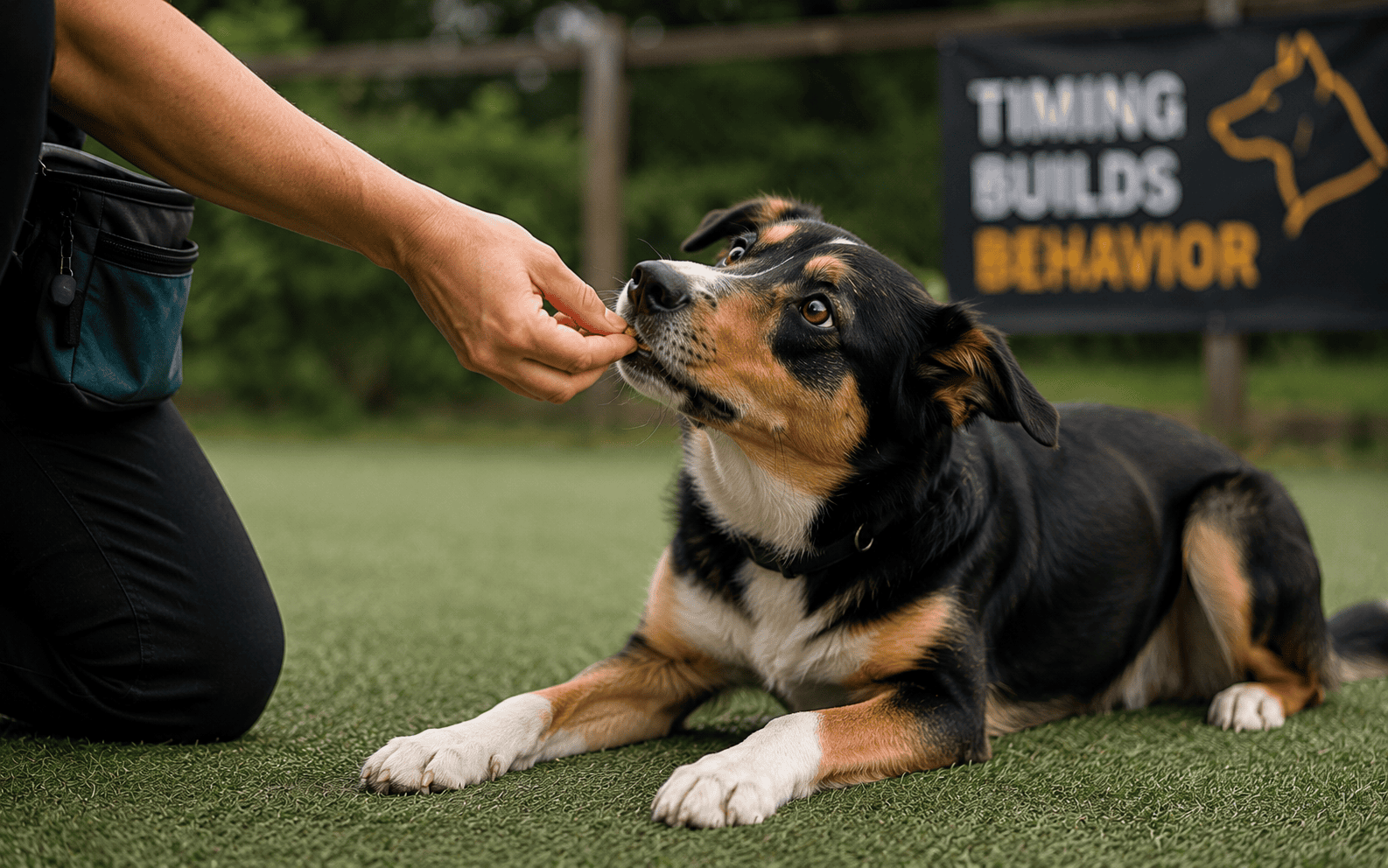
That said, the application of positive reinforcement looks different depending on age. For puppies, reward timing needs to be almost immediate, within one to two seconds of the behavior, because the association window is narrow. For adult dogs, the timing matters too, but you have a slightly wider margin as the dog begins to understand training context.
For obedience dog training, the structure of sessions should also adjust by age. Puppies benefit from short, frequent bursts throughout the day, while adult dogs can handle longer, more structured sessions broken into blocks with rest periods in between.
Management plays a bigger role with puppies. Because they cannot regulate their own impulses, the environment needs to be set up to prevent rehearsal of unwanted behaviors. Baby gates, leashes, crates, and direct supervision are not optional accessories for puppy owners. They are essential tools. Adult dogs still need management during training, but they typically require less constant supervision once foundational commands are in place.
When to Bring in Professional Help
Both puppies and adult dogs benefit from professional guidance, and the earlier you get it, the fewer bad habits you will need to undo. The question is not really whether to get help, but which type of help fits your schedule, your dog, and your household.
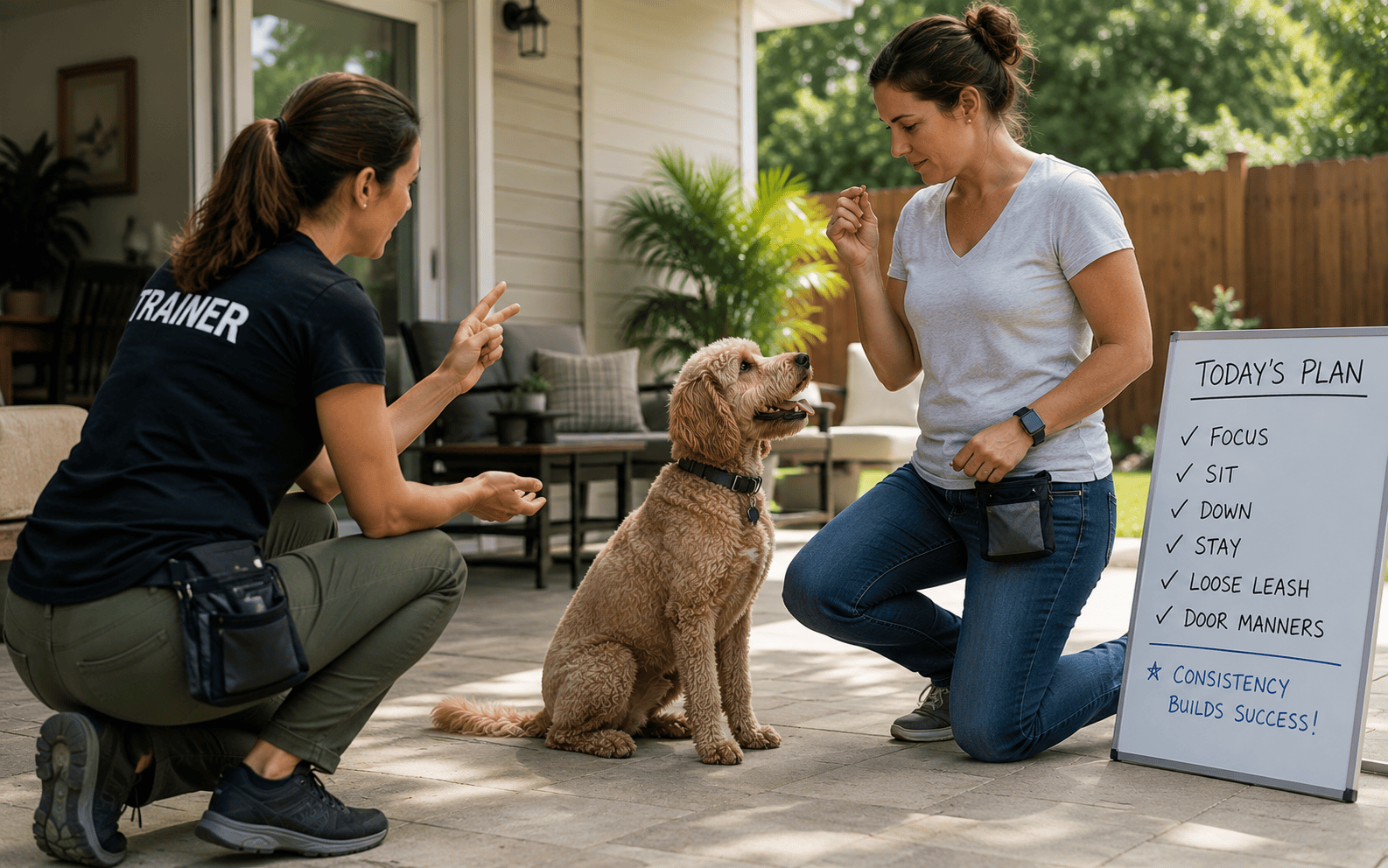
For owners in the Long Island area, several structured options are worth knowing about:
If you travel frequently or need intensive results in a compressed timeframe, board and train long island programs allow your dog to train full-time in a professional environment, which can accelerate progress significantly for both puppies and adult dogs with persistent issues.
If your schedule allows for involvement and you want to train alongside your dog, in home dog training long island brings the trainer to your environment, which is especially effective for addressing location-specific behaviors like door bolting, kitchen counter surfing, or separation anxiety in the actual space where it occurs.
For owners who want focused, one-on-one instruction tailored to their specific dog’s needs, private dog training long island sessions offer a customized curriculum without the distractions of group classes, which can be overwhelming for reactive or shy dogs.
Professional trainers also help you read your dog more accurately. A behavior that looks like “stubbornness” in an adult rescue might actually be fear. A behavior that looks like “aggression” in a puppy might be overstimulation. Getting that diagnosis right changes everything about how you respond.
Things to Know
- The 3-14 week socialization window is not a hard cutoff. It closes gradually, but the earlier you act, the more flexibility you have.
- “You can’t teach an old dog new tricks” is simply false. Adult dogs learn throughout their lives; the timeline just requires more patience in some cases.
- Regression is normal in both age groups. Adolescent dogs (roughly 6-18 months) often appear to forget training they previously mastered, this is neurological, not defiance.
- Puppies should not attend group classes until fully vaccinated, typically around 16 weeks, though some trainers allow partial-vaccine puppies in controlled environments.
- Adult dogs acquired from shelters may take 3-6 months to fully decompress before showing their true learning capacity.
- Rewarding the wrong behavior, even once accidentally, can set training back by days with a puppy and by a week or more with a dog that has an entrenched behavior pattern.
Ready to Train Your Dog at Any Age?
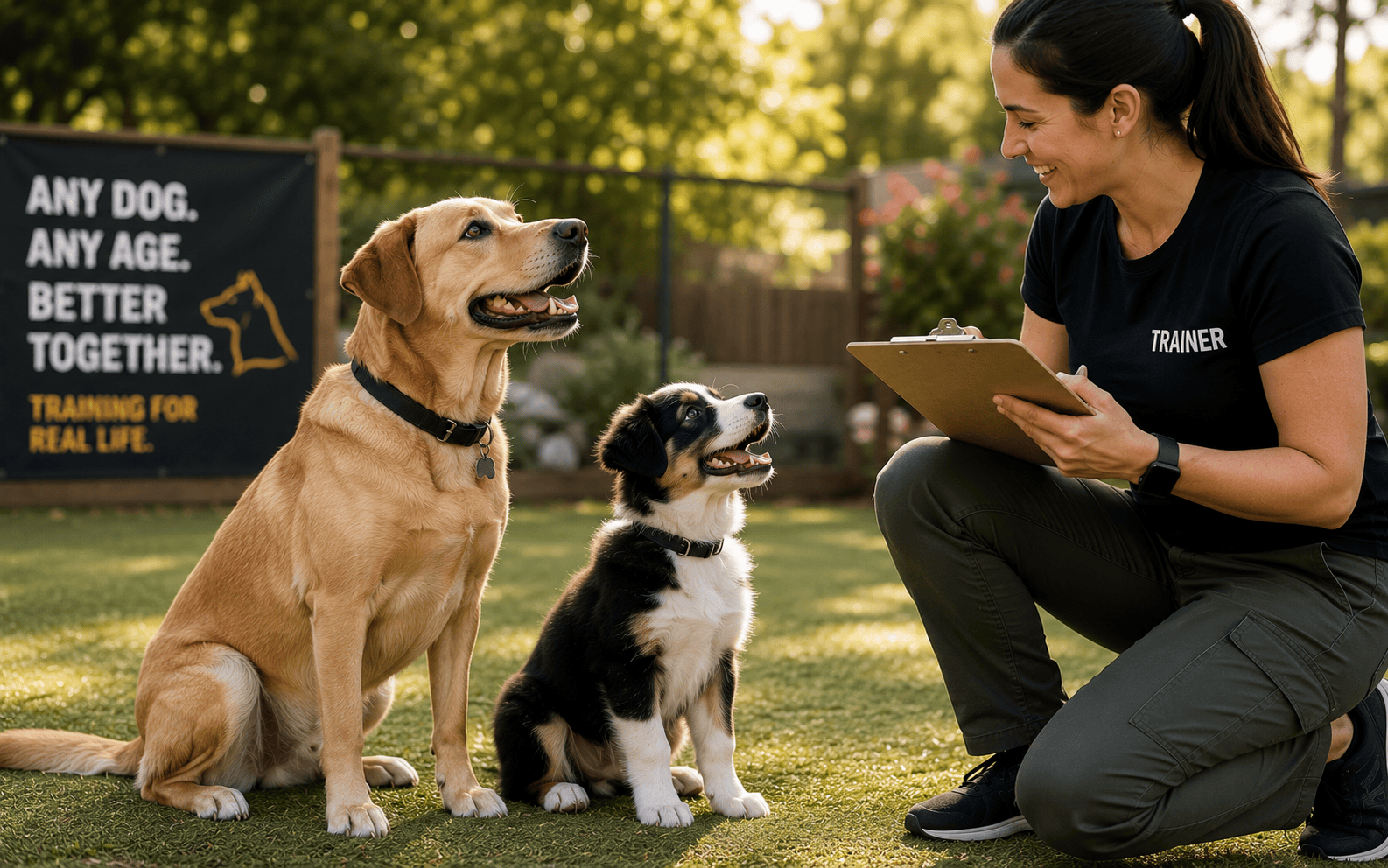
The single most effective next step you can take right now is to book a professional assessment before you invest months trying to troubleshoot on your own. Whether your dog is 10 weeks old or 10 years old, a trained eye will identify what is actually driving the behavior and give you a plan that is matched to your dog’s specific age, history, and temperament. Do not wait for the problem to escalate; getting the right framework early saves you significant time and frustration.
You May Also Read
Mouthing and Nipping Puppy Training
Dog Training Before Bringing Home a Puppy
Frequently Asked Questions
Is it harder to train a puppy or an adult dog?
Neither is universally harder; they each present a different set of challenges.
Puppies require constant management, short sessions, and early socialization, while adult dogs may need habit reversal alongside new learning. Your personal schedule, experience level, and the specific dog’s temperament will determine which feels more demanding.
At what age is a dog easiest to train?
Dogs between 6 months and 2 years often hit a productive training window once basic socialization is complete and before major habits are deeply ingrained.
That said, early puppyhood offers unique advantages for shaping behavior during the critical socialization period. Adult dogs trained with positive reinforcement and patience can reach excellent reliability at any age.
How long does it take to train a puppy vs. an adult dog?
Basic commands take 1-3 weeks of consistent practice for most puppies, while adult dogs may reach similar milestones in a similar timeframe depending on their background.
The bigger variable is consistency from the owner, not the dog’s age. Dogs with prior negative experiences or deeply ingrained habits will naturally take longer regardless of when training begins.
Can adult rescue dogs be fully trained after adoption?
Yes, adult rescue dogs can absolutely be fully trained, though they may need a decompression period of several weeks before training is most effective.
During decompression, many dogs are too stressed to absorb new learning. Allowing the dog to settle, building trust, and introducing training gradually produces far better outcomes than rushing into formal commands immediately.
Should I use different rewards for puppies vs. adult dogs?
Food rewards work well for both, but the type, size, and frequency of treats should be adjusted based on the dog’s drive, age, and caloric needs.
Puppies typically respond well to small, soft treats delivered rapidly. Adult dogs may have lower food motivation in distracting environments and may need higher-value reinforcers like real meat to maintain focus during challenging training scenarios.
The Bottom Line on Training Puppies vs. Adult Dogs
Training puppies vs. adult dogs is not a question of which is better or easier. It is a question of understanding the specific learning profile each age presents and adapting your approach accordingly. Puppies need early, frequent, and socialization-rich experiences. Adult dogs need patience, consistency, and smart management of existing behavior patterns. Both are absolutely trainable with the right strategy.
Whatever your dog’s age, the most important variable is the quality of guidance you build the training on. If you are unsure where to start, connect with a professional trainer who can assess your specific situation and give you a clear, actionable plan from day one.