Dogs think in smells, patterns, and emotions, not words, not sentences, and definitely not the way you do.
Their brains process the world through a completely different operating system: one dominated by scent, built on association, and wired over thousands of years to read human beings with startling accuracy. Once you understand that, your dog’s behavior, the good, the confusing, and the frustrating, starts to make complete sense.
In this guide, you’ll learn exactly how the canine mind works, backed by the latest research in animal cognition and behavioral science. Specifically, you’ll discover:
- How dogs experience their environment — why smell is their dominant sense and how they build mental maps of the world around them
- What emotions dogs actually feel — and which ones (like guilt and spite) science says they almost certainly don’t
- How dogs learn and retain memories — including why timing matters more than repetition in any training approach
- Why dogs read humans better than any other species on Earth — and how your emotional state directly shapes your dog’s behavior
- The most common misconceptions about dog thinking — including the ones that quietly sabotage training efforts every day
- A practical, brain-based framework for communicating with your dog in a way their mind is actually built to receive
Whether you’re trying to understand a behavior problem, get more out of training, or simply want a deeper relationship with your dog, this is where that starts.
What Does “How Dogs Think” Actually Mean?
Dogs don’t process the world the way we do. Their brains run on a fundamentally different operating system, one built around smell, spatial memory, social cues, and associative learning rather than language or abstract reasoning.
Canine cognition, the scientific study of how dogs think, has exploded over the past two decades. Research from Dr. Stanley Coren, a canine psychologist at the University of British Columbia, estimates that dogs have the general mental ability of a 2 to 2.5-year-old human child. That means they can learn more than 165 words, solve simple problems, and read social cues, but they can’t plan for next Tuesday or feel complex self-conscious emotions like shame.
Most dog behavior problems trace back to a single root cause: owners communicating in ways the canine brain simply isn’t wired to receive. Once you understand how your dog actually thinks, almost everything about their behavior starts to make sense.
Why This Matters More Than Most Dog Owners Realize
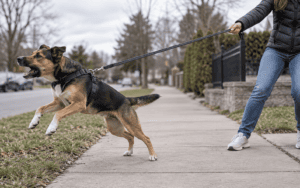
Pulling on leash, destructive chewing, separation anxiety, and aggression are rarely about stubbornness or defiance. In nearly every case, they reflect a mismatch between how we communicate and how dogs actually process information.
Recent MRI studies published in journals like Science and Animal Cognition have confirmed what skilled animal behaviorists have known for decades: dogs are social, emotionally rich, and highly intelligent, just not in the ways we tend to assume. Treating them like small humans leads to persistent training failures. Treating them like the cognitively complex dogs they actually are leads to rapid, lasting change.
How Dogs Actually Process the World
Smell Is Their Primary Sense, Not Sight
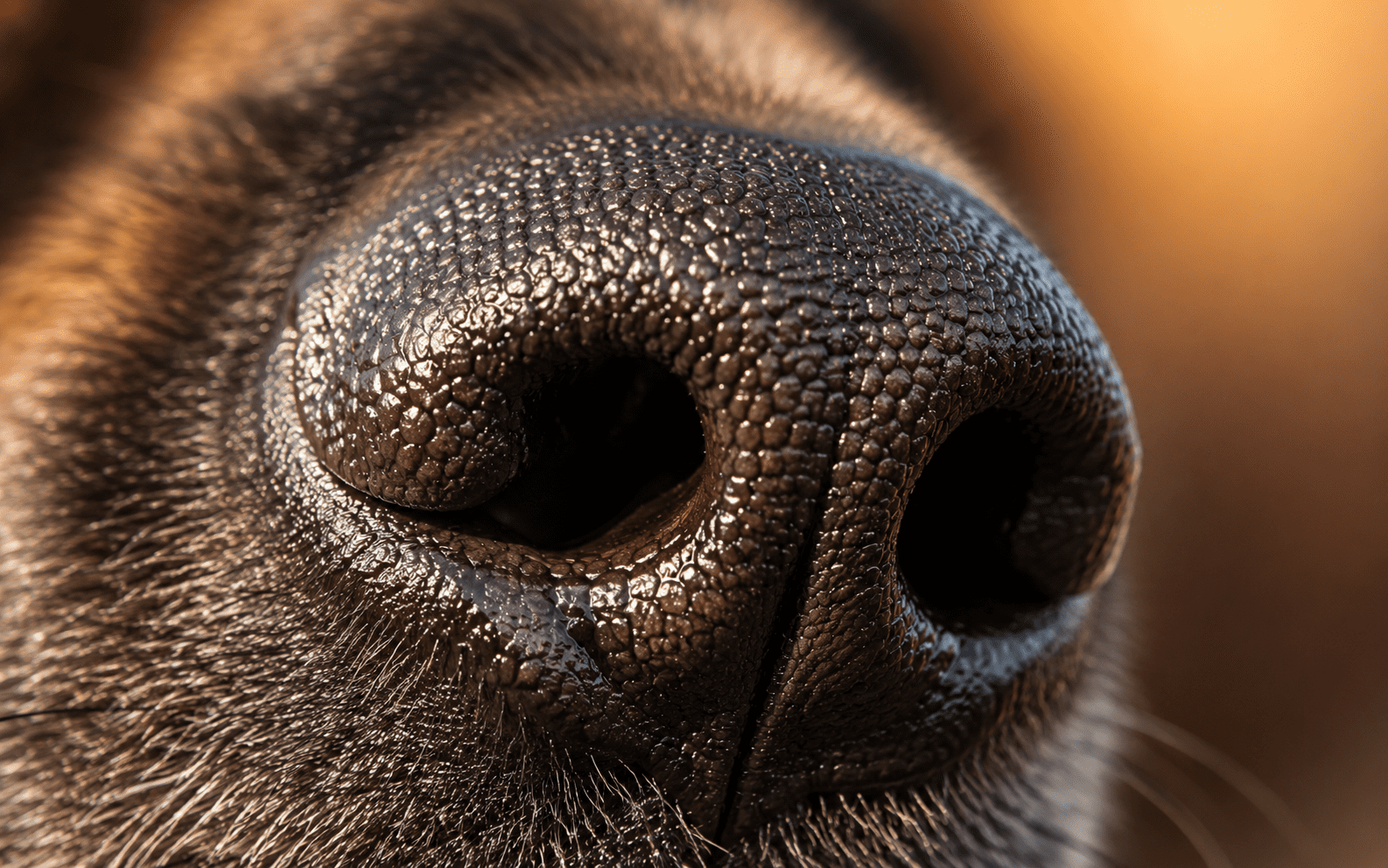
A dog’s nose contains approximately 300 million olfactory receptors, compared to about 6 million in humans. The area of their brain dedicated to processing smell is proportionally 40 times larger than ours. When your dog walks into a room, they’re not just seeing it, they’re reading a complete sensory report: who was here, what emotional state they were in, what they ate, and how long ago they left.
Olfactory processing is the dominant channel through which dogs understand their environment. This is why scent-based enrichment, sniff walks, nose work games, is one of the most mentally tiring and satisfying activities you can offer a dog. It’s not “just sniffing.” It’s exactly what their brain is built to do.
Pattern Recognition and Spatial Memory
Dogs excel at recognizing patterns and building spatial memory maps. They remember the route to the dog park after one or two trips. They notice when furniture moves. They recognize their owner at 300 yards, not by face, but by gait, posture, and scent signature.
Their short-term memory for isolated events is brief, estimated at around 2 minutes. But associative memory, linking a behavior to a consequence, or a scent to a location, is highly durable. This is the foundation of all effective dog training.
Do Dogs Have Emotions? What the Research Actually Shows
Yes, but not all emotions are the same, and this distinction matters enormously.

Neuroscientist Dr. Gregory Berns at Emory University trained dogs to lie still in MRI machines and found that the caudate nucleus, the brain region associated with anticipation and reward, activates in dogs in response to familiar human scents and positive cues the same way it does in humans. Dogs unambiguously experience what researchers classify as primary emotions: joy, fear, anger, disgust, and affection.
What dogs almost certainly do not experience:
- Guilt, the “guilty look” is an appeasement behavior triggered by reading your body language, not awareness of rule-breaking. Studies by Dr. Alexandra Horowitz at Barnard College confirmed dogs display this look based on owner reaction, not their own internal moral reckoning.
- Spite, dogs cannot plan ahead to “get back at you.” Revenge requires theory of mind at a level dogs don’t possess.
- Complex jealousy, some evidence suggests basic jealousy-adjacent responses, but not the layered social emotion humans experience.
This has enormous practical consequences. Scolding a dog an hour after an incident teaches them nothing about the incident, they’re already moved on, and they’re responding to your current anger, not their past action.
How Dogs Learn and Form Memories
Associative Learning Is Everything
Dogs learn almost entirely through association, pairing actions with outcomes. Every behavior a dog performs is either being reinforced (made more likely to repeat) or extinguished (made less likely) by what happens immediately after.
The key word is immediately. The canine brain connects a behavior to its consequence within a 1 to 2 second window. Praise or correction delivered outside that window gets associated with whatever the dog is doing right now, not what they did 10 seconds ago. This is why timing is the single most important mechanical skill in dog training.
→ For more on how dogs process the world mentally, read: Do Dogs Have Object Permanence?
Long-Term Memory and Emotional Imprinting
Dogs form strong long-term memories, especially around emotionally charged events. Trauma, socialization gaps, and early positive experiences leave lasting impressions that shape behavior for life.

A dog who was never exposed to children during the critical socialization window (roughly 3 to 14 weeks of age) will often react fearfully to them later, even without any direct negative experience. The brain defaults to “unfamiliar = potentially threatening” when it has no reference point.
→ Wondering how your dog experiences time between events? Read: Do Dogs Have a Sense of Time?
How Dogs Read Humans, Better Than We Read Them
One of the most striking findings in canine cognition research: dogs are uniquely skilled at reading human social cues, more so than chimpanzees, our closest genetic relatives.
Dogs follow pointing gestures, track human gaze direction, and respond to facial expressions in ways no other species naturally does. This is not just the result of training, it appears to be a product of thousands of years of co-evolution with humans. Their brains have literally been shaped by living alongside us.
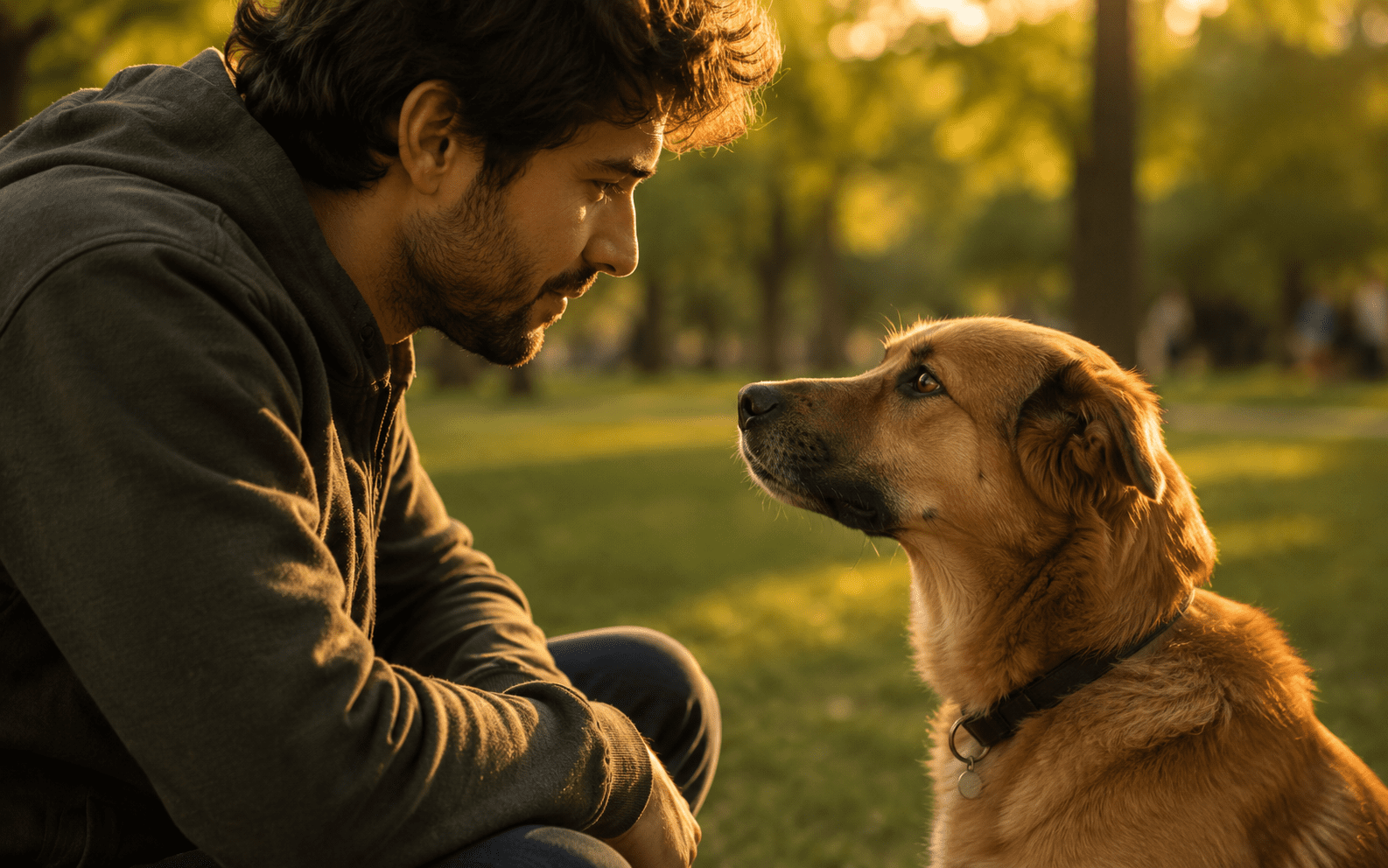
A 2021 study from the University of Helsinki found that dogs process emotional human faces in a specialized brain region and consistently show preference for looking at happy faces over neutral or angry ones.
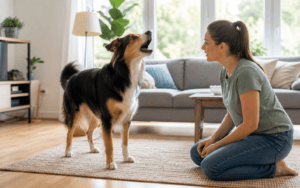
The practical implication is significant: your emotional state directly influences your dog’s behavior. A tense, frustrated owner creates a tense, anxious dog. Dogs are reading your shoulders, your breathing rhythm, your eye contact, and adjusting their behavior in real time.
Common Mistakes and Misconceptions About Dog Thinking
Myth #1: The guilty look means your dog knows they did something wrong.
It doesn’t. Dr. Horowitz’s research is definitive on this. The lowered head, flattened ears, and avoidant gaze appear when you act angry, not because of the dog’s internal awareness of a rule violation.
Myth #2: Dogs understand language the same way we do.
They respond to consistent sound cues, tone, and body language. “Sit” works because it sounds the same every time and has been paired with a specific action, not because the dog understands grammar or meaning.
Myth #3: Dominant dogs are trying to control the household.
The dominance-hierarchy model of dog behavior has been largely discredited by modern animal behaviorists. Most “dominant” behavior is anxiety, a lack of clear structure, or unmet physical and mental needs.
Myth #4: You can’t teach an old dog new tricks.
Neuroplasticity exists at every life stage. Adult and senior dogs can learn new behaviors, they may need higher-value reinforcers or more repetitions, but the capacity is absolutely there.
Myth #5: Ignoring bad behavior will always stop it.
Some behaviors are self-reinforcing regardless of your response. A dog who barks and gets to watch squirrels through the window is being rewarded by the squirrels, not by you. Extinction only works when you can remove the reinforcer entirely.
→ Understanding what drives instinctive behavior? Read: What Is Prey Drive in Dogs?
Actionable Framework: Communicate the Way the Canine Brain Works
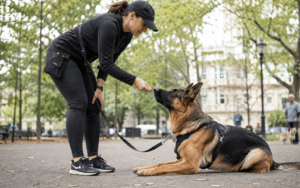
- Time your markers precisely. Use a clicker or a sharp verbal marker (“yes!”) within 1 second of the desired behavior. Late timing trains the wrong thing.
- Read calming signals early. Lip licking, yawning, turning away, and whale eye (showing the whites of the eyes) are stress signals, not defiance. Back off pressure before the dog escalates.
- Prioritize nose work daily. Even 10 to 15 minutes of structured sniff activity reduces cortisol and satisfies the brain’s dominant sense. This is legitimate mental exercise.
- Keep training sessions short. Five minutes of focused work beats 30 minutes of diminishing attention. Three to five short sessions per day produce faster results than one long one.
- Standardize rules across everyone in the home. Dogs learn context quickly, they’ll behave differently with different people if each person runs different rules. Pick a protocol and stick to it.
- Address emotional state before asking for behavior. A dog over threshold, too aroused, fearful, or reactive, cannot learn in that moment. Bring them back to baseline first.
FAQ: How Dogs Think
Do dogs think in words or pictures?
Neither, in the way humans do. Canine cognition is primarily sensory, anchored in scent, pattern, and emotional association. When a dog responds to a word like “sit,” they’re reacting to a learned sound cue and its associated outcome, not processing language in any linguistic sense.
Can dogs sense what I’m feeling emotionally?
Research strongly supports this. Dogs distinguish happy faces from fearful or angry ones, respond to tone of voice, and can detect physiological changes in humans, including elevated heart rate and shifts in body odor associated with stress. Your emotional state is information your dog is actively reading.
Do dogs have self-awareness?
Dogs show a form of self-awareness through scent, they respond distinctly to their own odor versus that of other dogs, which researchers use as a scent-based mirror test equivalent. They don’t pass the traditional visual mirror test, suggesting their self-concept operates through different sensory channels than ours.
Why does my dog stare at me?
Context determines meaning. Staring can signal attention-seeking, checking in for social cues, anticipating a known routine, or (in tense contexts) resource guarding. In relaxed interactions, mutual gaze between dogs and owners triggers an oxytocin release in both, the same bonding hormone involved in human parent-infant attachment.
Do dogs dream?
Almost certainly. MIT researchers found that rats replay the day’s experiences during REM sleep, and dog brain wave patterns during sleep closely mirror this. The twitching, soft vocalizations, and paw movements you observe during your dog’s sleep are consistent with active dreaming, most likely about recent events, running, playing, interacting with you.
Conclusion: What Knowing This Changes
Dogs aren’t small humans. They’re not pack wolves running a power play on your household. They’re a uniquely evolved species shaped by thousands of years of co-existence with people, with sensory capabilities, emotional depth, and social intelligence that, once understood, make every interaction with them more effective and more meaningful.
How dogs think is shaped by smell, association, emotional memory, and a remarkable ability to read the humans around them. Honor that, and training gets easier, behavior problems become explainable, and your relationship with your dog gets significantly better.
Get Real Results With K9 Mania Dog Training, Long Island’s Behavioral Experts
If your dog’s behavior has you searching for answers, K9 Mania Dog Training is here to help. We’re Long Island’s leading board and train program and home to top-tier animal behaviorists who understand exactly how dogs think, and apply that knowledge to achieve real, lasting results. From reactivity and anxiety to aggression and basic obedience, we’ve worked with it all.
Explore our in-home dog training and private training sessions and let us build the dog, and the bond, you’ve been working toward. Trust K9 Mania. We’ll meet your dog where their mind is.