Can dogs have panic attacks?Yes, dogs can have panic attacks just like humans do. These intense episodes of fear cause physical symptoms like trembling, excessive panting, drooling, and attempts to escape or hide.
If you’ve ever watched your dog suddenly freeze in fear, shake uncontrollably, or frantically try to escape during a thunderstorm or fireworks display, you’ve likely witnessed a panic attack. Understanding what triggers these episodes and how to respond can make a huge difference in your dog’s quality of life.
In this guide, we’ll walk you through everything you need to know about panic attacks in dogs, from recognizing the warning signs to practical strategies that actually help. Whether your dog struggles with specific triggers or seems anxious out of nowhere, you’ll find clear answers here.
Struggling with a fearful or anxious dog? Our in-home dog training program helps dogs overcome anxiety in their own environment.
What Are Panic Attacks in Dogs
A panic attack in dogs is a sudden, overwhelming wave of fear that triggers an intense physical and behavioral response. Unlike general anxiety that builds gradually, panic attacks hit fast and feel completely out of control to your dog.
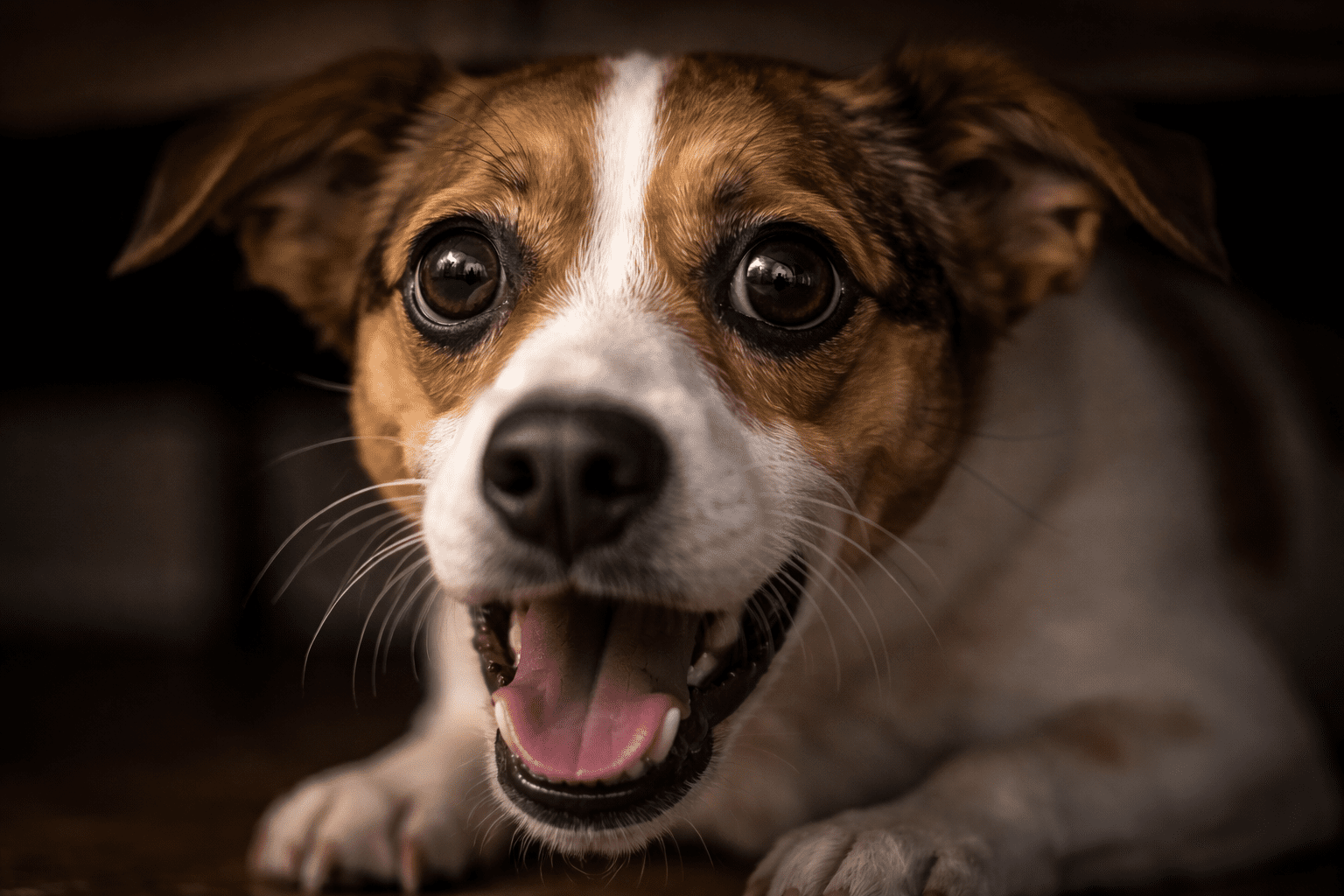
During an episode, your dog’s body goes into full fight-or-flight mode. Their heart races, breathing becomes rapid and shallow, and stress hormones flood their system. This isn’t just nervousness or being scared. It’s a full-body panic response that can be genuinely terrifying for your pet.
How Panic Attacks Differ From Normal Fear
Normal fear has an obvious cause and fades once the threat disappears. Your dog might bark at a stranger approaching the house, then calm down once the person leaves. That’s a healthy, proportional response.
Panic attacks are different. They often seem exaggerated compared to the trigger, or they happen without any clear reason at all. A dog having a panic attack might:
- React to a minor noise as if their life is in danger
- Continue panicking long after the trigger is gone
- Show extreme physical symptoms that seem out of proportion
- Struggle to calm down even with comfort and reassurance
The intensity is the biggest giveaway. While a nervous dog might whine or pace, a panicking dog acts like they’re in immediate danger.
The Science Behind Dog Panic Attacks
When dogs experience panic, their amygdala (the brain’s fear center) takes over. This ancient survival mechanism worked great for wild ancestors avoiding predators, but it causes problems for modern pets.
The body releases adrenaline and cortisol, preparing for an emergency that isn’t really there. Your dog’s pupils dilate, their muscles tense up, and blood rushes to their legs for a quick escape. Their digestive system shuts down, which is why panicked dogs often lose bladder or bowel control.
Some dogs are genetically predisposed to anxiety and panic. Certain breeds, like German Shepherds, Border Collies, and rescue dogs with unknown histories, show higher rates of panic-related behaviors. Early life experiences matter too. Puppies who miss critical socialization windows between 3-14 weeks often develop fear-based issues later.
Brain chemistry plays a role as well. Dogs with panic disorders may have imbalances in neurotransmitters like serotonin and dopamine, similar to humans with anxiety conditions.
Common Signs and Symptoms of Panic Attacks in Dogs
Recognizing a panic attack early helps you respond quickly and prevent the situation from getting worse. Dogs can’t tell us when they’re panicking, so you need to read their body language and behavior.
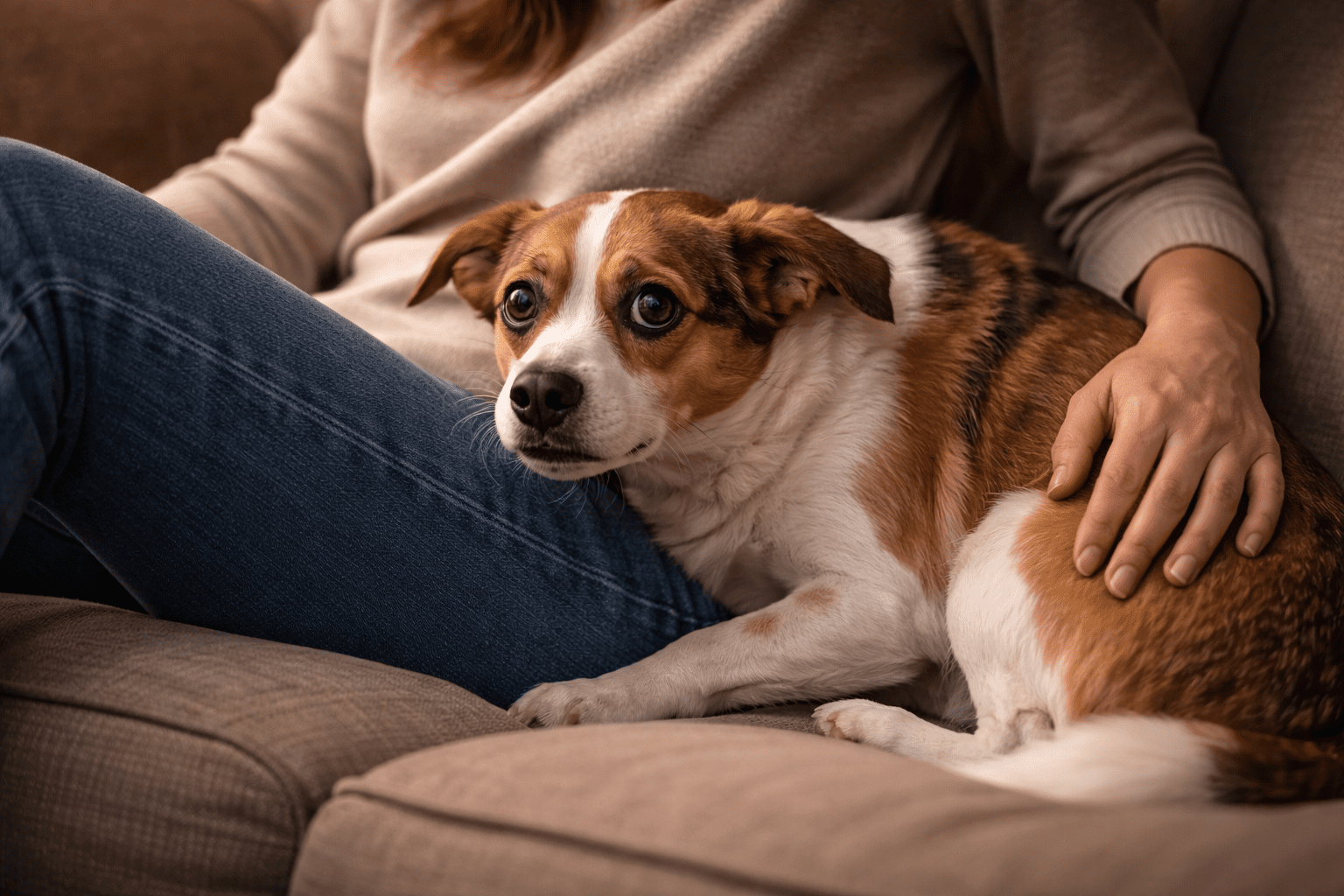
Physical Symptoms to Watch For
The physical signs of panic attacks are usually impossible to miss:
- Excessive panting even when not hot or tired
- Trembling or shaking that seems uncontrollable
- Dilated pupils with a wide-eyed, fearful expression
- Drooling more than normal
- Sweaty paw pads that leave wet prints
- Rapid heartbeat you can feel when touching their chest
- Tucked tail pressed tightly against their body
- Loss of bladder or bowel control during severe episodes
You might also notice your dog trying to make themselves smaller by crouching low or pressing against walls and furniture. Their ears will be pinned back flat against their head.
Behavioral Changes During Episodes
Panic changes how your dog acts. Some dogs try to escape whatever is scaring them, even if that means hurting themselves:
- Destructive behavior like scratching at doors or chewing through barriers
- Attempts to escape by jumping fences or breaking out of crates
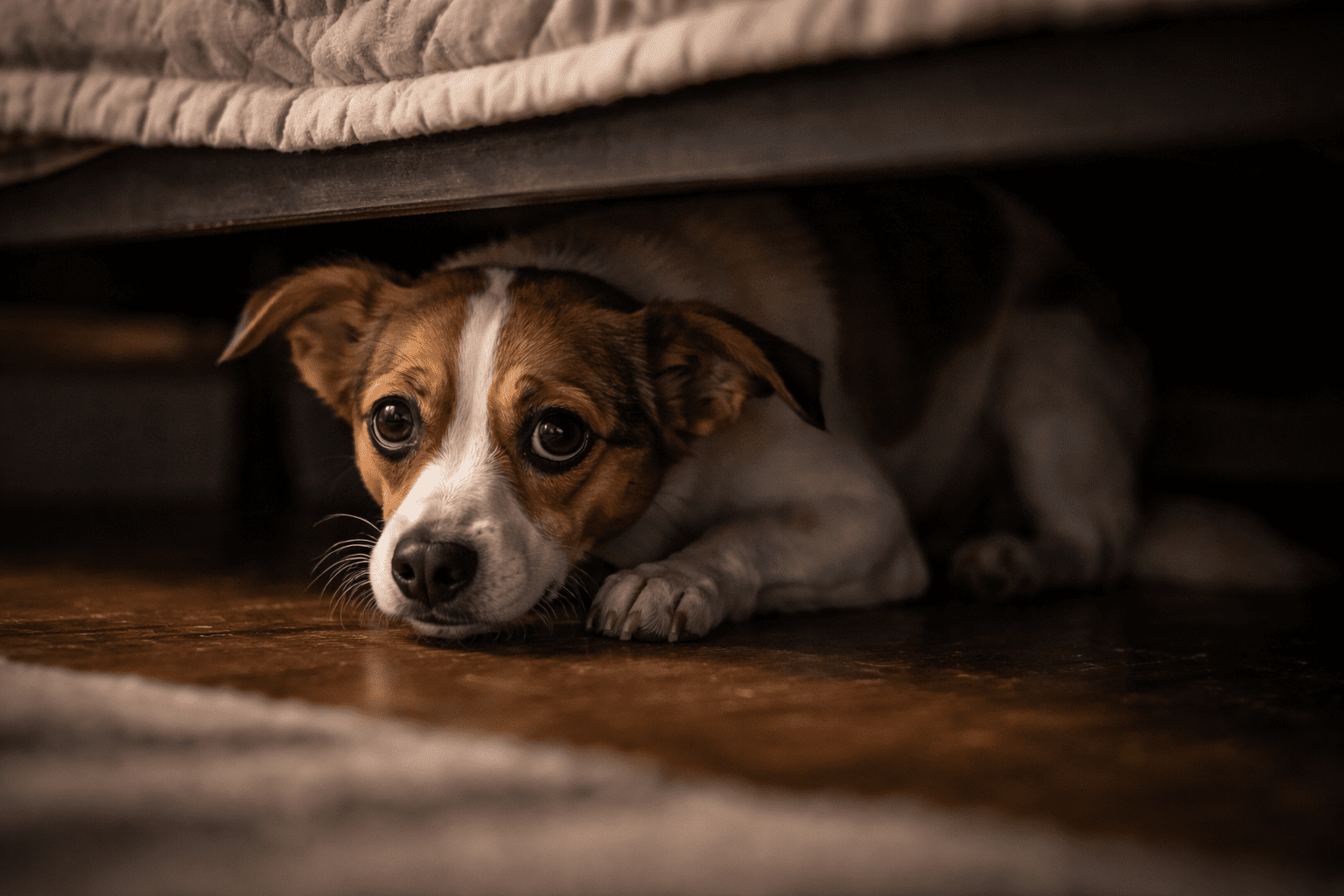
- Hiding in tight spaces like closets, under beds, or behind furniture
- Pacing back and forth without settling
- Excessive barking or whining that sounds distressed
- Refusing food or treats they’d normally love
- Aggression when cornered or restrained (fear-based snapping or biting)
Some dogs shut down completely instead of acting out. They might freeze in place, refuse to move, or become unresponsive to your voice. This “shutdown” response is just as serious as the more active panic behaviors.
If you notice these patterns becoming frequent or severe, professional help makes a real difference. Training programs like our board and train Long Island service provide intensive support for dogs with anxiety issues.
What Triggers Panic Attacks in Dogs
Understanding your dog’s specific triggers is the first step toward preventing future episodes. While every dog is different, certain situations cause panic attacks more often than others.
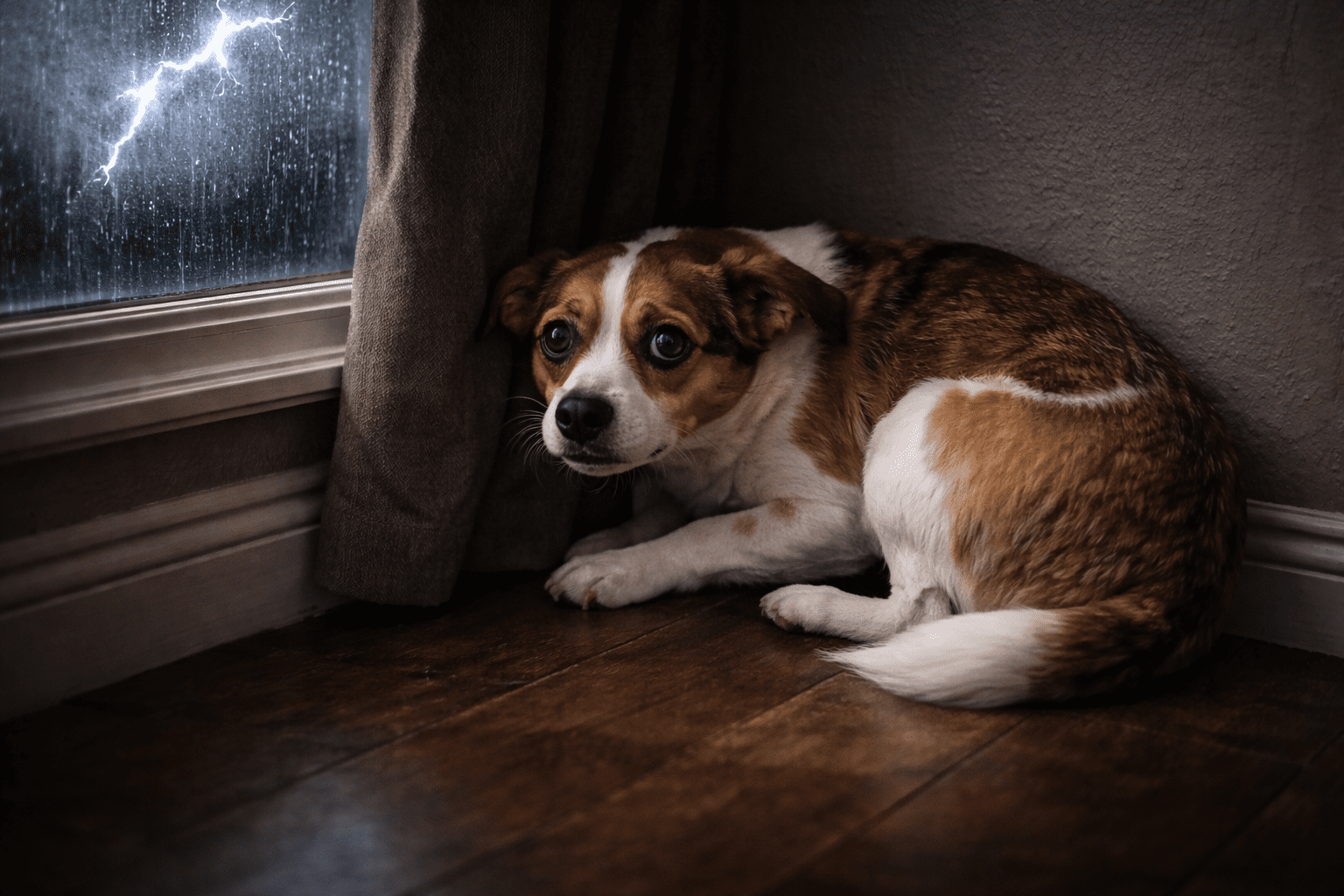
Environmental and Situational Triggers
Loud or unexpected noises top the list of panic triggers:
- Thunderstorms with lightning, thunder, and changes in barometric pressure
- Fireworks or other explosive sounds
- Construction noise like jackhammers or power tools
- Vacuum cleaners and other loud household appliances
- Car backfires or sudden traffic sounds
Unfamiliar environments stress some dogs to the point of panic. A trip to the vet, groomer, or boarding facility might trigger an episode, especially if your dog had a bad experience in the past.
Separation from their owner causes intense panic in dogs with attachment issues. Even brief departures can trigger full-blown attacks. Learn more about this specific issue in our guide on signs of separation anxiety.
Past Trauma and Learned Fear
Dogs who experienced abuse, neglect, or frightening events often develop panic responses to specific triggers:
- A rescue dog who was hit might panic around raised hands
- A dog attacked at a park might have panic attacks around other dogs
- A puppy trapped in a crate too long might panic when confined
These learned fears can last years, even in safe, loving homes. The dog’s brain associates certain cues with danger, triggering panic even when the actual threat is long gone.
Lack of early socialization creates vulnerabilities too. Puppies who don’t experience normal sights, sounds, and situations during their critical development period often grow into fearful adults. Things that seem ordinary to other dogs (like the doorbell or seeing a bicycle) can trigger panic in under-socialized pets.
Panic Attacks vs. Anxiety Attacks: Understanding the Difference
While people often use these terms interchangeably, panic attacks and anxiety attacks have distinct characteristics in dogs. Knowing which your dog experiences helps you respond appropriately.
| Feature | Panic Attacks | Anxiety Attacks |
| Onset | Sudden and intense, peaks within minutes | Gradual buildup over time |
| Duration | Usually 5-20 minutes (rarely longer) | Can last hours or persist throughout the day |
| Trigger | May have no obvious cause or overreaction to minor stimulus | Usually tied to specific situation or anticipation |
| Physical Intensity | Extreme symptoms (trembling, inability to function) | Moderate symptoms (restlessness, mild panting) |
| Recovery | Dog exhausted after but returns to normal | May remain on edge even after trigger passes |
| Predictability | Often unpredictable and random | More predictable based on known stressors |
Why the Distinction Matters
Anxiety tends to respond well to management strategies like routine, exercise, and gradual desensitization. You can often prevent anxiety by avoiding known triggers or preparing your dog in advance.
Panic attacks need a different approach. Because they’re sudden and intense, prevention is harder. The focus shifts to helping your dog feel safe during episodes and reducing overall stress levels that make panic more likely.
Some dogs experience both. They might have general anxiety about being alone, then have full panic attacks when they hear thunder. Understanding your dog’s patterns helps you create a targeted treatment plan.
How to Help Your Dog During a Panic Attack
When your dog is in the middle of a panic attack, your response can either calm them down or make things worse. Here’s what actually helps.
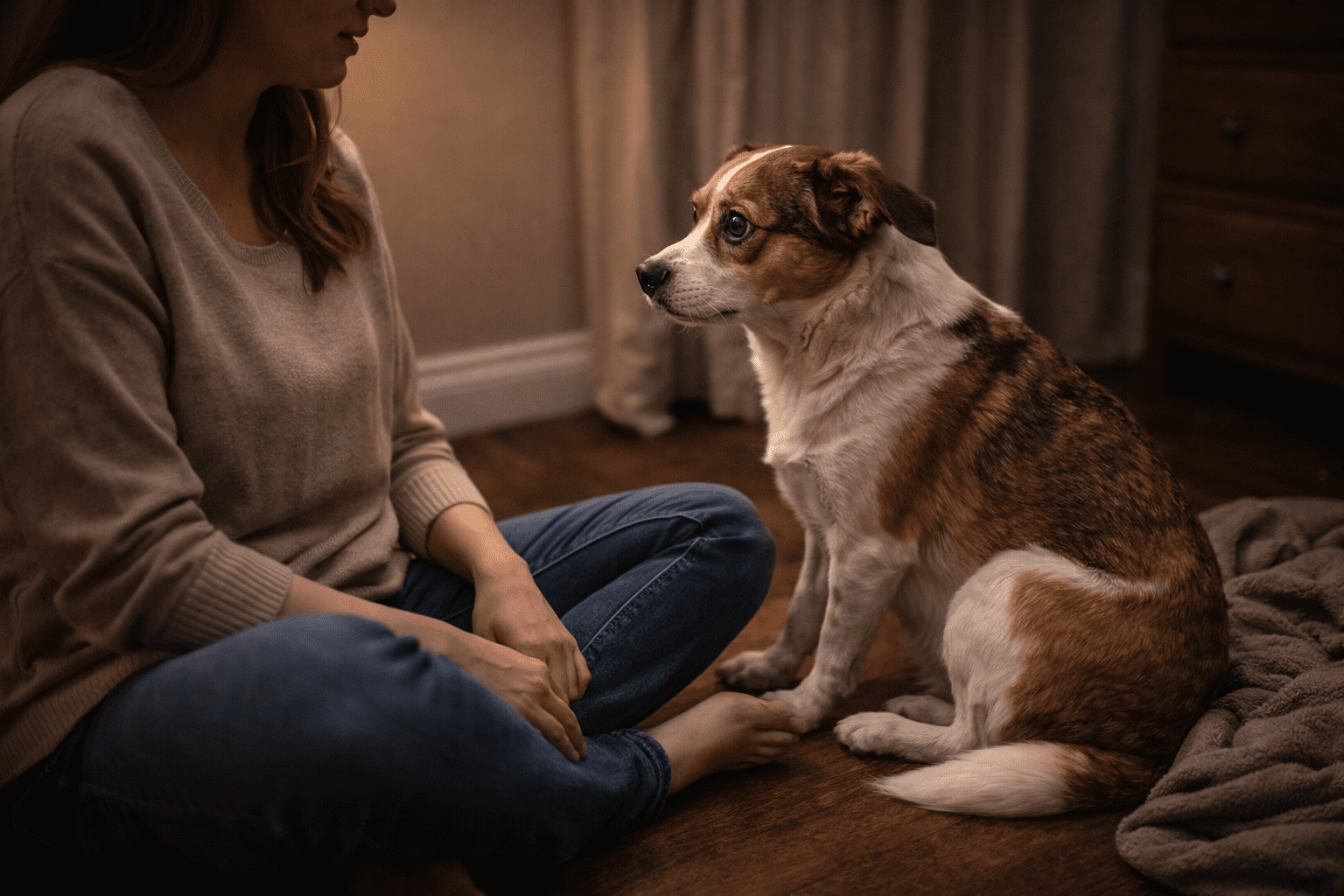
Immediate Steps to Take
Stay calm yourself. Dogs pick up on your energy, and if you’re stressed or upset, you’ll amplify their panic. Take slow, deep breaths and use a gentle, reassuring voice.
Move to a safe, quiet space. If possible, guide your dog to a familiar room away from the trigger. Close curtains during storms, turn off loud appliances, or create distance from whatever is causing the panic.
Don’t force physical contact. Some dogs find comfort in being held or petted during panic attacks, while others need space. Let your dog choose. Offer your presence without crowding them.
Create a safe den. Many dogs naturally seek small, enclosed spaces when panicking. A crate covered with a blanket (if your dog is crate-trained) or access to a closet or bathroom can help them feel protected. Our article on proper crate training explains how to make crates feel safe, not scary.
Try pressure wraps. Products like anxiety wraps or thundershirts apply gentle, constant pressure that can calm some dogs, similar to swaddling a baby.
What NOT to Do
These common mistakes can make panic attacks worse:
- Don’t punish or scold your dog. They can’t control their panic, and punishment adds to their fear.
- Don’t force them into the situation that’s triggering the panic. Exposure therapy only works when done gradually and carefully, not during an active attack.
- Don’t leave them alone unless they’re actively trying to get away from you. Most dogs do better with a calm, supportive presence nearby.
- Don’t restrain them forcefully. A panicking dog might bite or injure themselves trying to escape restraint.
Long-Term Management Strategies
Between episodes, work on reducing your dog’s overall stress and building their confidence:
Establish a predictable routine. Dogs feel safer when they know what to expect. Feed, walk, and play with your dog at consistent times each day.
Provide plenty of exercise. Physical activity burns off excess energy and reduces background anxiety. A tired dog is generally a calmer dog.
Work on basic obedience. Training builds confidence and gives your dog something to focus on during stressful moments. Start with simple commands from our guide on top dog training commands.
Consider calming supplements. Products containing ingredients like L-theanine, chamomile, or CBD may help reduce anxiety between panic episodes. Always check with your vet first.
Desensitize gradually. If your dog panics over specific triggers like thunderstorms, you can slowly help them build tolerance through controlled exposure and positive associations. This takes time and should be done carefully, preferably with professional guidance.
When to Seek Professional Help
Some panic attacks need more than home management. Knowing when to call in experts protects your dog’s wellbeing and your peace of mind.
Warning Signs That Require Veterinary Attention
Contact your vet immediately if your dog:
- Has panic attacks that last longer than 30 minutes
- Injures themselves trying to escape (broken teeth, torn nails, bloody paws)
- Shows signs of exhaustion or collapse after episodes
- Has panic attacks that increase in frequency or intensity
- Develops new symptoms like vomiting, diarrhea, or seizures alongside panic
- Becomes aggressive during or after panic episodes
Your vet can rule out medical causes that might look like panic attacks. Thyroid problems, heart conditions, brain tumors, and certain medications can all cause symptoms similar to panic. Blood tests and physical exams help eliminate these possibilities.
How Professional Dog Training Helps
Professional dog trainers in Long Island who specialize in anxiety and fear-based behaviors bring expertise you can’t get from internet articles alone. They assess your individual dog, identify triggers you might have missed, and create a customized behavior modification plan.
Working with a professional is especially important if:
- Your dog’s panic attacks put them or others at risk
- You’ve tried home strategies without seeing improvement
- Your dog has a bite history related to fear or panic
- The panic attacks stem from complex trauma or multiple triggers
Intensive programs like our dog boarding camp provide immersive training environments where dogs learn new coping skills through consistent, expert-guided practice.
Medication Options
In severe cases, medication can help dogs manage panic while you work on behavioral training. Common options include:
| Medication Type | How It Works | Best For |
| SSRIs (fluoxetine, sertraline) | Increase serotonin levels; taken daily | Long-term anxiety and panic prevention |
| Benzodiazepines (alprazolam, diazepam) | Fast-acting sedation; given during episodes | Event-specific panic (storms, fireworks) |
| Trazodone | Calming without heavy sedation | Moderate panic or as-needed use |
| Clonidine | Reduces physical anxiety symptoms | Dogs who don’t respond well to other meds |
Medication works best when combined with behavior modification, not used alone. Think of meds as a tool that makes training more effective by reducing your dog’s panic enough that they can learn new responses.
Wrapping Up: Supporting Your Dogs Panic Attacks
Yes, dogs can experience panic attacks, and these episodes can be just as distressing for them as they are for humans. The encouraging part is that, with the right approach, most dogs can still live calm, happy, and fulfilling lives.
The first step is understanding your dog. Learn their triggers, recognize early warning signs, and provide a safe, reassuring environment when episodes occur. Avoid punishment, as fear-based reactions are not a choice. Instead, focus on building confidence through consistent routines, positive reinforcement, and gradual exposure to stressors when appropriate.
Progress takes time. Some dogs respond well to home management, while others benefit from professional training or medical support. Both options are completely valid. What matters most is taking action and staying patient.
Every effort you make to support your anxious dog improves their well-being and deepens your bond.
K9 Mania Dog Training, a leading board and train Long Island, specializes in anxiety, fear, and behavior challenges. Our experienced trainers work one-on-one with dogs to create lasting, confidence-based change.
You May Also Want to Read
👉 Crate Training a Dog with Separation Anxiety
👉 How to Train a Dog to Lay Down: Step-by-Step Guide
👉 Signs of Bad Dog Boarding: What Every Dog Owner Should Know
Frequently Asked Questions
What does a panic attack look like in a dog?
A dog having a panic attack typically shows extreme physical signs like uncontrollable trembling, excessive panting with an open mouth, wide eyes with dilated pupils, and drooling. Behaviorally, they might try to escape by scratching at doors, hide in tight spaces, pace frantically, or freeze completely. Some dogs lose control of their bladder or bowels during severe episodes.
How do I calm my dog down from a panic attack?
Move your dog to a quiet, safe space away from the trigger if possible. Stay calm yourself and speak in a soft, reassuring voice. Let your dog choose whether they want physical contact or space. Offer familiar comfort items like their favorite blanket or toy. Don’t punish or force them into anything. Most panic attacks pass within 20 minutes if you minimize stress and provide a sense of security.
What’s the difference between a panic attack and an anxiety attack?
Panic attacks come on suddenly with intense physical symptoms and typically last 5-20 minutes before subsiding. They may happen without an obvious trigger. Anxiety attacks build more gradually, last longer (sometimes hours), and are usually tied to specific situations or anticipation of stressful events. Panic is more intense but shorter, while anxiety is moderate but more persistent.
What are signs of anxiety in dogs?
General anxiety shows up as restlessness, excessive panting when not exercised, pacing, whining, drooling, destructive chewing, difficulty settling down, loss of appetite, and clingy behavior. Anxious dogs might also show repetitive behaviors like tail chasing or excessive licking. These symptoms are less intense than panic attacks but can occur daily or in specific situations.
What triggers panic attacks in dogs?
Common triggers include loud noises (thunderstorms, fireworks, construction), unfamiliar environments, separation from owners, visits to the vet or groomer, encounters with other dogs (if they have a fear history), and past trauma. Some dogs have panic attacks without obvious triggers due to generalized anxiety disorder or chemical imbalances in the brain.
How long can a panic attack last for dogs?
Most dog panic attacks peak within 5-10 minutes and resolve within 20 minutes. However, severe episodes can last up to 30 minutes or longer. The physical symptoms usually fade first, while behavioral signs like hiding or wariness may continue for hours after the attack ends. If your dog’s panic episodes last longer than 30 minutes reularly, consult your veterinarian.