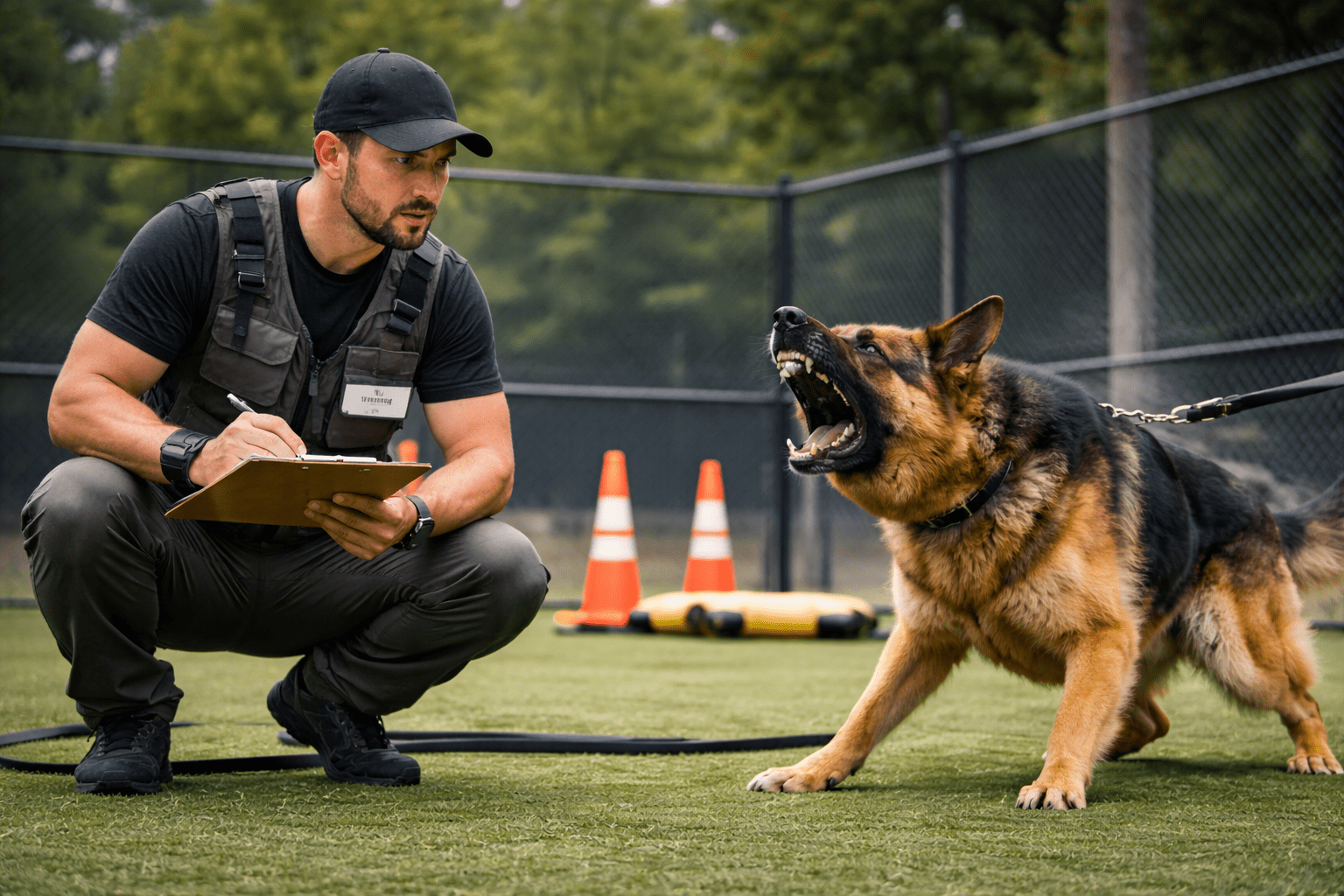
Board and train for aggressive dogs provides intensive behavioral modification through immersive training where your dog lives with professional trainers who work on aggression issues around the clock. This approach addresses dangerous behaviors faster than weekly training sessions because your dog receives consistent correction and positive reinforcement throughout the day in various situations.
Dealing with an aggressive dog can feel overwhelming and even scary. Whether your dog lunges at other dogs, growls at strangers, or shows food aggression, you need a solution that works quickly and effectively. Many Long Island dog owners find that traditional training methods move too slowly when safety is a concern.
Board and train programs offer a unique solution. Your dog stays with experienced trainers who specialize in aggression, receiving professional guidance every single day. This intensive approach often produces faster results than weekly lessons because trainers can immediately address problem behaviors as they happen.
Transform your aggressive dog’s behavior with professional help. Explore our board and train program on Long Island designed for dogs with behavioral challenges.
What Is Board and Train for Aggressive Dogs?
Board and train for aggressive dogs is a residential training program where your dog lives temporarily with professional trainers who specialize in behavioral modification. Unlike drop-off daycare or basic obedience classes, these programs focus specifically on identifying aggression triggers and teaching your dog better responses.
Your dog typically stays for 2-4 weeks, depending on the severity of the aggression and your specific goals. During this time, trainers work with your dog multiple times throughout each day, exposing them to controlled situations that would normally trigger aggressive reactions.
How Board and Train Programs Work
The process starts with a thorough evaluation. Trainers assess what triggers your dog’s aggression, whether it’s other dogs, strangers, food, toys, or specific situations like being touched or confined.
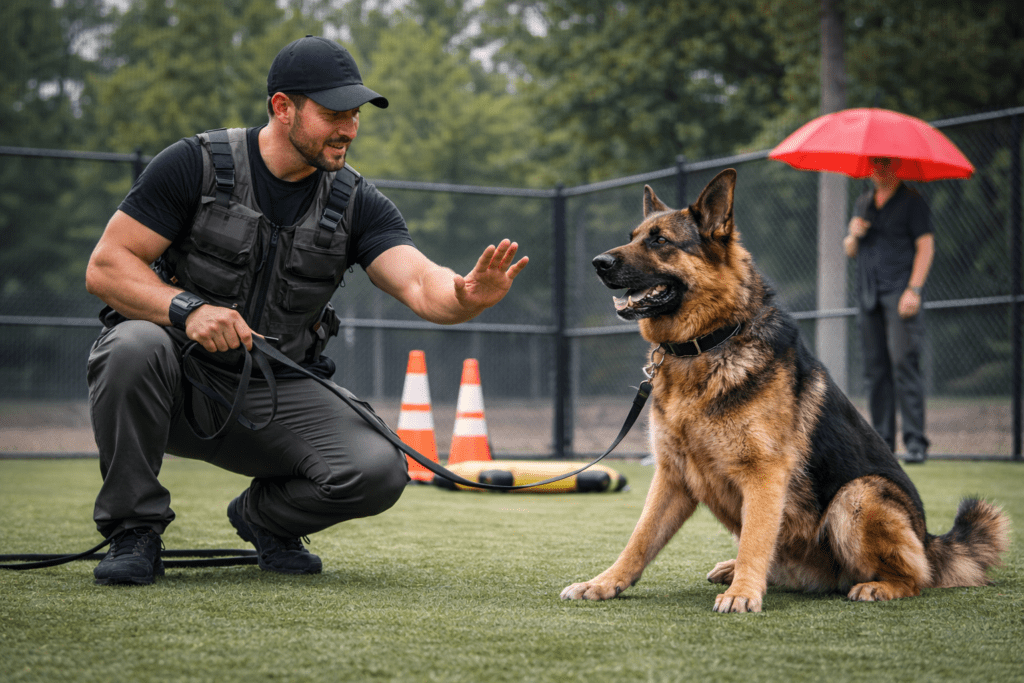
Once they understand your dog’s specific issues, trainers create a customized plan. This might include:
- Desensitization to triggers in controlled settings
- Teaching alternative behaviors to replace aggression
- Building confidence in anxious dogs who act out from fear
- Establishing clear leadership and structure
- Practicing obedience commands under distraction
- Socialization with people and dogs when appropriate
Trainers document your dog’s progress daily, often sending updates through photos or videos so you can see improvements. At K9 Mania Dog Training on Long Island, owners receive regular communication about their dog’s journey.
Why Choose Board and Train for Aggression Issues
Aggression problems demand immediate, consistent intervention. When you only see a trainer once a week, your dog might behave perfectly during that hour but continue aggressive patterns at home the other 167 hours.
Board and train eliminates this gap. Trainers can address problems the moment they surface, whether that’s at 6 AM during feeding time or 10 PM when your dog hears a noise outside. This round-the-clock access speeds up learning dramatically.
Safety is another major factor. Aggressive dogs can hurt people or other animals. Working with professionals in a controlled environment protects your family, neighbors, and community while your dog learns better behaviors.
The immersive nature also helps dogs generalize their training. They practice good behavior in the trainer’s home, yard, on walks through different neighborhoods, and in various scenarios. This makes it easier for dogs to maintain their training when they return home.
Types of Aggression Addressed in Board and Train Programs
Not all aggression looks the same, and understanding what type your dog displays helps trainers develop the right approach. Board and train programs on Long Island typically address multiple aggression types, often in the same dog.
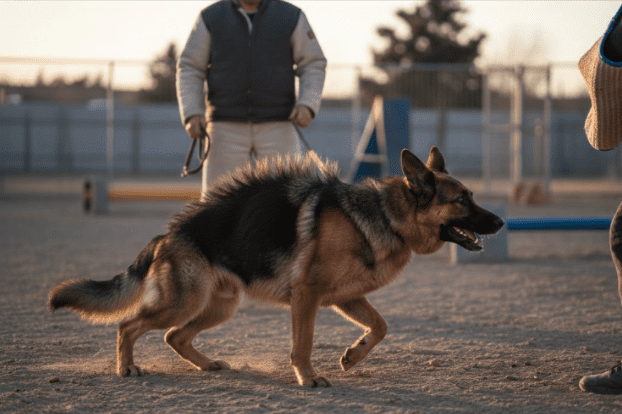
Common Aggression Triggers
Dogs rarely act aggressively without reason. Most aggression stems from specific triggers:
Fear-based aggression happens when dogs feel threatened and believe they need to defend themselves. A dog who was poorly socialized as a puppy might bark and lunge at strangers because they seem scary.
Territorial aggression appears when dogs protect their space, whether that’s your home, yard, or car. These dogs often bark aggressively at people passing by or delivery drivers approaching the door.
Resource guarding occurs when dogs protect valuable items like food, toys, bones, or even favorite people. This can escalate to biting if someone tries to take the resource away.
Dog-to-dog aggression ranges from barrier frustration (lunging on leash) to serious fights. Some dogs only react to certain types of dogs while others show aggression toward all dogs.
Redirected aggression happens when a dog can’t reach their intended target and attacks whatever is nearby instead. For example, a dog frustrated by a dog outside might bite the owner trying to pull them away from the window.
Understanding your dog’s specific triggers allows trainers to create targeted solutions. This is similar to how puppy training on Long Island addresses age-appropriate behaviors before they become serious problems.
Here’s how different aggression types present and what board and train programs do to address them:
| Aggression Type | Common Signs | Training Approach |
| Fear-Based | Backing away, growling, snapping when cornered | Building confidence, desensitization to triggers, creating positive associations |
| Territorial | Barking at windows, charging at door, aggressive in yard | Teaching calm responses to visitors, establishing boundaries, impulse control |
| Resource Guarding | Stiffening over food/toys, growling when approached, freezing | Trade-up games, teaching “drop it,” building trust around resources |
| Dog Aggression | Lunging on leash, fighting, excessive barking at other dogs | Controlled socialization, teaching focus commands, distance work |
What to Expect During Board and Train for Aggressive Dogs
Knowing what happens during your dog’s stay helps you feel confident in your decision and prepares you for their return home.
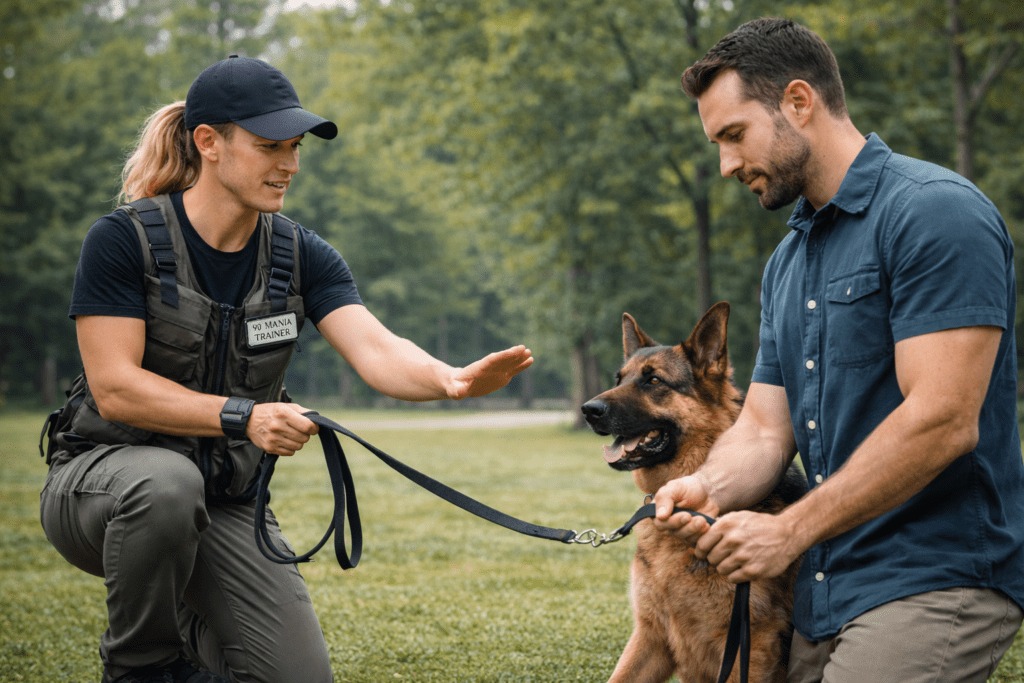
Initial Assessment Process
The first few days focus on evaluation rather than heavy training. Trainers need to see your dog’s true personality and identify all triggers, not just the ones you reported.
They’ll test responses to various situations:
- Meeting new people of different ages and appearances
- Seeing other dogs at different distances
- Handling sensitive areas like paws, ears, and mouth
- Resource scenarios with food and toys
- Reactions to noises, movements, and environmental changes
This assessment reveals the full picture of your dog’s aggression. Sometimes dogs show additional issues once they’re away from home. Other times, behaviors improve simply from the change in environment and leadership.
Trainers also evaluate your dog’s obedience foundation. Dogs with zero basic training need to learn commands alongside their behavioral modification, which may extend the program length.
Training Methods Used
Reputable board and train programs use balanced training approaches that combine positive reinforcement with appropriate corrections. For aggressive dogs, this typically means:
Building a strong foundation through basic obedience. Dogs must learn to follow commands reliably before addressing aggression directly. Commands like “sit,” “stay,” “place,” and “heel” give dogs structure and alternative behaviors.
Desensitization and counter-conditioning expose dogs gradually to their triggers at safe distances. As the dog remains calm, trainers reward good behavior and slowly decrease distance over time. This rewires the dog’s emotional response.
Establishing clear leadership through structured routines and boundaries. Many aggressive dogs lack confidence in their owners and feel they must protect themselves or their family. Clear leadership relieves this pressure.
Practicing impulse control helps dogs learn to think before reacting. Exercises like waiting at doorways, staying calm during feeding, and leaving temptations alone build self-control that transfers to aggression triggers.
Duration and Timeline
Most board and train programs for aggressive dogs run 2-4 weeks. Serious aggression cases may require longer stays or follow-up sessions.
Week 1 focuses on assessment, relationship building, and establishing basic obedience. Dogs need time to adjust to their new environment before intensive work begins.
Week 2-3 involves active behavioral modification. Trainers introduce triggers in controlled scenarios, teaching and reinforcing better responses. You might receive daily updates showing progress.
Final days prepare for the transition home. Trainers often schedule owner education sessions where they teach you how to maintain your dog’s progress. This training is crucial because your dog needs to respond to you the same way they respond to their trainer.
Board and Train vs. Other Training Options
When dealing with aggression, you have several training choices. Understanding how board and train compares helps you make the best decision for your situation.
| Training Method | Best For | Typical Results Timeline | Cost Range |
| Board and Train | Serious aggression, busy owners, need fast results, safety concerns | 2-4 weeks for significant improvement | Higher investment for intensive work |
| In-Home Training | Mild aggression, environmental-specific issues, owners who can practice daily | 6-12 weeks with weekly sessions | Lower per-session cost, longer timeline |
| Group Classes | Dogs with minor reactivity, socialization needs, budget-conscious | 8-12 weeks, requires homework | Most affordable but slowest |
| Day Training | Moderate issues, owners want professional help during work hours | 4-8 weeks with consistent schedule | Middle ground option |
In-home dog training on Long Island works well for many behavioral issues, but aggression cases often benefit from the controlled environment and intensive nature of board and train programs.
The main advantage of board and train is speed and consistency. Your dog receives professional guidance all day, every day. There’s no gap between sessions where your dog might practice bad behaviors.
The challenge is cost. Board and train programs cost more upfront than weekly lessons because you’re paying for round-the-clock care and training. However, many owners find the faster results and guaranteed progress worth the investment.
Another consideration is owner involvement. With weekly sessions, you practice with your dog daily between lessons. With board and train, the trainer does the initial work, then teaches you to maintain it. Both require your commitment, just at different stages.
Preparing Your Dog for Board and Train
Getting your dog ready for their stay increases the chances of success and helps them adjust more smoothly to the temporary change.
Before Drop-Off Checklist
Health requirements come first. Most programs require current vaccinations, flea/tick prevention, and a health check from your vet. Aggressive dogs may need additional precautions to keep trainers and other dogs safe.
Gather supplies your dog will need:
- Current food (enough for the entire stay plus extra)
- Any medications with clear instructions
- Collar with ID tags
- Favorite blanket or toy for comfort
- Recent photos in case of emergency
Document your dog’s triggers in detail. Write down specific situations that cause aggression, what the behavior looks like, and what you’ve tried already. Video examples help trainers see exactly what you’re dealing with. Understanding your dog’s patterns is just as important as recognizing puppy aggression early before it develops into serious adult aggression.
Prepare yourself mentally for the separation. Aggressive dogs often have anxious owners who unknowingly reinforce nervous behaviors. Your dog will pick up on your stress during drop-off, so stay calm and confident.
Communicate concerns with your trainer ahead of time. If your dog has medical issues, specific fears, or has bitten before, full disclosure protects everyone and allows trainers to plan appropriately.
After Board and Train: Maintaining Progress
Your dog’s training doesn’t end when they come home. In fact, the work you do after board and train determines whether the results last or fade.
Owner Training Sessions
Before you take your dog home, you’ll attend one or more sessions where trainers teach you their techniques. Pay close attention during these lessons because you need to replicate what the trainer does.
You’ll learn:
- How to hold the leash and give commands
- Timing for corrections and rewards
- Reading your dog’s body language
- Handling trigger situations safely
- What to do if aggression resurfaces
Take notes, record videos if allowed, and ask questions. Don’t feel embarrassed if you need to practice the same thing multiple times. Many owners struggle initially because they’re not used to the firm, clear communication style that works with aggressive dogs.
Consistency at Home
Dogs thrive on consistency, and aggressive dogs especially need clear rules. Everyone in your household must follow the same guidelines the trainer established.
Maintain the structure your dog learned. If trainers had your dog wait before going through doorways, keep doing that. If they earned meals by working for them, continue that practice. These routines provide stability and reinforce your leadership.
Practice daily even after your dog seems “fixed.” Aggression can resurface if you become complacent. Short training sessions every day keep skills sharp and remind your dog of their new behaviors.
Avoid trigger situations initially. If your dog completed board and train for dog aggression, don’t immediately take them to the dog park. Gradually reintroduce challenges as your confidence grows. This is where the power of consistency in dog training becomes essential.
Stay in contact with your trainer. Reputable programs offer follow-up support when you have questions or face setbacks. Use this resource rather than letting problems grow.
Choosing the Right Board and Train Program on Long Island
Not all board and train programs handle aggression equally well. Choosing the wrong program wastes money and could make your dog worse.
Check trainer credentials first. Look for certifications, years of experience specifically with aggressive dogs, and evidence of ongoing education. Aggression requires expertise beyond basic obedience training.
Ask about methods used. You should understand and agree with their training philosophy before enrolling your dog. Avoid programs that rely solely on punishment or refuse to explain their techniques.
Visit the facility if possible. Where will your dog stay? Do they have secure areas for aggressive dogs separated from others? Is the environment clean and safe?
Request references from past clients with aggressive dogs. Success stories from similar cases indicate the program can handle your dog’s issues.
Understand what’s included. Does the price cover the entire program, or are there hidden fees? What happens if your dog needs more time? Are follow-up sessions included?
Review contracts carefully before signing. What happens if your dog bites someone during training? Is there a guarantee? What are the refund policies?
K9 Mania Dog Training on Long Island specializes in behavioral modification for aggressive dogs, offering experienced trainers and comprehensive programs that include owner education.
Learning all about board and train and how to prepare for it gives you realistic expectations and better outcomes.
Final Thoughts on Board and Train for Aggressive Dogs
Choosing board and train for aggressive dogs is a significant decision that requires research, financial investment, and commitment to maintaining your dog’s progress afterward. However, for many Long Island families dealing with dangerous behaviors, this intensive approach provides the fastest path to safety and peace of mind.
The immersive nature of board and train addresses aggression from multiple angles simultaneously. Your dog learns basic obedience, practices self-control, experiences proper leadership, and faces their triggers in controlled situations all within the same program. This comprehensive approach creates lasting change that weekly training sessions take much longer to achieve.
Remember that your involvement after your dog returns home determines long-term success. Board and train gives your dog the foundation, but you must maintain and build upon that foundation through consistent practice and clear boundaries. With the right program and your continued effort, most aggressive dogs can become well-behaved, trustworthy companions.
You May Also Want to Read
Why Is My Puppy Biting Me: Common Causes and Easy Solutions
How to Stop Leash Pulling in Dogs: The Proven Training Guide
Top 10 Essential Dog Commands Every Owner Must Know
Frequently Asked Questions About Board and Train for Aggressive Dogs
What is the best training for an aggressive dog?
The best training for an aggressive dog combines behavioral modification techniques with obedience training in a controlled environment. Board and train programs work well because they provide intensive daily training that addresses the root causes of aggression while teaching alternative behaviors. The most effective approaches use balanced training methods that include desensitization, counter-conditioning, and establishing clear leadership.
Can a dog be trained out of aggression?
Yes, most aggressive dogs can be trained to manage and control their aggressive responses. While some triggers may always exist, dogs can learn better ways to cope with them instead of reacting aggressively. Success depends on identifying the type of aggression, working with experienced trainers, and maintaining consistent training after the program ends. However, genetics and early life experiences sometimes limit how much improvement is possible.
How do I break my dog from being aggressive?
Breaking aggression requires identifying triggers, teaching your dog alternative responses, and consistently reinforcing good behavior. Start by avoiding situations that provoke aggression while working with a professional trainer who specializes in behavioral issues. Build a foundation of basic obedience, establish clear leadership, and gradually expose your dog to their triggers at safe distances. Board and train programs accelerate this process through intensive daily work.
Is it too late to train my aggressive dog?
It’s rarely too late to work on aggression, regardless of your dog’s age. Older dogs can learn new behaviors, though they may take longer than younger dogs who haven’t practiced aggression as long. The key factors are the severity of aggression, your commitment to training, and working with professionals experienced in behavioral modification. Even dogs with bite histories can improve significantly with proper intervention.
What causes a dog to become aggressive?
Dogs become aggressive for many reasons including fear, lack of socialization, genetics, poor breeding, traumatic experiences, pain or medical issues, territorial instincts, or resource guarding. Some dogs learn aggression works to get what they want. Others act aggressively because they lack confidence and feel threatened. Understanding the specific cause helps trainers create effective solutions targeting the root issue rather than just suppressing symptoms.
How much does board and train for aggressive dogs cost?
Board and train programs for aggressive dogs typically cost between $2,000 and $5,000+ for 2-4 weeks, depending on location, trainer experience, and program length. Long Island prices reflect the regional cost of living and expertise required for aggression cases. This investment includes daily training, room and board, progress updates, and owner education sessions. While more expensive than weekly lessons, the intensive nature often produces faster results.