Summary:
Why Traditional Dog Training Methods Fail in Queens
Here in NYC and Nassau County, training your dog isn’t an option. There are WAY too many people around and LOTS of dogs… you NEED to have a dog with great manners who is under control. We live in a crowded city so we need our dogs to listen under everyday distractions.
Most training advice comes from suburban environments where dogs have yards and face minimal distractions. Queens is different. Your dog encounters more stimulation in one city block than most suburban dogs see in a month. The training methods that work in quiet neighborhoods often crumble under the pressure of urban life.
A well-behaved dog in Queens needs to know how to successfully navigate apartment hallways and lobbies, be friendly to deliverymen, bicyclists and joggers. Dogs in Queens often come in contact with many different dogs on daily walks (some not as well-trained as your dog will be!)
Mistake #1: Training Without Real-World Distractions
The biggest mistake Queens dog owners make is practicing commands in quiet, controlled environments and expecting those skills to transfer to busy streets. Your dog might sit perfectly in your living room but completely ignore you when a delivery truck rumbles past or another dog approaches.
Any trainer knows, or should know, that you must complete a learning phase before entering a distraction phase, like taking your dog to a park etc. But here’s the problem: most trainers stop at the learning phase. They teach your dog to sit, stay, and come in sterile environments, then send you home expecting these commands to work in Queens’ chaos.
Professional dog training in Queens requires a different approach. Your dog needs to master commands while fire trucks blast their sirens, while kids on bikes zoom past, and while other dogs pull their owners down the sidewalk. This isn’t advanced training—it’s basic necessity for city life.
The solution isn’t to avoid distractions during training. It’s to gradually introduce them in a controlled way. Start with mild distractions and slowly increase the intensity as your dog’s focus improves. A dog that can hold a “stay” command while a garbage truck passes is a dog that’s truly trained for Queens living.
Mistake #2: Inconsistent Training Between Family Members
At K9 Mania Dog Training, we understand that telling someone to “do this” is not good enough. You need to understand why you are doing something. We know it takes some people longer than others to understand what is being taught.
Every family member needs to use the same commands, the same timing, and the same expectations. When mom says “down” and dad says “lie down” for the same behavior, you’re not training your dog—you’re confusing them. This confusion multiplies in Queens’ demanding environment where clear communication can mean the difference between safety and disaster.
The most successful Queens dog owners establish family training protocols before they start. Everyone learns the same hand signals, uses identical verbal cues, and maintains consistent rules. Your dog shouldn’t get mixed messages about whether jumping on the couch is allowed or whether pulling toward other dogs is acceptable.
It’s important to maintain an upbeat attitude because dogs can read human emotions. If your dog thinks you’re angry or stressed, they’ll shut down and stop learning. Although this often looks like your dog is being stubborn or ignoring you, they’re simply reacting to your negative mood. In Queens’ high-stress environment, maintaining consistent, positive energy across all family members becomes even more critical.
Document your training approach. Write down the specific words you use for each command, the hand signals you employ, and the rewards that motivate your dog. Share this with everyone in your household and any regular dog sitters or walkers.
The Most Dangerous Training Mistakes for Queens Dogs
Some training mistakes are merely inconvenient. Others can be dangerous in Queens’ urban environment. What if your dog ran outside in the busy street and you were unable to call them back to you? This is devastating and can be completely avoided.
The stakes are higher here. A dog that doesn’t respond to recall commands faces traffic, not just an empty field. A dog that resource guards faces confrontations with other dogs in tight spaces, not the privacy of a backyard. Understanding these elevated risks helps Queens dog owners prioritize their training focus.
Mistake #3: Ignoring Leash Reactivity Until It Becomes Aggression
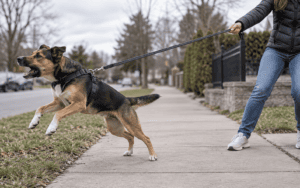
Does your normally sweet dog turn into a mess when you’re outside? Leash reactivity, leash aggression, and pulling on the leash are some of the most common problems we encounter. Many Queens dog owners dismiss early signs of leash reactivity as “just excitement” or assume their dog will outgrow the behavior.
Leash reactivity starts small. Maybe your dog pulls a little harder when they see another dog. Maybe they whine or pace when they spot a squirrel. In Queens’ dense environment, these small reactions quickly escalate because your dog encounters triggers constantly. What begins as mild interest becomes frantic pulling, then barking, then lunging.
The mistake is waiting to address these behaviors until they become unmanageable. By the time your dog is lunging and barking at every other dog on the street, you’re dealing with a much more complex problem that requires professional intervention.
We’ve seen great success helping dogs adapt different training tools to our very crowded Queens neighborhood. We take time educating owners on how to lead their dogs through passive influence. We also teach dogs to avoid behaviors that owners think are normal dog behaviors to ensure that dogs don’t become more anxious scanning the environment for triggers, allowing them to just enjoy being a dog!
Early intervention makes all the difference. Address pulling, whining, and fixation on other dogs immediately. Teach your dog that calm, focused behavior earns forward movement and attention, while reactive behavior stops all progress. This approach prevents escalation and creates a more enjoyable walking experience for both of you.
Mistake #4: Using Punishment-Based Methods in High-Stress Environments
If you correct your dog’s mistakes with words like “No!” or “Ehh!” or any other aversive, they’ll fear getting it wrong. Rather than actively participating in the training process, they’ll disengage and stop trying. It’s far better to use positive reinforcement training techniques, set up your dog for success, and reward their accomplishments.
Queens’ environment is already stressful for dogs. The constant noise, crowds, and stimulation create a state of heightened arousal that makes learning difficult. Adding punishment-based corrections to this environment often backfires spectacularly.
When dogs are stressed or overstimulated, punishment doesn’t teach them what you want—it teaches them to fear making any choice at all. A dog that shuts down in Queens’ demanding environment becomes unpredictable and potentially dangerous. They might freeze when they encounter new situations, or worse, they might react defensively when they feel cornered.
Another rule of ours is to never punish the dog for making mistakes. We know that old school way of taking him back to the scene of the crime, mushing his nose in it, then smacking him with a newspaper. PLEASE DO NOT DO THIS!!! It is ineffective at best and damaging your dog’s relationship with you at worst.
We focus on teaching dogs what TO do rather than punishing them for what they shouldn’t do. This approach builds confidence and creates dogs that actively problem-solve rather than simply avoid making mistakes. In an environment where your dog needs to make good decisions quickly, confident decision-making is essential.
How to Find Professional Dog Training Help in Queens
We get calls all the time from people who said their dog had “failed” obedience school. The problem usually is not the dog but what the other school failed to successfully teach the owner. This is a shame and a waste of money.
Avoiding these common training mistakes requires understanding what actually works in Queens’ unique environment. The most successful dog owners recognize when they need professional guidance and choose trainers who understand urban challenges. Look for board and train programs that address real-world scenarios, not just basic obedience in sterile environments.
The right professional dog training makes the difference between a dog that barely manages city life and one that thrives in it. When you’re ready to give your dog the training they deserve, reach out to K9 Mania Dog Training for solutions that actually work in Queens’ demanding environment.