Why Does My Dog Lunge on a Leash?
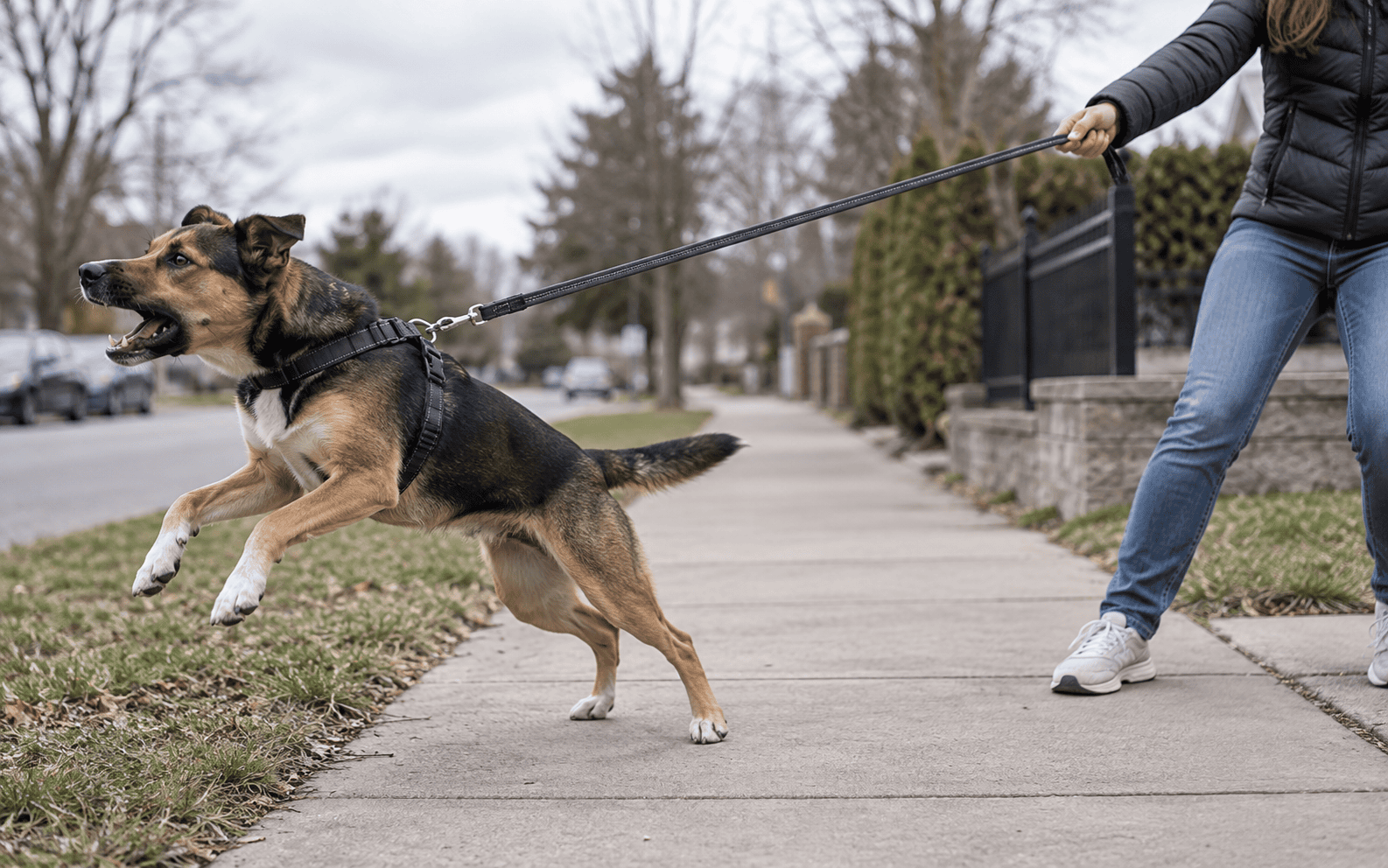
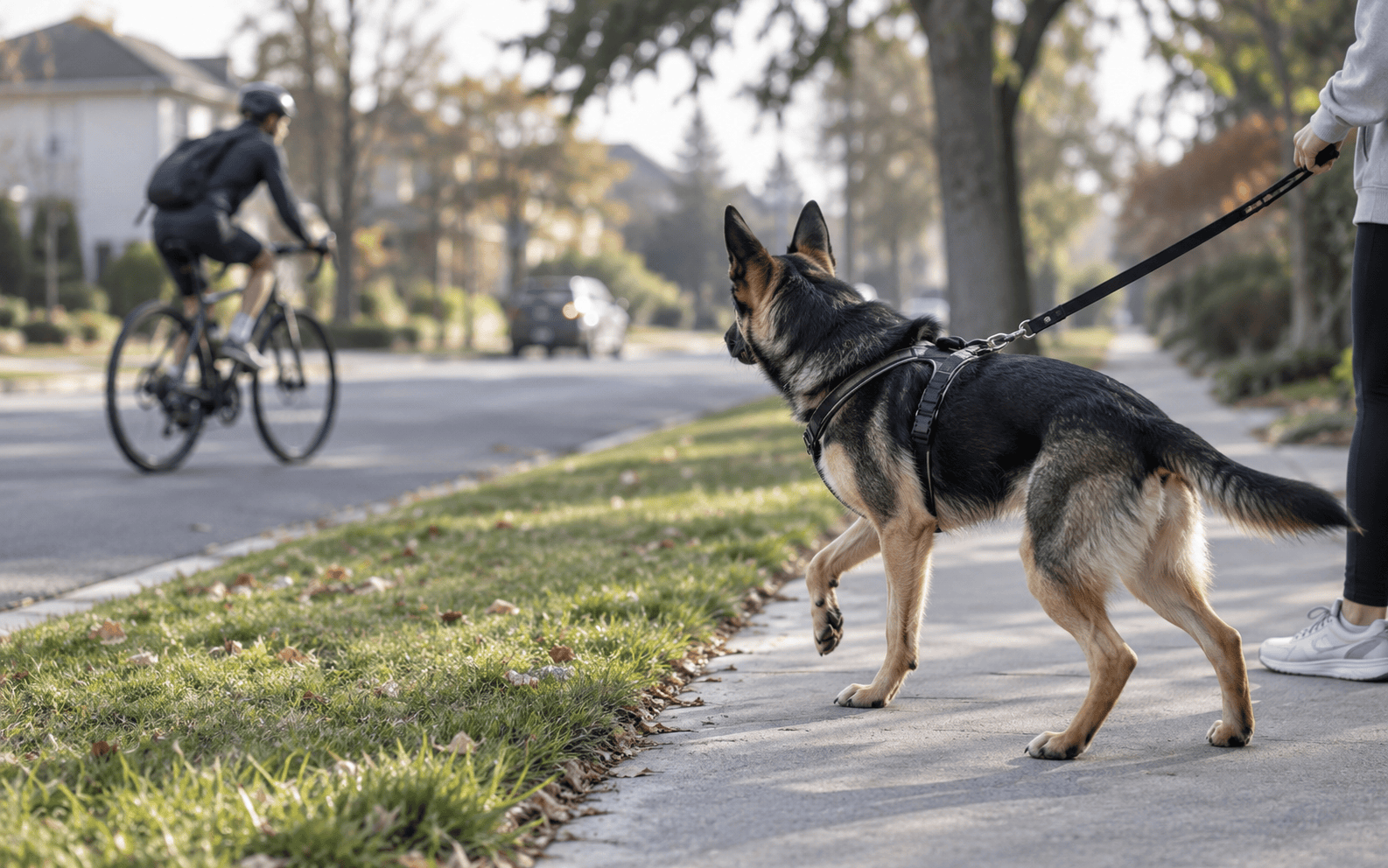
Why does my dog lunge on a leash? Most dogs lunge on a leash because they feel frustrated, fearful, or overstimulated by a trigger they cannot reach or escape, such as another dog, a stranger, or a passing bike. The leash blocks their natural response, so the energy comes out as a sudden pull, bark, or lunge.
Quick Insights
- Lunging is a symptom of an underlying emotion, not a training failure on its own.
- The three biggest drivers are fear, frustration, and prey drive.
- Puppies and adolescent dogs (6 months to 2 years) lunge more often due to underdeveloped impulse control.
- Retractable leashes make lunging worse by removing consistent pressure feedback.
- Most dogs improve within 4 to 8 weeks of consistent, structured training.
- Sudden or worsening lunging can signal pain, vision loss, or an untreated fear that has generalized.
Struggling to walk your dog past other dogs or people without a scene? Our dog reactivity training in Long Island program is built specifically for leash reactivity and lunging, with real-world practice built into every session.
Why Does My Dog Lunge on a Leash in the First Place?
Leash lunging almost always traces back to one of four root causes, and identifying which one applies to your dog changes how you fix it.
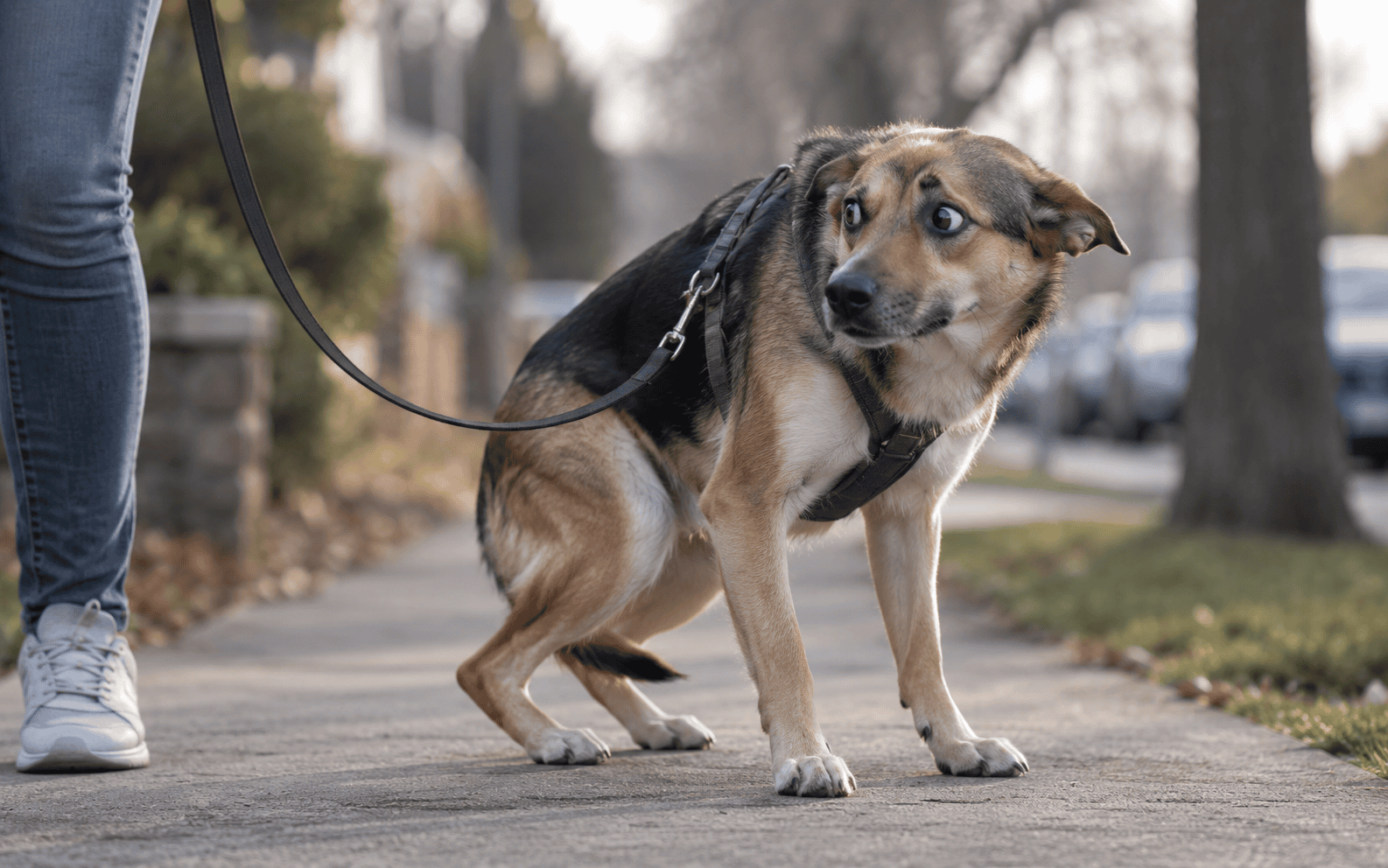
Fear-based lunging happens when a dog feels trapped. On leash, a dog cannot create distance from something that scares them, so lunging becomes a way to make the scary thing back off or go away. This is common with undersocialized dogs and rescues with unknown histories.
Frustration-based lunging, sometimes called barrier frustration, shows up in social dogs who want to greet every person or dog they see. The leash prevents that greeting, and frustration builds until it erupts as a lunge, often paired with whining or spinning.
Prey drive lunging is triggered by fast movement, squirrels, cats, joggers, or bikes. It’s an instinctive chase response rather than an emotional one, which is why it can appear in otherwise calm, well-socialized dogs.
Overarousal is the fourth cause, and it’s often overlooked. A dog who is already keyed up from a long car ride, a busy street, or a string of small triggers has a lower threshold before the next trigger causes a full reaction. This is called trigger stacking, and it’s worth understanding on its own; see our guide to trigger stacking in dogs for a deeper breakdown.
Age and life stage play a role too. Puppies between 6 months and 2 years old are going through an adolescent period where impulse control is still developing, so a trigger that barely registered at 4 months can suddenly cause a full lunge at 10 months. Senior dogs can also become more reactive as hearing or vision declines, since a trigger that suddenly appears without warning is scarier than one they saw coming.
How Do You Stop a Dog From Lunging on a Leash?
The right fix depends on which cause is driving the behavior, so matching the method to the trigger matters more than any single technique.
For fear-based lunging, the best approach is desensitization and counter-conditioning: creating distance from the trigger, then pairing its presence with something positive like food or play until the dog’s emotional response shifts. Punishing a fearful dog for lunging usually makes the fear, and the lunging, worse.
For frustration-based lunging, impulse control work is more effective than distance alone. Teaching a dog to sit and check in before approaching another dog or person redirects the energy into a calm behavior instead of a lunge.
For prey-drive lunging, engagement games such as “look at that” training teach the dog to glance at the trigger and return focus to the handler, rather than fixate and chase. For overarousal, the priority is lowering the dog’s baseline stress through decompression walks in low-stimulation areas before reintroducing busier routes.
This is also why generic leash-pulling advice often falls short for a lunging dog. Pulling and lunging look similar but come from different places, and a dog with both issues usually needs the pulling addressed separately; our guide on how to stop leash pulling in dogs covers that piece specifically.
Common Leash Lunging Triggers
| Trigger | Likely Root Cause | What It Usually Means |
| Other dogs | Frustration or fear | Wants to greet, or feels cornered |
| Strangers | Fear or protective instinct | Undersocialized, or guarding the owner |
| Bikes and joggers | Prey drive | Fast movement triggers a chase response |
| Cars and trucks | Fear or noise sensitivity | Startled by sound, size, or motion |
| Squirrels and cats | Prey drive | Natural hunting instinct |
| Other leashed dogs approaching | Barrier frustration | Wants access the leash is blocking |
6 Steps to Stop Your Dog From Lunging on a Leash
- Identify the Real Trigger and Threshold Distance
Watch your dog’s body language before a reaction: ears forward, stiff body, and a fixed stare all happen before the actual lunge. Find the distance at which your dog notices a trigger but can still take treats and respond to their name. That distance is your starting point.
- Build Engagement Before You Add Distractions
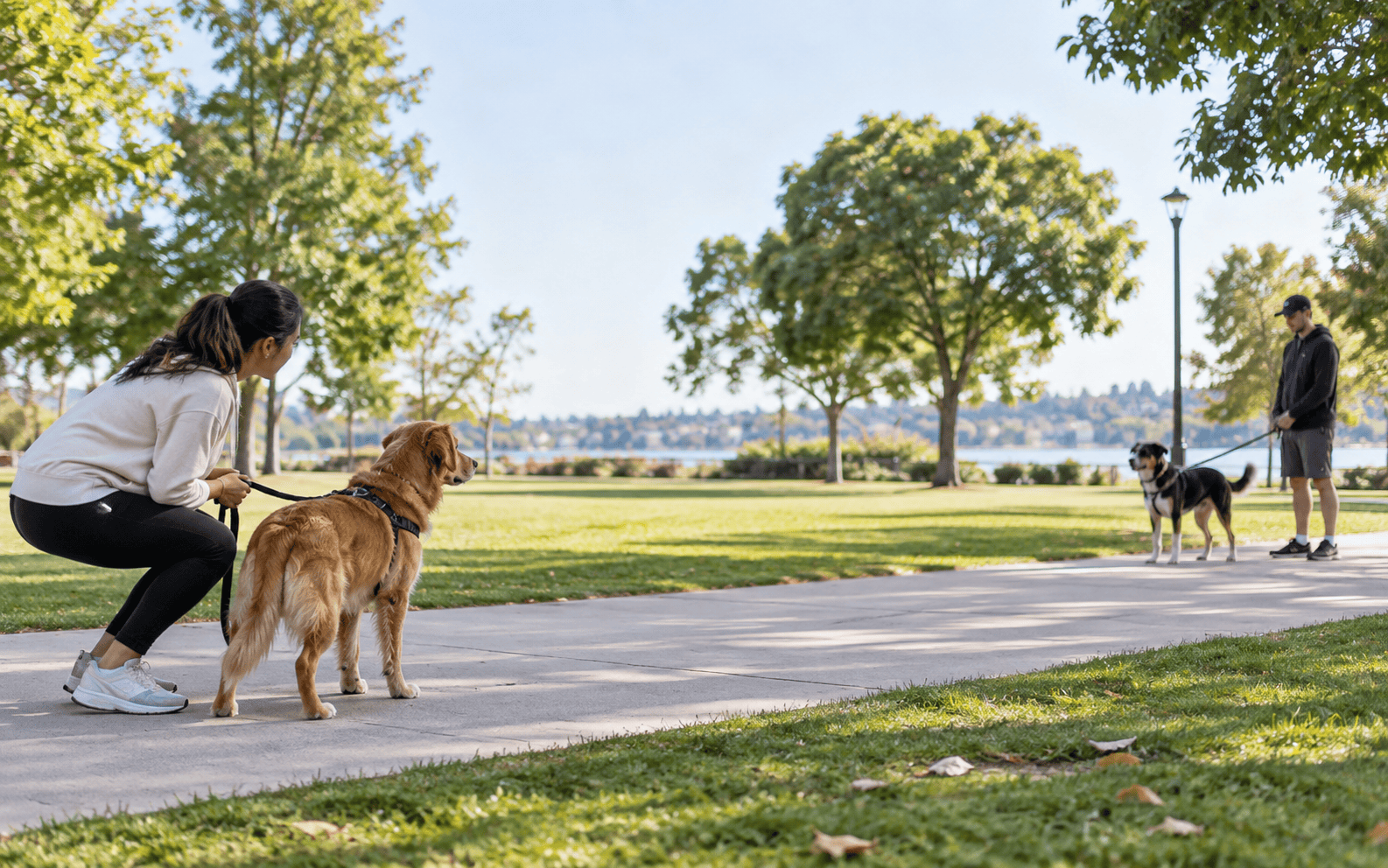
Practice eye contact, name response, and simple sits in a quiet space with zero distractions first. A dog who doesn’t check in at home won’t check in near a trigger. Five minutes a day of engagement games builds the habit you’ll rely on outside.
- Use Counter-Conditioning at a Safe Distance
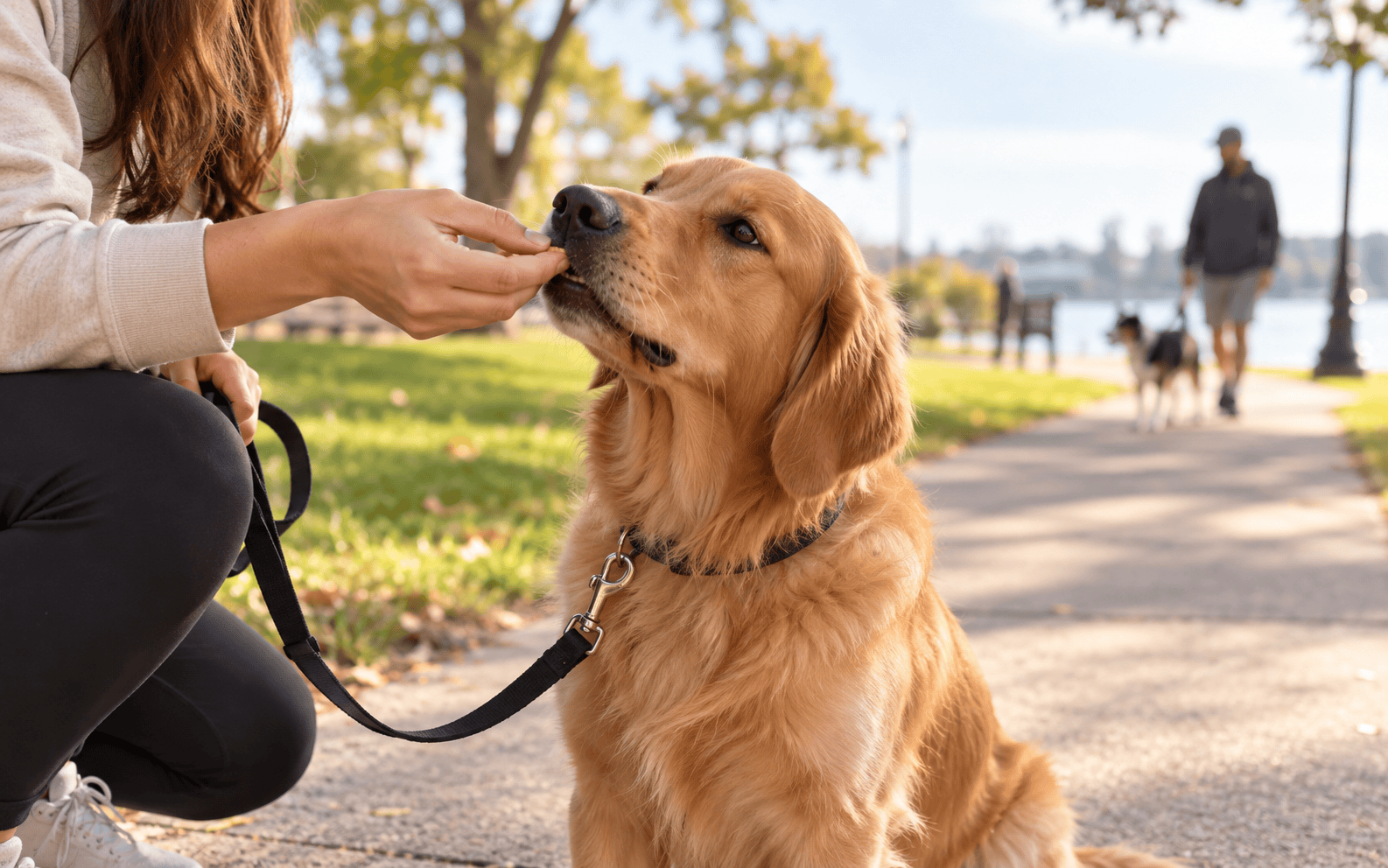
Once you know the threshold distance, pair every sighting of the trigger with high-value treats delivered immediately. Over sessions, gradually decrease the distance as your dog stays calm. Rushing this step is the most common reason lunging returns.
- Teach an Alternate Behavior
Give your dog something else to do instead of lunging, such as a hand target, a sit, or a U-turn cue. Practice the alternate behavior heavily in low-distraction settings before asking for it near a real trigger.
- Manage the Environment While You Train
Cross the street, use parked cars as visual barriers, or walk at quieter times while training is in progress. This isn’t a permanent fix, but it prevents rehearsal of the lunging behavior, which slows progress every time it happens.
- Add Real-World Reps Gradually
Once your dog is reliable at a distance, shorten it in small increments across different locations. Consistency across new environments, not just your usual block, is what makes the training stick long-term.
Common Mistakes Owners Make
- Correcting the dog for lunging without addressing why it’s happening, which can suppress the warning signs without changing the emotion underneath.
- Flooding the dog by getting too close to a trigger too soon, which usually sets training back weeks.
- Using a retractable leash, which removes the steady feedback a standard leash provides and encourages pulling that escalates into lunging.
- Skipping engagement training at home and only working on the behavior during walks, where distractions are highest.
- Confusing lunging with general leash pulling and applying the wrong fix; the two often need different training plans.
- Giving up too early, since most dogs need several weeks of repetition before the new response becomes automatic.
- Practicing only on-leash and never rewarding calm behavior around triggers off-leash or in the yard, which slows down how quickly the new response generalizes.
- Letting well-meaning strangers approach and pet a reactive dog “to help it get used to people,” which usually confirms the dog’s fear rather than easing it.
Training Timeline: What to Expect
| Timeframe | What You Should See |
| Week 1 to 2 | Dog notices triggers earlier; still reacts but recovers faster |
| Week 3 to 4 | Dog takes treats and responds to cues at a set distance from triggers |
| Week 5 to 6 | Distance to trigger starts shrinking without a reaction |
| Week 7 to 8 | Dog manages most everyday triggers calmly on familiar routes |
| Ongoing | New environments and unexpected triggers still need occasional practice |
When to Get Professional Help
If your dog’s lunging includes biting, snapping, or has drawn blood, if the behavior is getting worse despite consistent training, or if you don’t feel confident handling your dog’s size or intensity, it’s time to bring in a professional rather than continue on your own.
Our board and train in Long Island program immerses your dog in daily, structured leash work with a certified trainer, which is often the fastest path for dogs with an established lunging habit. For owners who want to be part of every session, our in-home dog training in Long Island program builds the same skills in your dog’s actual environment. If you want a flexible schedule with one-on-one coaching, our private dog training in Long Island sessions are tailored around your dog’s specific triggers and your goals.
Your Partner in a Calmer, More Confident Walk
If you’re still asking why does my dog lunge on a leash after trying training tips on your own, you don’t have to figure it out alone. K9 Mania Dog Training is Long Island’s leading board and train program with the best dog behaviorist on Long Island, and we specialize in turning reactive, lunging dogs into calm, confident walking partners. From board and train to private sessions, our team builds a plan around your dog’s specific triggers, not a one-size-fits-all script. Reach out today and let us help you and your dog enjoy walks again.
You May Also Want to Read
Leash Aggression in Dogs
Trigger Stacking in Dogs
How to Train a Reactive Dog on Leash
Frequently Asked Questions
Leash lunging raises a lot of follow-up questions once owners start digging into the cause. Here are the answers to what we hear most often.
How do I stop my dog from lunging on a leash?
Identify the trigger and the distance at which your dog can stay calm, then use counter-conditioning to pair that trigger with treats while slowly closing the distance. Combine this with an alternate behavior, like a hand target or sit, so your dog has something else to do instead of lunging.
How to correct a dog that lunges?
“Correction” works best when it means redirecting to an alternate behavior rather than punishment. Interrupting with a cue your dog already knows, then rewarding the calm response, changes the pattern faster than a leash pop, which can increase fear or frustration in some dogs.
Why is my dog suddenly lunging at people?
Sudden lunging at people often points to a fear response that has been building quietly, an unpleasant experience your dog associates with a similar-looking stranger, or reduced tolerance from stress elsewhere in their routine. A vet check is worth ruling out pain as a contributing factor too.
What are the signs of leash anxiety in dogs?
Early signs include tense body posture, tucked tail, excessive sniffing or scanning, panting when it’s not hot, and pulling toward or away from something specific. These signs typically appear before the actual lunge and are the best window for early intervention.
Why does my dog randomly lunge at other dogs?
This is rarely random. It’s usually frustration from wanting to greet, fear from a past negative experience, or overarousal from trigger stacking earlier in the walk. Tracking what happened in the 10 to 15 minutes before each incident often reveals a pattern.
Why is my dog suddenly becoming more reactive to the leash?
Increasing reactivity over time can mean the dog is rehearsing the behavior successfully (the trigger leaves, which reinforces lunging), an unaddressed medical issue is lowering their tolerance, or trigger stacking has become a daily pattern. A structured training plan or a professional evaluation can identify which applies.