Leash reactivity is one of the most frustrating behavioral issues dog owners deal with, and it rarely improves without structured, consistent intervention. If you live in Long Island and your dog is lunging, barking, or losing its mind every time it sees another dog or a stranger on a walk, the right training program can completely change your daily life.
Key Takeaways
- Leash reactivity is a behavioral pattern rooted in overstimulation, fear, or frustration, not stubbornness or aggression.
- Long Island offers several training formats for reactive dogs, but not all of them address the root cause effectively.
- Board and train programs tend to produce faster, more consistent results for severe reactivity cases.
- The environment where training happens matters just as much as the techniques used.
- Trigger stacking is a major factor most owners overlook when trying to manage a reactive dog on walks.
- Finding a trainer who specializes specifically in reactivity, rather than general obedience, makes a significant difference in outcomes.
Why Leash Reactivity Is So Common on Long Island
Long Island is a densely populated area. Whether you live in Nassau County near the Five Towns, or further east in Suffolk County closer to Huntington or Babylon, the reality is that your dog is constantly exposed to triggers: other dogs, cyclists, joggers, skateboards, and unfamiliar people. That level of environmental stimulation is a recipe for a reactive dog to spiral fast.
Leash reactivity typically develops from one of three root causes. The first is fear, where a dog feels trapped on leash and reacts to create distance from something it perceives as a threat. The second is frustration, where an overly social dog is prevented from greeting other dogs and channels that energy into barking and lunging. The third is a combination of both. Without identifying which type your dog is displaying, you cannot design an effective training plan.
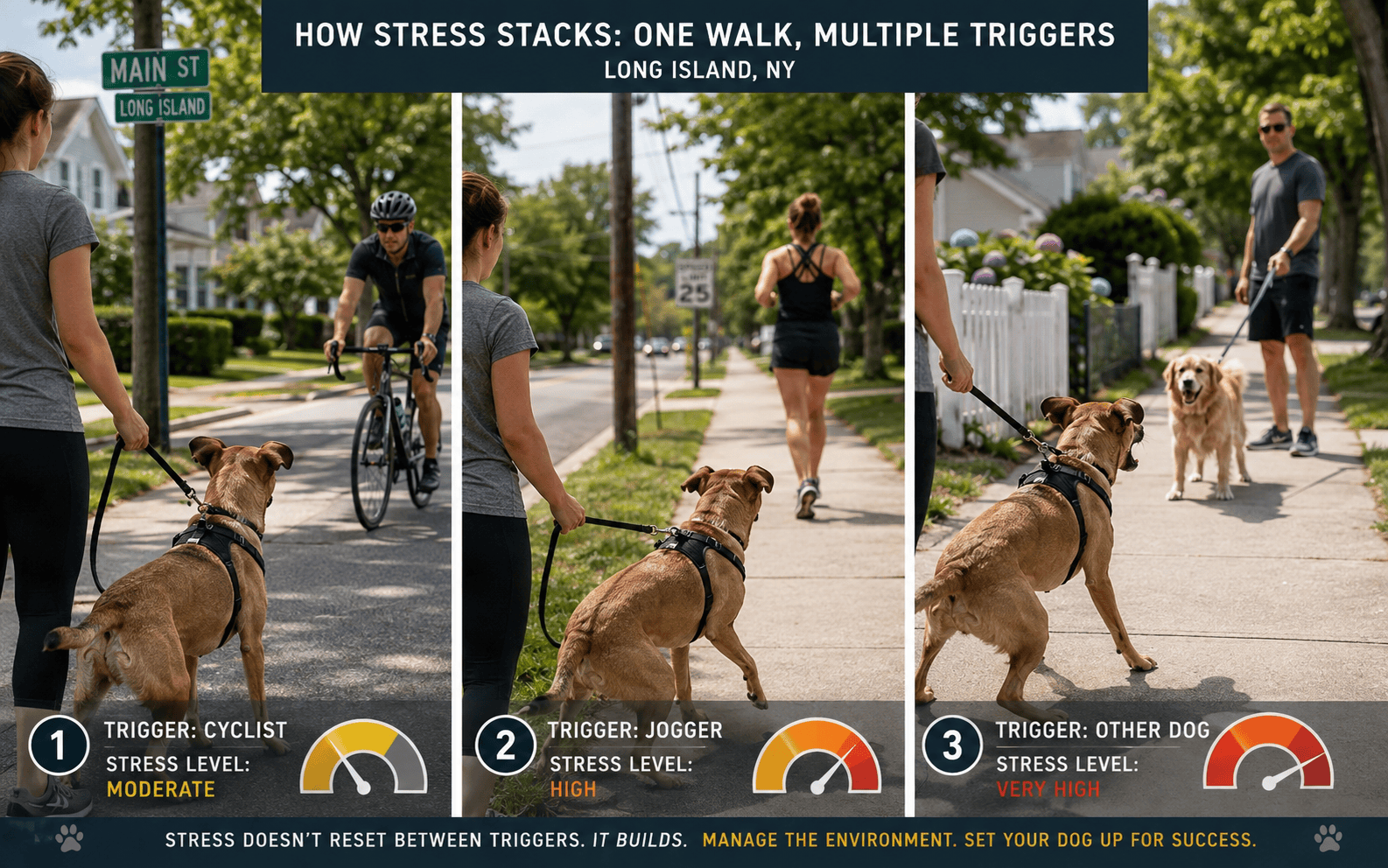
Understanding what is trigger stacking in dogs is essential before you start any training program, as trigger stacking is the cumulative effect of multiple stressors building up during a walk. Your dog might handle one trigger fine, but by the fourth or fifth, it explodes. Most owners address the final trigger without realizing the earlier ones set the whole reaction in motion.
What Makes a Dog Training Program Actually Effective for Reactive Dogs
Not all dog training programs are created equal, and this is especially true when it comes to reactivity. A general obedience class at a big-box pet store is not going to resolve leash reactivity. Here is what to look for when evaluating programs on Long Island.
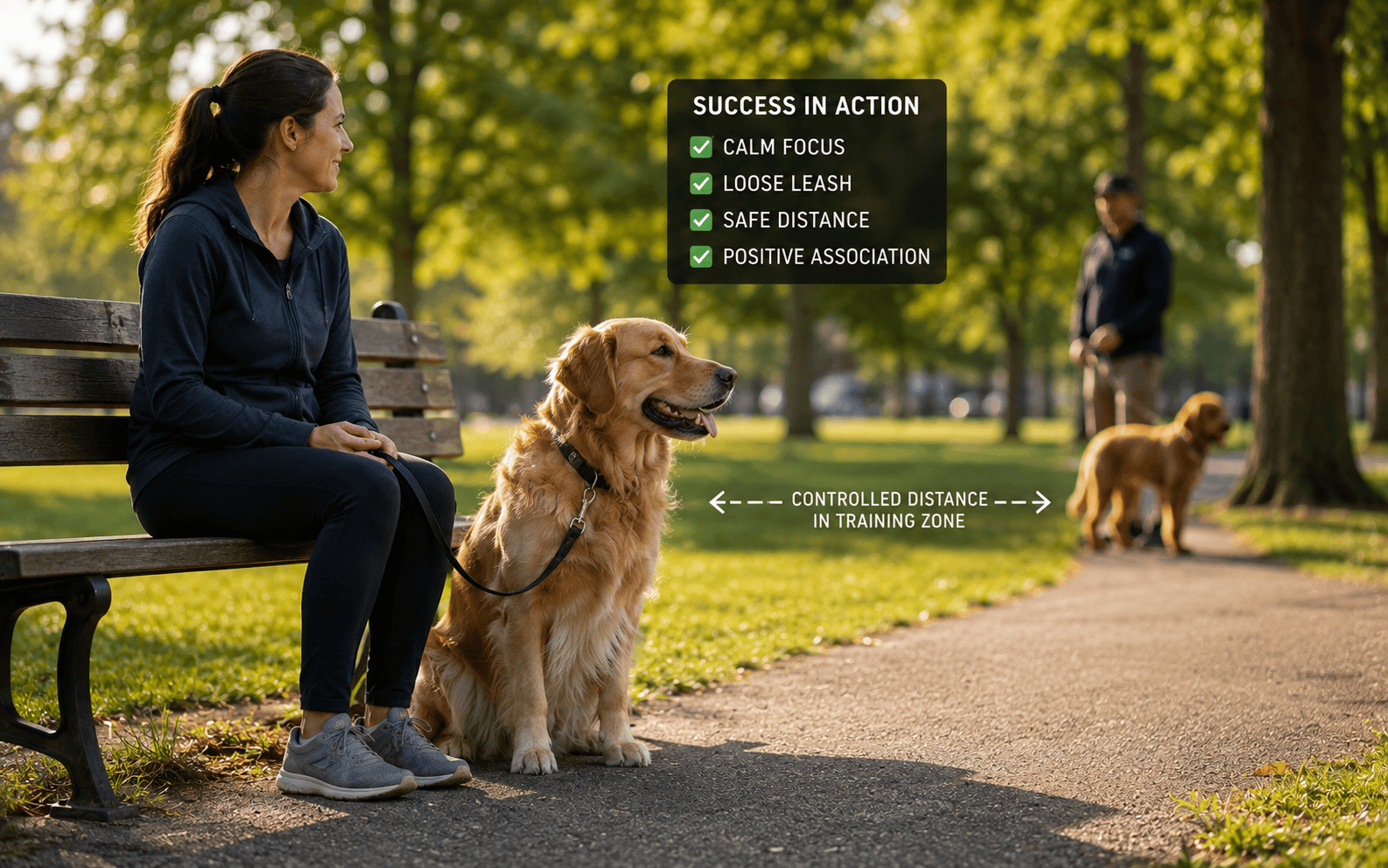 Specialization in reactivity: The trainer or facility should have specific, documented experience working with reactive dogs, not just a general background in obedience.
Controlled exposure environments: Effective reactivity training requires the ability to control the distance, intensity, and duration of exposure to triggers. A trainer working in a chaotic group class cannot do this reliably.
Systematic desensitization and counter-conditioning: These are the two foundational techniques used in evidence-based reactivity training. Desensitization means gradually exposing your dog to triggers at a threshold below what causes a reaction. Counter-conditioning means pairing that exposure with something your dog values, so the emotional response changes over time.
Owner education: A good program teaches you how to handle your dog, not just how the trainer handles your dog. If you cannot replicate the results on your own walks, the training has not transferred to real life.
Clear follow-through support: Reactivity does not resolve in a single session. Any reputable program should provide ongoing coaching or structured follow-up.
If you are unsure where to begin, reading about how to calm a reactive dog what actually works gives you a solid baseline understanding of the techniques used in quality training programs before you commit to anything.
The Three Main Training Formats and How They Compare
When you are looking for the best dog training for leash reactivity in Long Island, you will encounter three primary delivery formats. Each has genuine advantages and real limitations.
| Format | Best For | Typical Timeline | Key Limitation |
| Group reactivity classes | Mild to moderate cases | 6-10 weeks | Limited individual attention |
| Private lessons | All severity levels | Ongoing, variable | Results depend heavily on owner consistency |
| Board and train | Moderate to severe cases | 2-4 weeks | Requires strong owner follow-through after graduation |
Group classes can be useful for mild reactivity cases where the dog can stay under threshold in a structured environment. However, many reactive dogs cannot function in a group setting at all without first having some foundational work done. Placing a severely reactive dog in a group class can actually reinforce the reactive behavior if the exposure is not managed carefully.
Private lessons give you personalized, one-on-one time with a trainer who can tailor every session to your dog’s specific triggers and threshold levels. The downside is that progress is entirely dependent on how consistently you practice between sessions. Life gets busy, sessions get skipped, and the training loses momentum.
Board and train programs, sometimes called residential dog training or dog boot camp, place your dog with a professional trainer full-time for an intensive block of training, and learning about board and train for leash reactive dogs can help you understand how this intensive format approaches the problem. Your dog works through its reactivity in a controlled, consistent environment with daily repetition that simply cannot be replicated in one-hour weekly sessions. For moderate to severe cases of leash reactivity, this format tends to produce the most significant results in the shortest timeframe.
Why Dog Training Works for Reactivity Specifically
The reason dog training programs are particularly effective for leash reactivity comes down to repetition and environment control. A reactive dog needs hundreds of carefully managed exposures to its triggers to begin rewiring its emotional response. A trainer seeing your dog once a week simply cannot generate that volume of experience.
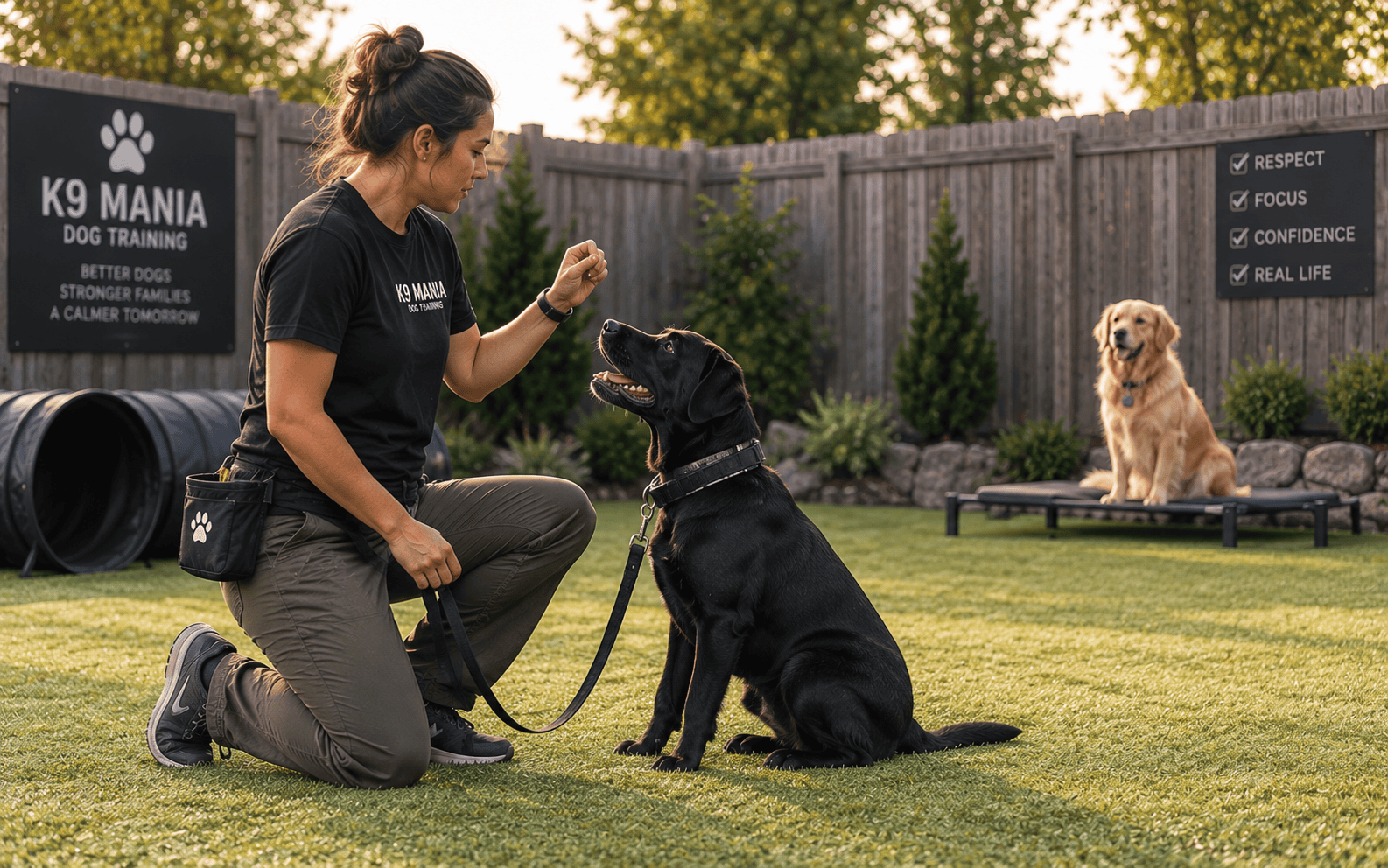
During a residential program, your dog is exposed to controlled trigger scenarios multiple times per day. The trainer can manipulate distance, duration, and intensity precisely. When your dog succeeds, that success is reinforced immediately and consistently. When the dog reaches its threshold, the session is adjusted in real time rather than waiting until next week’s appointment.
Long Island residents specifically benefit from board and train long island programs because the trainers working in this region understand the specific environmental challenges your dog faces, as the stimulation level on a busy street in Garden City or along a popular walking trail in Bethpage State Park is very different from a quiet rural setting. Your trainer needs to account for that reality.
Private Lessons as a Complementary Approach
While dog training is often the most efficient format for serious reactivity cases, private dog training long island remains a strong option for owners who want to stay closely involved in every stage of the process, or whose dog has a milder form of reactivity that does not require the intensity of a residential program.
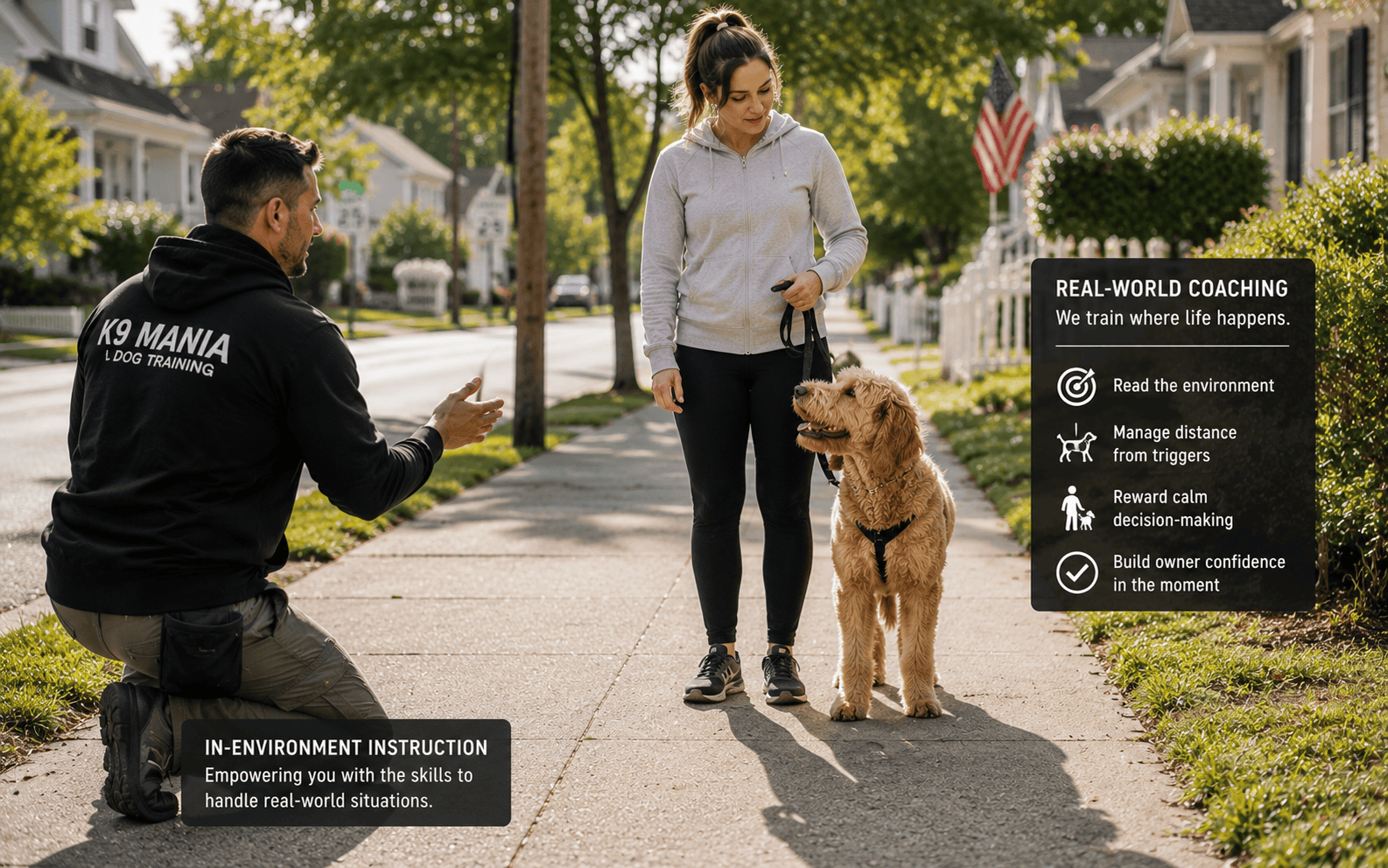
In a well-designed private lesson structure, the trainer comes to your neighborhood, works with your dog in the actual environments where the reactivity occurs, and coaches you on handling skills in real time. This has a significant advantage: the training happens exactly where the problem happens. There is no transfer gap between the training environment and your daily walks.
The key to making private lessons work for reactivity is commitment. You need to practice daily, follow the trainer’s protocols precisely, and avoid situations that overwhelm your dog outside of training sessions. Without that consistency from your side, private lessons will plateau.
For many Long Island dog owners, the most effective approach combines both formats: a board and train program to build the foundational behavioral changes, followed by private lessons to generalize those skills to your specific neighborhood and walking routes.
Things to Know
- Reactivity rarely resolves on its own. Without intervention, it typically escalates over time as the dog’s associations with triggers become more deeply ingrained.
- “Socialization” is not the same as reactivity training. Forcing a reactive dog into social situations often makes the reactivity worse, not better.
- Not every board and train facility has meaningful experience with reactivity. Ask specifically what their protocol is for reactive dogs before enrolling.
- The post-training handoff is critical. A residential program should include a structured transition session where the trainer teaches you how to maintain what your dog learned.
- Leash equipment matters. The type of collar, harness, or head halter your dog wears during training affects how quickly progress is made. A qualified trainer will guide you on the right setup.
- Dog reactivity training in long island is available at various price points, but be cautious of extremely low-cost programs that do not include follow-up support, as you are paying for a behavioral transformation, not just a service.
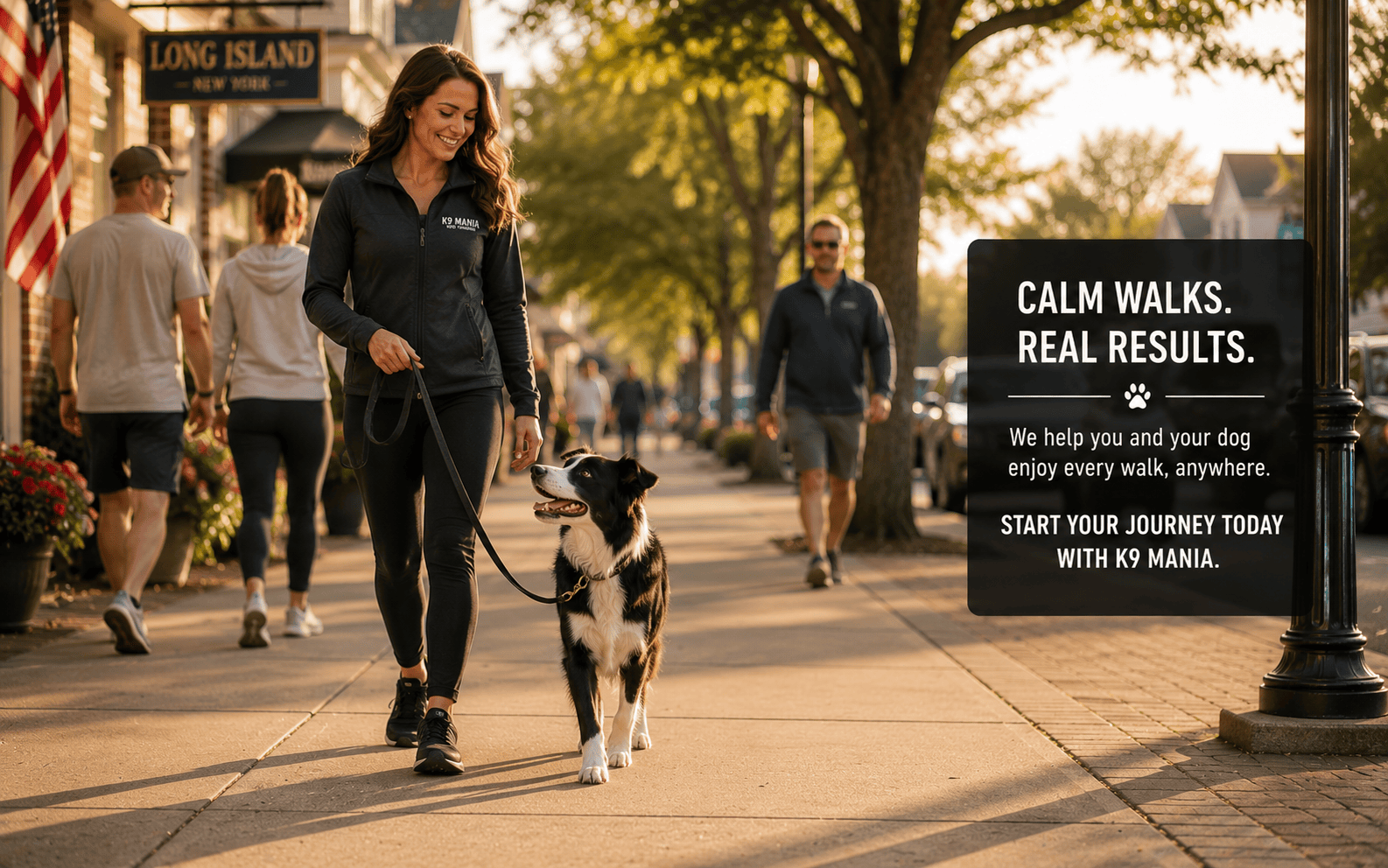
Start Your Dog’s Reactivity Training Before It Gets Worse
Leash reactivity tends to compound over time. Every walk where your dog practices the reactive behavior is another repetition that reinforces the pattern. The longer you wait, the more ingrained the response becomes and the longer the rehabilitation process takes. If your dog is already showing signs of reactivity, now is the right time to act, not after the next incident.
Reach out to a qualified trainer who specializes in reactive dogs in your area. Schedule an evaluation so the trainer can assess your dog’s specific triggers, threshold levels, and the severity of the reactivity. From there, you can make an informed decision about whether private lessons, a board and train program, or a combination approach is the right fit for your dog and your lifestyle.
Frequently Asked Questions
How long does it take to train a leash-reactive dog?
The timeline depends on the severity of the reactivity, the consistency of training, and the format used. Mild cases addressed through consistent private lessons may show meaningful improvement within 6-8 weeks. Moderate to severe reactivity treated through a board and train program typically requires 2-4 weeks of residential training followed by ongoing owner practice at home.
Can leash reactivity be fully cured?
In most cases, leash reactivity can be managed to the point where your dog functions normally on walks, though some dogs will always require mindful handling. The goal of training is not necessarily to create a dog with zero awareness of triggers, but to reduce the emotional intensity of the response so your dog can stay calm and take direction from you even when triggers are present.
Is board and train safe for reactive dogs?
Yes, provided the facility has genuine experience with reactive dogs and uses ethical, evidence-based methods. Before enrolling, ask how the facility manages reactive dogs around other dogs in the program and what their daily schedule looks like. A reputable program will be transparent about their protocols and methods.
What should I do between training sessions to help my reactive dog?
Avoid trigger flooding, practice threshold management on your walks, and reinforce calm behavior consistently. Keep walks short and controlled, cross the street before your dog reaches its threshold, and reward focus on you heavily whenever triggers are present in the environment.
How do I know if my dog needs private lessons or a board and train program?
A professional evaluation is the most reliable way to answer that question, but generally, severe or long-standing reactivity benefits most from the intensity of a residential program. If your dog cannot complete a walk without multiple major reactive episodes, or if the reactivity is escalating despite your efforts, a board and train program is likely the more appropriate starting point.
The Bottom Line on Best Dog Training for Leash Reactivity in Long Island
The best dog training for leash reactivity in Long Island is the program that matches your dog’s severity level, targets the root cause of the reactivity, and equips you to maintain results long after the formal training ends. Whether you choose private lessons, a residential board and train program, or a combination of both, the most important factor is finding a trainer with specific, proven experience in reactivity.
Do not let another frustrating walk go by without taking action. Contact a qualified Long Island trainer, schedule an evaluation for your dog, and get a clear plan in place so you and your dog can finally enjoy your walks together.